Ruzena Bajcsy
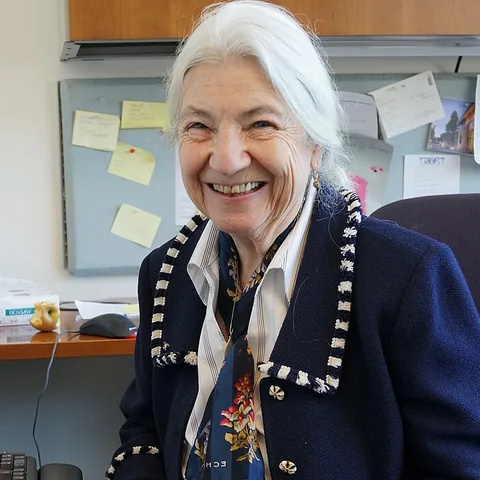
Ruzena Bajcsy researches robotics, perception and human movement. She earned a Stanford computer science PhD in 1972 and worked at Penn, where she established the GRASP laboratory in 1978. With students, she developed work on digital anatomy and elastic matching for medical images. She led NSF’s computer and information science directorate in 1999–2001 and became CITRIS’s founding director in 2001. She received the 2021 Azriel Rosenfeld Lifetime Achievement Award.
- Works
- 502
- Citations
- 16,705
- h-index
- 48
Publication numbers from OpenAlex, as of 14 October 2026.
Timeline
-
1972
Computer science and robotics
Bajcsy earned a Stanford computer science PhD in 1972. She became a professor at the University of Pennsylvania that year. Her research there included computer vision, tactile perception and identifying the behavior of systems.
-
1978
Creating the GRASP laboratory
She established the General Robotics, Automation, Sensing and Perception laboratory at Penn in 1978. The group brought together computer science, electrical and mechanical engineering, psychology and cognitive science. Its research combined sensing with robot action.
-
1999–2001
Research leadership
Bajcsy led the NSF computer and information science directorate from 1999 to 2001. She became CITRIS’s founding director at Berkeley in 2001.
-
2021
Computer vision recognition
Bajcsy received the 2021 Azriel Rosenfeld Lifetime Achievement Award.
-
As of October 2026
Medical imaging and human movement
Bajcsy worked with students on a digital anatomy atlas and elastic matching for identifying brain structures. She also studied how robots could measure movement abilities and develop assistive devices.
Sources and credits
Photo: Franc Solina, via Wikimedia Commons. License: CC BY-SA 4.0. Source: commons.wikimedia.org. Cropped to a square and resized. Ask us to remove or replace this photo.
