Fernando Iglesias-Suarez
Fernando Iglesias-Suarez is a climate and AI data scientist whose research applies machine learning to climate models and Earth-system science. After earning degrees at Universidad Pablo de Olavide in 2004 and the University of East Anglia in 2011, he completed a doctorate on stratospheric ozone at Lancaster University in 2017 and held research posts at the Spanish National Research Council in Madrid and DLR in Oberpfaffenhofen. At DLR, he developed neural-network cloud parameterizations for the ICON model, coauthored the ClimSim dataset that won a 2023 NeurIPS Outstanding Paper Award, and applied causal and stochastic deep learning to atmospheric processes. As of October 2026, he is a climate scientist at Predictia in Santander, where he spearheads a deep-learning cloud-forecasting component for Destination Earth.
- Now at
- Predictia
Timeline
-
2004–2011
Degrees in Seville and Norwich
He completes a BSc in Environmental Science at Universidad Pablo de Olavide in Seville in 2004. In 2011, he earns an MSc in Climate Change at the University of East Anglia in Norwich under supervisors Naomi Vaughan and Timothy Osborn, with a dissertation on geoengineering solutions to meet the 2ºC target.
-
2016–2017
A PhD on stratospheric ozone
At Lancaster University in 2016, he works as a Research Associate and PhD student, presenting his climate research on multi-decadal ozone variability and Pacific sea surface temperatures at the Royal Meteorological Society Student Conference in Manchester in July 2016. He completes a Lancaster doctorate in atmospheric science on stratospheric ozone in 2017 under supervisors Paul J. Young and Oliver Wild, with Lancaster Environment Centre and Data Science Institute affiliations.
-
2017–2021
Madrid research and Pacific ozone
From 2017 to 2019, he works as a Research Associate at the Spanish National Research Council in Madrid. A 2021 study he coauthors links multi-decadal variation in tropical stratospheric circulation and ozone to the Interdecadal Pacific Oscillation.
-
2022
Neural networks for ICON clouds
Joining DLR in Oberpfaffenhofen as a Research Associate from 2019 to 2024, he conducts ELLIS research on the project Machine learning for improving climate models. In 2022, he coauthors a DLR paper that trains neural networks to estimate sub-grid cloud cover from coarse-grained atmospheric data in the ICON modeling framework.
-
2023
ClimSim wins at NeurIPS
With collaborators, he coauthors ClimSim in 2023, a multi-scale dataset for hybrid ML-physics climate emulation. The paper wins a NeurIPS 2023 Outstanding Paper Award in the Datasets and Benchmarks track in December 2023.
-
2024
Causal learning and digital twins
In 2024, he coauthors Causally-Informed Deep Learning to Improve Climate Models and Projections, which applies causal discovery to atmospheric subgrid processes in a superparameterized climate model. He also contributes to Digital Twins of the Earth with and for Humans as a climate scientist at DLR, then continues climate work at Predictia in Santander as a Climate and AI Data Scientist in 2024.
-
2025
Stochastic climate models
His 2025 coauthored study, Simulating Atmospheric Processes in Earth System Models and Quantifying Uncertainties with Deep Learning Multi-Member and Stochastic Parameterizations, develops machine-learning methods for uncertainty in convection and turbulence.
-
As of October 2026
Climate scientist at Predictia
As of October 2026, he is a climate scientist at Predictia in Santander and works on a deep-learning cloud-forecasting component for Destination Earth, presented at EGU26 in 2026, that models cloud-related fields up to 12 hours ahead.
Career
- NowPredictiaClimate Scientist
- 2017–2019Consejo Superior de Investigaciones CientíficasResearch Associate
- 2016–2017Lancaster UniversityResearch Associate
- German Aerospace CenterClimate Scientist
Education
- 2017Lancaster UniversityPhD
- 2011University of East AngliaMSc
- 2004Universidad Pablo de OlavideBSc
Colleagues
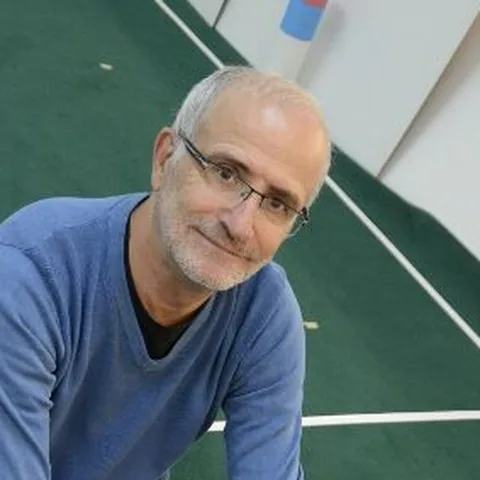 Ramon López de MàntarasConsejo Superior de Investigaciones Científicas, 2017–2019
- Nigel DaviesLancaster University, 2016–2017
- Alberto SanfeliuConsejo Superior de Investigaciones Científicas, 2017–2019
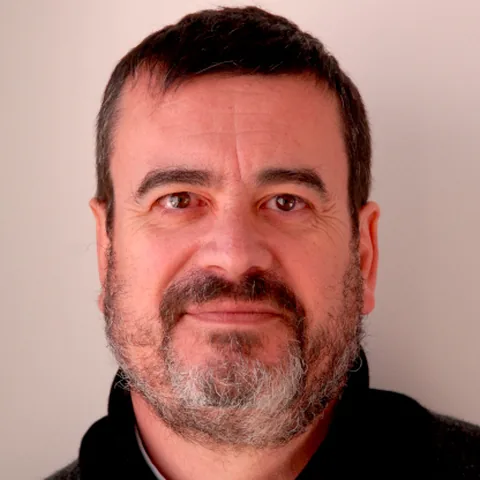 Carles SierraConsejo Superior de Investigaciones Científicas, 2017–2019
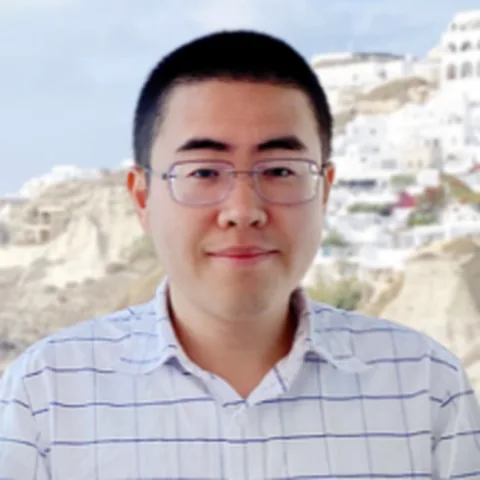 Ce ZhangLancaster University, 2016–2017
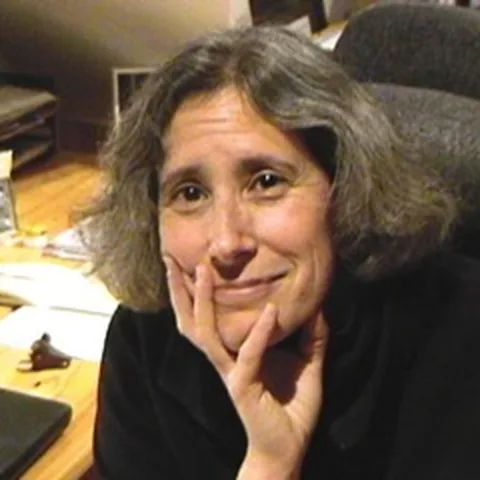 Lucy SuchmanLancaster University, 2016–2017
Sources and credits
Photo: We have no published photo of Fernando Iglesias-Suarez yet. Send us a free-licensed photo.
- About me
- PhD student speaks at RMetSoc Conference
- Stratospheric ozone in the Earth system
- Tropical Stratospheric Circulation and Ozone Coupled to Pacific Multi-Decadal Variability
- Fernando Iglesias-Suarez | European Laboratory for Learning and Intelligent Systems
- Deep Learning Based Cloud Cover Parameterization for ICON
- ClimSim: A large multi-scale dataset for hybrid physics-ML climate emulation
- Announcing the NeurIPS 2023 Paper Awards
- Causally-Informed Deep Learning to Improve Climate Models and Projections
- Digital Twins of the Earth for Actionable Science
- Simulating Atmospheric Processes with Stochastic AI: A New Step Toward Smarter Climate Models
- Tag - Machine learning
- An Early-Warning System and a DestinE component for cloud forecasting, at EGU26