Edward Gibson
Also known as Ted Gibson
Edward Gibson is an MIT psycholinguist who studies how people learn and process language and has discussed what large language models reveal about syntax. He studied mathematics and computer science at Queen’s, earned an MPhil at Cambridge and a computational linguistics PhD at Carnegie Mellon, then joined MIT’s Brain and Cognitive Sciences faculty in 1993. His research connects communication efficiency with language structure and uses machine learning to model human processing of recursive syntax; he was a Fellow of the Cognitive Science Society by 2021. In 2024, he coauthored a Nature essay on language as a tool for communication and discussed LLMs on the Lex Fridman podcast. He published Syntax: A Cognitive Approach in 2025, and as of October 2026 he is a professor at MIT, where the Gibson Lab studies language.
- Works
- 625
- Citations
- 22,236
- h-index
- 68
- Badges
Publication numbers from OpenAlex, as of 22 October 2026.
Timeline
-
1962–1991
Toronto to Carnegie Mellon
Born and raised in Toronto, Canada, in 1962, he studies mathematics and computer science at Queen’s University. He earns an MPhil at Cambridge in 1986 and a PhD in computational linguistics at Carnegie Mellon in 1991.
-
1993–2000
Assistant professor at MIT
In 1993, he joins MIT’s Department of Brain and Cognitive Sciences as an assistant professor. In 2000, MIT promotes him to associate professor with tenure.
-
2019
How efficiency shapes human language
In 2019, he coauthors the review “How Efficiency Shapes Human Language,” which connects information theory, controlled experiments, and computational modeling with questions of how communication and learning shape language.
-
By 2021
A Cognitive Science Society fellowship
By 2021, he is a Fellow of the Cognitive Science Society and teaches an MIT Mind-Brain course lecture on human language.
-
2022
A resource-rational model of recursive syntax
In 2022, he coauthors a resource-rational model of recursive linguistic structure. The team uses machine learning to model memory limits and improve predictions about how people understand and produce sentences.
-
2024
Language as a tool for communication
In 2024, he coauthors a Nature essay that reviews evidence for a double dissociation between language and thought and argues that language is optimized for communication. He also discusses LLMs on the Lex Fridman podcast.
-
2025–2026
Syntax: A cognitive approach
He publishes Syntax: A Cognitive Approach in 2025, presenting dependency grammar as a cognitive account of syntax. In January 2026, he says large language models suggest that language is learnable.
-
As of October 2026
Professor in Brain and Cognitive Sciences
As of October 2026, he is a professor in MIT’s Department of Brain and Cognitive Sciences. His Gibson Lab investigates how people learn, represent, and process language.
Career
- Since 1993Massachusetts Institute of TechnologyAssistant Professor, Associate Professor with tenure
Education
- 1991Carnegie Mellon UniversityPhD in computational linguistics
- 1986University of CambridgeMPhil
- Queen's University
Most-cited works
- Linguistic complexity: locality of syntactic dependencies
- Quarterly Journal of Experimental Psychology
- The Dependency Locality Theory: A Distance-Based Theory of Linguistic Complexity
- The P600 as an index of syntactic integration difficulty
- Processing Syntactic Relations in Language and Music: An Event-Related Potential Study
Videos

Video data from YouTube API Services. By watching you agree to the YouTube Terms of Service. How we use YouTube data.
Colleagues
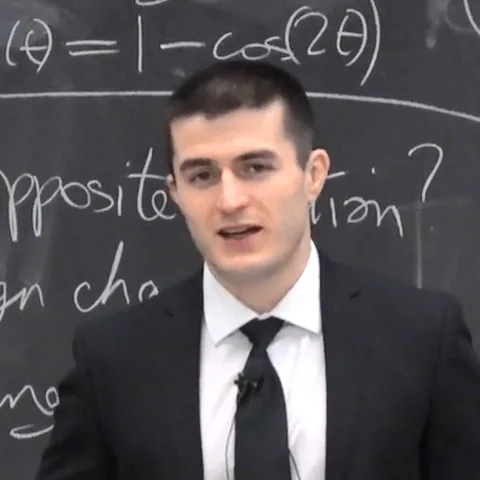 Lex FridmanMassachusetts Institute of Technology, 2015–2023
 Jeffrey H. ShapiroMassachusetts Institute of Technology, 1994–2026
 John V. GuttagMassachusetts Institute of Technology, 1994–2026
 Jaime CarbonellCarnegie Mellon University, 1987–1993
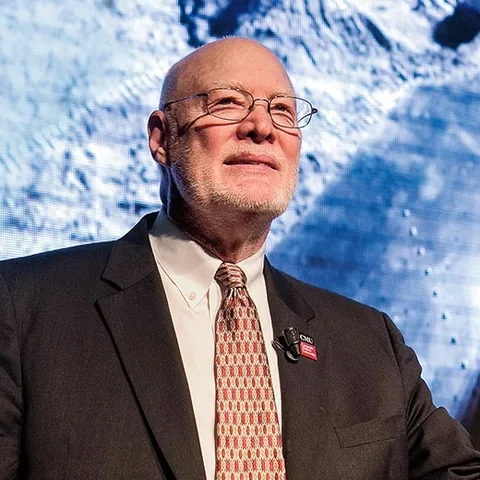 William L. WhittakerCarnegie Mellon University, 1987–1993
- Mary ShawCarnegie Mellon University, 1987–1993
Sources and credits
Photo: We have no published photo of Edward Gibson yet. Send us a free-licensed photo.
- Ted's Bio
- Corporation committee awards tenure to 23 faculty members
- How efficiency shapes human language
- Mind-Brain Course | Brain and Cognitive Sciences
- Cognitive scientists develop new model explaining difficulty in language comprehension
- What is language for?
- Transcript for Edward Gibson: Human Language, Psycholinguistics, Syntax, Grammar & LLMs | Lex Fridman Podcast #426
- Syntax: A Cognitive Approach - Edward A. F. Gibson - Google Books
- Q&A: A simpler way to understand syntax
- Edward A Gibson | Brain and Cognitive Sciences