Chris McIntosh
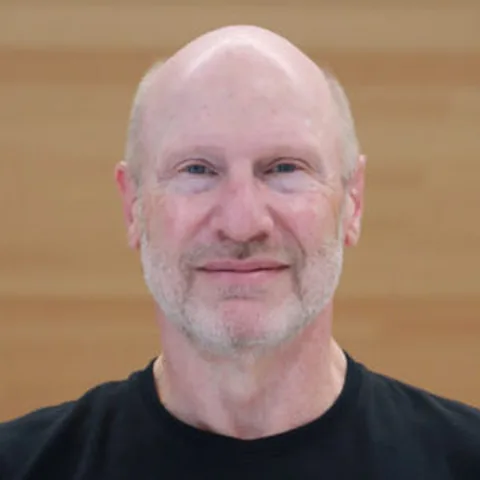
Chris McIntosh is a medical AI researcher whose work turns machine learning into tools for cancer treatment and patient monitoring. He earned a computing science degree at Simon Fraser University, completed a PhD under Ghassan Hamarneh, and joined the University of Toronto as an assistant professor in 2019. With Thomas Purdie, he helped develop a system that creates radiation plans in minutes, and he later led a clinical study of machine-generated plans for prostate cancer. He is a senior scientist at UHN and an associate professor at Toronto, where his research includes multimodal radiology AI and smartwatch-based heart failure prediction.
- Badges
Timeline
-
2005–2012
Computing and medical imaging
He earns a BSc with honours in computing science at Simon Fraser University in 2005 and a PhD under Ghassan Hamarneh in 2011. He joins the Department of Radiation Physics as a research associate in 2012, working in Tom Purdie's and David Jaffray's labs.
-
2018
Automated radiation planning
In 2018, McIntosh and Thomas Purdie's team develop an AI system for radiation treatment planning. It uses machine learning to compare a patient's images with similar cases and create a personalized plan; clinical staff at Princess Margaret use the technology to treat a prostate cancer patient in 2018.
-
2019
Starting a medical AI lab
In 2019, he joins the University of Toronto's Department of Medical Biophysics as an assistant professor and starts a lab on AI for diagnosis, segmentation, quality assurance, and treatment planning. By 2019, his radiation therapy work with Tom Purdie is commercialized and deployed in hospitals around the world.
-
2021
A medical imaging chair
In February 2021, the Joint Department of Medical Imaging announces his appointment as the R. Howard Webster Foundation Chair in Medical Imaging and AI.
-
2021
Clinical tests of AI plans
In 2021, McIntosh and colleagues compare machine-learning radiation treatments with human plans for 100 patients. Physicians judge 89 per cent of the machine-learning plans clinically acceptable and select 72 per cent over human plans; the process cuts planning time from 118 hours to 47 hours.
-
March 2025
Clinical integration and multimodal AI
In March 2025, as Chair in Medical Imaging and AI, he says he leads research and clinical integration and mentors trainees. He describes multimodal AI that combines imaging with broader patient physiology as a path to more personalized diagnoses and treatments.
-
2026
Smartwatch and radiology AI
In 2026, he coauthors AlphaRAD, accepted to ECCV, which studies zero-shot chest-radiology classification and spatial grounding. His team also develops an AI algorithm to predict heart failure from smartwatch data.
-
As of October 2026
Senior scientist and professor
As of October 2026, he is Lead AI Scientist and Senior Scientist at the University Health Network's Peter Munk Cardiac Centre, and an Associate Professor in the University of Toronto's departments of Medical Biophysics, Computer Science, and Medical Imaging.
Career
- Since 2019University of TorontoAssistant Professor
- NowUniversity Health NetworkLead AI Scientist and Senior Scientist
- From 2021Joint Department of Medical ImagingR. Howard Webster Foundation Chair in Medical Imaging and AI
- From 2012Department of Radiation PhysicsResearch Associate
Education
- 2005Simon Fraser UniversityBSc with honours in computing science
Colleagues
Sources and credits
Photo: We have no published photo of Chris McIntosh yet. Send us a free-licensed photo.
- MBP Welcomes Dr. Chris McIntosh
- Artificial intelligence feeds need for speed
- Announcing Dr. Chris McIntosh as the R. Howard Webster Foundation Chair in Medical Imaging and AI
- U of T Researchers Examine Use of AI in Radiation Oncology
- Meeting MI - Radiologists Behind AI: Dr. Chris McIntosh, JDMI AI Chair
- Vector Institute 2025-26 Annual Report
- Chris McIntosh Lab | Healthcare AI at U of T & UHN