Bruno Olshausen
Also known as Bruno A. Olshausen
Bruno Olshausen is a computational neuroscientist whose 1996 sparse-coding paper showed that natural-image learning can produce receptive fields like those in visual cortex. He earned electrical-engineering degrees at Stanford and a doctorate at Caltech, then held postdoctoral posts at Cornell and MIT before joining UC Davis's faculty. There, he helped Jeff Hawkins launch the Redwood Neuroscience Institute, which became Berkeley's Redwood Center for Theoretical Neuroscience. He is a Berkeley professor and the center's director, and in March 2026 he coauthored a study that used sparse coding to model unique hues from natural color statistics.
Timeline
-
1986–1989
Stanford degrees and NASA vision
He earns BS and MS degrees in electrical engineering at Stanford in 1986 and 1987. From 1987 to 1989, he works at NASA Ames in Pentti Kanerva's Sparse Distributed Memory group, developing vision applications.
-
1989–1996
Caltech doctorate and postdoctoral work
At Caltech, he completes a PhD in Computation and Neural Systems in 1994 after graduate research in its Division of Biology. He works as a postdoctoral fellow in Cornell's Department of Psychology from 1994 to 1996 and at MIT's Center for Biological and Computational Learning in 1996.
-
1996
Sparse codes for natural images
With David J. Field, he publishes a 1996 Nature paper showing that an algorithm trained to produce sparse linear codes from natural scenes can generate localized, oriented, bandpass receptive fields like those in primary visual cortex.
-
1996–2002
UC Davis and the Redwood Institute
He joins UC Davis's Department of Psychology and Center for Neuroscience as an assistant professor in 1996. In 2002, with Pentti Kanerva and Fritz Sommer, he helps Jeff Hawkins launch the Redwood Neuroscience Institute.
-
2005–2010
Associate professor at Berkeley
In 2005, he becomes an associate professor in Berkeley's Helen Wills Neuroscience Institute and School of Optometry. The Redwood Neuroscience Institute is incorporated into the institute and renamed the Redwood Center for Theoretical Neuroscience.
-
2010
Professor at UC Berkeley
In 2010, he becomes a professor at UC Berkeley's Helen Wills Neuroscience Institute and School of Optometry.
-
March 2026
Sparse coding for unique hues
In March 2026, he coauthors the paper “Emergence of unique hues from sparse coding of color in natural scenes” with Alexander Belsten and E. Paxon Frady. Its six-basis-vector model converges to the four unique hues plus black and white.
-
As of October 2026
Director of the Redwood Center
He is a professor in Berkeley's Department of Neuroscience and School of Optometry and directs the Redwood Center for Theoretical Neuroscience. His lab builds computational models of neural networks to account for object recognition and scene analysis. In Fall 2026, he teaches Neuroscience Graduate Research.
Career
- Since 2005University of California, BerkeleyAssociate Professor, Professor
- From 2002Redwood Neuroscience InstituteCo-founder
- 1996Massachusetts Institute of TechnologyPostdoctoral Fellow
- From 1996University of California, DavisAssistant Professor
- 1994–1996Cornell UniversityPostdoctoral Fellow
- 1987–1989NASA
Education
- 1994California Institute of TechnologyPhD in Computation and Neural Systems
- 1987Stanford UniversityBS and MS in electrical engineering
Colleagues
- Pentti KanervaUniversity of California, Berkeley, 2012–2026
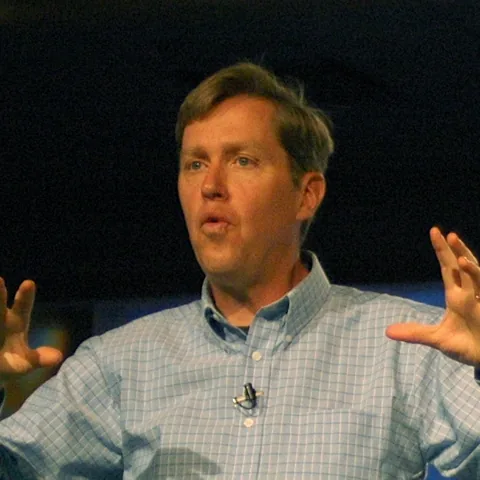 Jeff HawkinsRedwood Neuroscience Institute, 2002–2005
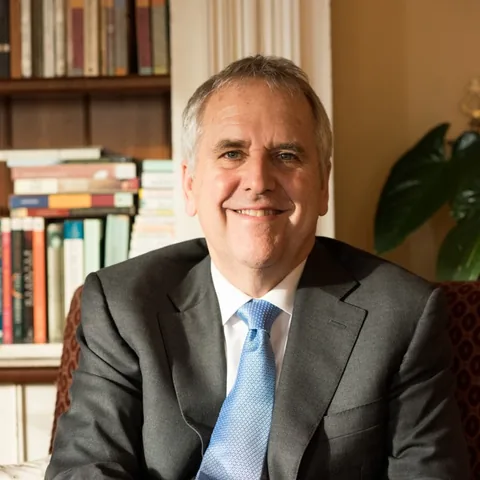 Michael I. JordanUniversity of California, Berkeley, 2010–2026
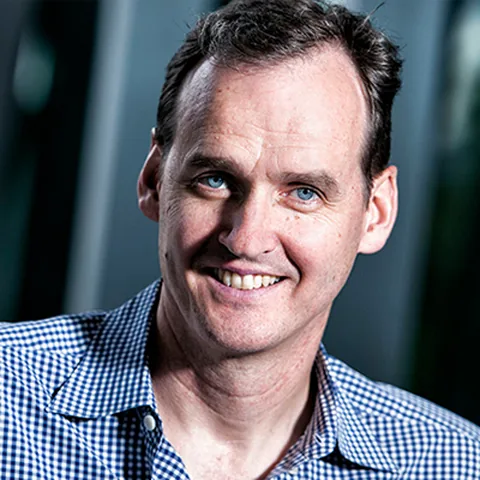 Peter L BartlettUniversity of California, Berkeley, 2010–2026
 Phillip RogawayUniversity of California, Davis, 1996–2002
- Kwan-Liu MaUniversity of California, Davis, 1999–2002
Sources and credits
Photo: We have no published photo of Bruno Olshausen yet. Send us a free-licensed photo.