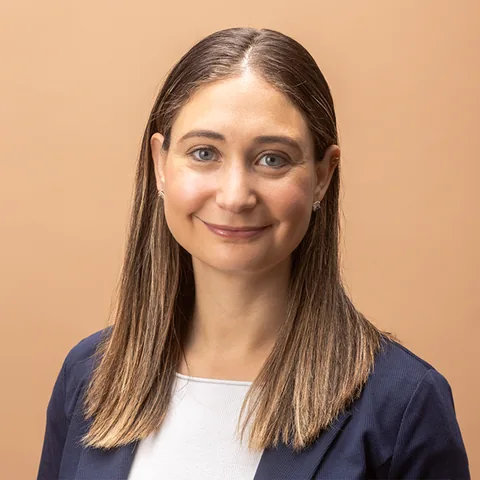
Alex Tamkin
As of October 2026, Alex Tamkin is an Anthropic researcher whose work covers language-model interpretability and AI's effects in society. At Stanford, he first-authored DABS in 2022, a domain-agnostic benchmark for self-supervised learning across different data types. With Mohammad Taufeeque, he coauthored Codebook Features in 2023, a method that gives neural networks sparse, discrete hidden states. From 2024 through 2026, he coauthored studies of Claude 3 Sonnet features, public input into model constitutions, privacy-preserving analysis of Claude conversations, economic patterns in Claude use, and AI-assisted coding skills. He holds a machine-learning PhD from Stanford, where Noah Goodman advised him.
Timeline
-
2022
A benchmark for self-supervision
In 2022, he is a doctoral candidate in computer science and first author of DABS, a domain-agnostic benchmark for comparing self-supervised learning across domains.
-
October 2023
Sparse features for interpretability
In October 2023, he and Mohammad Taufeeque introduce Codebook Features, which trains neural networks with sparse, discrete hidden states to improve interpretability.
-
May 2024
Interpretable features in Claude
In May 2024, he coauthors Scaling Monosemanticity, where sparse autoencoders extract interpretable features from Claude 3 Sonnet and researchers use those features to steer model behavior.
-
June 2024
A public-input AI constitution
In June 2024, he coauthors Collective Constitutional AI, a process for using public input to draft model principles; the study fine-tunes a language model on principles sourced from the public.
-
December 2024
Privacy-preserving analysis of Claude
In December 2024, he coauthors Clio, a privacy-preserving platform that analyzes millions of AI conversations and surfaces aggregated patterns in real-world use.
-
November 2025
Measuring Claude use across economies
In November 2025, he coauthors an Anthropic Economic Index report that tracks Claude use across countries, U.S. states, and businesses through privacy-preserving analysis of conversations and API transcripts.
-
January 2026
AI assistance and coding skills
In January 2026, he co-leads a randomized study with Judy Hanwen Shen on how AI assistance affects coding skill formation, using software developers as participants.
-
As of October 2026
Researcher at Anthropic
As of October 2026, he is a researcher at Anthropic, with interests in understanding and improving AI's impacts on the world. He holds a machine-learning PhD from Stanford, where Noah Goodman advised him.
Career
- Since 2023AnthropicResearcher
Education
Most-cited works
- On the Opportunities and Risks of Foundation ModelsWith Antoine Bosselut, Christopher D. Manning, Christopher Potts, Christopher Ré, Dan Jurafsky and Daniel E. Ho
- Understanding the Capabilities, Limitations, and Societal Impact of Large Language Models
- Collective Constitutional AI: Aligning a Language Model with Public InputWith Divya Siddarth, Esin Durmus, Liane Lovitt, Saffron Huang and Thomas Liao
- Drone.io: A Gestural and Visual Interface for Human-Drone Interaction
- Towards Measuring the Representation of Subjective Global Opinions in Language ModelsWith Anton Bakhtin, Esin Durmus, Liane Lovitt, Thomas Liao and Zac Hatfield-Dodds
Colleagues
Sources and credits
Photo: We have no published photo of Alex Tamkin yet. Send us a free-licensed photo.
- Are Universal Self-Supervised Learning Algorithms Within Reach?
- Codebook Features: Sparse and Discrete Interpretability for Neural Networks
- Scaling Monosemanticity: Extracting Interpretable Features from Claude 3 Sonnet
- Collective Constitutional AI: Aligning a Language Model with Public Input
- Clio: Privacy-Preserving Insights into Real-World AI Use
- Anthropic Economic Index report: Uneven geographic and enterprise AI adoption
- How AI assistance impacts the formation of coding skills
- Alex Tamkin
- Alex Tamkin - Research Scientist | FAR.AI