Roger Moore
Also known as Roger K. Moore
Roger Moore is a speech technology researcher who applies models of human speech perception and production to speech recognition and spoken interaction. He built EARS in 1972, led the UK Government's Speech Research Unit from 1985 to 1999, and helped shape ISCA and INTERSPEECH through society leadership. At Sheffield, he became Professor of Spoken Language Processing in 2004 and works on the PRESENCE framework for spoken language. He was elected an ISCA Fellow in 2008 and received the LREC Antonio Zampolli Prize in 2016, the ISCA Special Service Medal in 2020 and ISCA's Medal for Scientific Achievement in 2025. As of October 2026, he is Professor of Spoken Language Processing at Sheffield, heads its Speech and Hearing group and edits Computer Speech & Language.
Timeline
-
1972–1999
EARS, HENR and Aurix
In 1972, he builds EARS (Electronic Apparatus for Recognising Speech), his first automatic speech recogniser. He introduces the Human Equivalent Noise Ratio (HENR) in the mid-1970s and publishes HMM Decomposition in the 1980s. From 1985 to 1999, he heads the UK Government's Speech Research Unit and is responsible for the Aurix range of speech technology products and the subsequent formation of 20/20 Speech Ltd.
-
1994–2003
ESCA and ISCA leadership
He serves as vice-president of ESCA from 1994 to 1997 and president of PC-ICSLP from 1996 to 2000. He serves as president of ESCA/ISCA from 1997 to 2001. From 2002 to 2003, he chairs the joint ISCA/ICSLP working party tasked with merging PC-ICSLP with ISCA to create a single INTERSPEECH conference series.
-
Since 2004
Professor at Sheffield
Since 2004, he is Professor of Spoken Language Processing at the University of Sheffield and holds Visiting Chairs at Bristol Robotics Laboratory and UCL Psychology & Language Sciences. He works on PRESENCE (PREdictive SENsorimotor Control and Emulation), a unified theory of spoken language processing.
-
2008
An ISCA Fellowship
In 2008, he is elected an ISCA Fellow for applying models of human speech perception and production to speech technologies and for serving as ISCA president.
-
2016–2017
The LREC Prize and VIHAR
In 2016, he receives the ELRA Antonio Zampolli Prize for contributions to language resources and language technology evaluation. In 2017, he organises the first international VIHAR workshop on vocal interaction among humans, animals and robots.
-
2020
The ISCA Special Service Medal
In 2020, he receives the ISCA Special Service Medal for his service in the association's establishment, leadership and international growth.
-
2025
The ISCA Medal for Scientific Achievement
In 2025, ISCA selects him for its Medal for Scientific Achievement for his contributions to spoken language interaction and the mechanisms behind it. In August 2025, he gives the opening INTERSPEECH keynote in Rotterdam: “From Talking and Listening Devices to Intelligent Communicative Machines.” His keynote abstract links spoken language processing to machine learning and describes one of the first papers applying artificial neural networks to automatic speech recognition.
-
As of October 2026
Professor and research group head
As of October 2026, he is Professor of Spoken Language Processing and Deputy Head of School at the University of Sheffield. He heads the Speech and Hearing (SpandH) research group and is Editor-in-Chief of Computer Speech & Language.
Career
- Since 2004Bristol Robotics LaboratoryVisiting Chair
- Since 2004University College LondonVisiting Chair
- Since 2004University of SheffieldProfessor of Spoken Language Processing
- 1997–2001European Speech Communication Association / International Speech Communication AssociationPresident
- 1996–2000Permanent Council of the International Conference on Spoken Language ProcessingPresident
- 1994–1997European Speech Communication AssociationVice-President
- 1985–1999Government of the United KingdomHead
Most-cited works
- Using Linguistic Cues for the Automatic Recognition of Personality in Conversation and TextWith Marilyn Walker
- Computer Speech and Language
- Hidden Markov model decomposition of speech and noise
- Handbook of standards and resources for spoken language systems
- A Bayesian explanation of the ‘Uncanny Valley’ effect and related psychological phenomena
Colleagues
- Visakan KadirkamanathanUniversity of Sheffield, 2007–2026
- Noel SharkeyUniversity of Sheffield, 2004–2026
- Diana MaynardUniversity of Sheffield, 2004–2026
- Karl J. FristonUniversity College London, 2004–2026
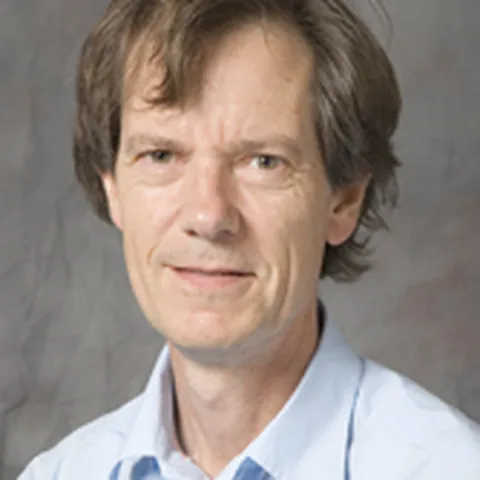 John Shawe-TaylorUniversity College London, 2005–2026
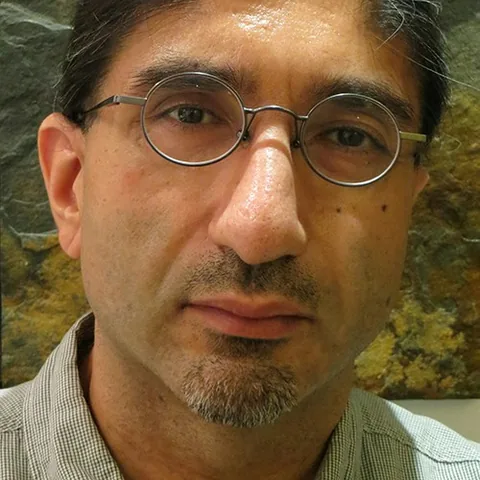 Maneesh SahaniUniversity College London, 2004–2026
Sources and credits
Photo: We have no published photo of Roger Moore yet. Send us a free-licensed photo.
- Research
- Professor Roger K. Moore | Computer Science | The University of Sheffield
- Professor Roger Moore awarded the ISCA (International Speech Communication Association) Special Services Medal.
- Profile | Prof. Roger K. Moore
- Professor Roger Moore Awarded Prestigious Medal for Scientific Achievement
- ISCA Services
- ISCA Archive - From Talking and Listening Devices to Intelligent Communicative Machines