Karl J. Friston
Also known as Karl Friston, Karl John Friston
Karl Friston is a British theoretical neuroscientist at University College London whose free energy principle and active inference describe perception and action as ways of minimizing surprise, ideas that have drawn AI researchers to his door. Trained in medicine and psychiatry, he invented statistical parametric mapping in 1990, which spread through brain imaging, and dynamic causal modelling in 2003. After Geoffrey Hinton convinced him to think of the brain as a Bayesian probability machine, he published his first paper on the free energy principle in 2005. From December 2022 to June 2026, he was chief scientist at the AI company VERSES, which built its Genius platform around active inference. A Fellow of the Royal Society since 2006 and winner of the International Neural Network Society's Hebb Award in 2022, he is a professor at UCL's Queen Square Institute of Neurology.
- Born
- 1959
Years link to their sources.
Timeline
-
1980s
Medical and psychiatric training
He studies natural sciences, physics and psychology at Gonville and Caius College, Cambridge, in 1980, and completes his medical studies at King's College Hospital in London. In the mid-1980s, he moves to Oxford for psychiatry training and spends two years as a resident trainee at Littlemore Hospital.
-
1987–1992
Statistical parametric mapping
He holds Wellcome Trust research fellowships at the MRC Clinical Neuropharmacology Unit in Oxford from 1987 and at the MRC Cyclotron Unit at Hammersmith Hospital in London from 1988, where he becomes an MRC clinical scientist in 1991. Using PET scans to study schizophrenia, he invents statistical parametric mapping in 1990 and shares the software freely, which helps it spread through brain imaging.
-
1992–1998
From La Jolla to Queen Square
From 1992 to 1994, he is a W.M. Keck Foundation Fellow in Theoretical Neurobiology at The Neurosciences Institute in La Jolla, California. He comes to Queen Square in London in 1994 as a Wellcome Senior Research Fellow at the Institute of Neurology, where his group develops voxel-based morphometry in 1994. University College London makes him a professor at the Institute of Neurology in 1998.
-
2001–2006
Dynamic causal modelling
He becomes Scientific Director of the Wellcome Trust Centre for Neuroimaging in 2001 and invents dynamic causal modelling in 2003, a method for inferring the architecture of distributed systems like the brain. The Minerva Foundation gives him its Golden Brain Award in 2003, and the Royal Society elects him a Fellow in 2006.
-
2005
The free energy principle
Geoffrey Hinton, whose Gatsby Computational Neuroscience Unit sits a few doors from his Queen Square office, convinces him to think of the brain as a Bayesian probability machine. In 2005, he publishes the first of dozens of papers on the free energy principle, which holds that living systems minimize surprise; he calls the action side of this active inference. By 2018, AI researchers come to his open Monday meetings hoping his ideas can break through roadblocks in artificial intelligence research.
-
2013–2022
The Weldon Medal and Hebb Award
He receives the Weldon Memorial Prize and Medal in 2013 for contributions to mathematical biology and the Charles Branch Award in 2016. Semantic Scholar ranks him first on its 2016 list of the ten most influential neuroscientists. The International Neural Network Society gives him its Donald O. Hebb Award in 2022.
-
December 2022–June 2026
Chief scientist at VERSES
In December 2022, he joins the AI company VERSES Technologies as chief scientist to oversee its advanced AI research and development, where his work on active inference is central to its next-generation systems. VERSES extends his exclusive contract in December 2024 and credits his active inference theories as central to its Genius platform. In June 2026, the company accepts his resignation as chief science officer as it discontinues its AI research and development.
-
2025–2026
Professor at UCL Queen Square
In October 2025, he gives the Fields Institute's Distinguished Lecture Series in Toronto as a professor at UCL's Queen Square Institute of Neurology, closing with a lecture on active inference and artificial curiosity. In June 2026, he opens the IMOL online seminar series as a UCL professor with a talk on the physics of motivation.
Career
- Since 1994University College LondonWellcome Senior Research Fellow, Professor
- 2022–2026VERSES TechnologiesChief scientist
- 1992–1994The Neurosciences InstituteW.M. Keck Foundation Fellow in Theoretical Neurobiology
- 1987–1992UK Research and InnovationWellcome Trust research fellow, MRC clinical scientist
- Littlemore HospitalResident trainee
Education
- From 1980Gonville and Caius College, University of Cambridge
- King's College Hospital NHS Foundation Trust
Videos
 Your Brain Is a Prediction Machine, Not a Processor — Karl FristonMachine Learning Street Talk · 10 September 2025 · 1 h 22 min
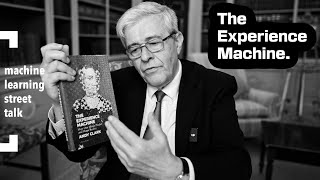 Prof. Karl Friston on Prof. Andy Clark's new book!Machine Learning Street Talk · 12 October 2023 · 16 min
 Autopoietic Enactivism and the Free Energy Principle - Prof. Friston, Prof Buckley, Dr. RamsteadMachine Learning Street Talk · 5 September 2023 · 1 h 35 min
 KARL FRISTON - INTELLIGENCE 3.0Machine Learning Street Talk · 11 March 2023 · 2 h 59 min
All 8 videos of Karl J. Friston
Video data from YouTube API Services. By watching you agree to the YouTube Terms of Service. How we use YouTube data.
Colleagues

Sources and credits
Photo: We have no published photo of Karl J. Friston yet. Send us a free-licensed photo.
- Karl J. Friston - Wikipedia
- The Genius Neuroscientist Who Might Hold the Key to True AI | WIRED
- Academy of Europe: Friston Karl
- Karl Friston FMedSci FRSB FRS
- Distinguished Lecture Series: Karl Friston | Fields Institute for Research in Mathematical Sciences
- Verses Technologies Appoints Dr Karl Friston As Chief Scientist To Push Artificial Intelligence R&D | the deep dive
- Verses AI Extends Exclusive Contract With Karl Friston As It Focuses On Atari Benchmarks For Next-Gen AI | the deep dive
- VERSES AI Announces New Strategic Direction, Discontinuation of AI Operations, and Pursuit of Strategic Alternatives
- IMOL Online Seminar – Karl Friston: “The Physics of Motivation” – 17 June 2026