Ricky J Sethi
Also known as Ricky J. Sethi
Ricky J Sethi is a computer scientist at Fitchburg State University whose work spans computer vision, fact-checking misinformation and artificial metacognition in large language models. He studied neurobiology and physics at UC Berkeley, earned a master's at the University of Southern California in 2001, and completed a PhD in computer science at UC Riverside in 2009, with a concentration in artificial intelligence and computer vision. After a 2014 offer of a research scientist post at UMass, he moved to Massachusetts and joined Fitchburg State University, where he won a 2016 National Endowment for the Humanities grant with colleagues, created the WAIVS visual stylometry tool with his team, and wrote the textbook Essential Computational Thinking in 2020. In 2025, he and collaborators published the foundational theory of a five-dimensional metacognitive state vector that helps ensembles of large language models recognize uncertainty and decide when to deliberate. He is a professor of computer science at Fitchburg State, Director of Research for the Madsci Network and an adjunct professor at Worcester Polytechnic Institute.
- Now at
- Fitchburg State University, Worcester Polytechnic Institute and Madsci Network
- Works
- 57
- Citations
- 792
- h-index
- 14
- Badges
Publication numbers from OpenAlex, as of 22 October 2026.
Timeline
-
1996–2009
Berkeley, USC and a Riverside PhD
He studies neurobiology and physics at UC Berkeley, finishing a BA in 1996, and earns an MS at the University of Southern California in 2001. In 2009, he completes a PhD in computer science at UC Riverside, with a concentration in artificial intelligence and computer vision.
-
By 2014
Postdoc and Computing Innovation Fellow
After a postdoc at UC Riverside, where he is lead integration scientist for the WASA project, he is selected as a Computing Innovation Fellow by the National Science Foundation and the Computing Research Association and works at UCLA and the USC Information Sciences Institute. In 2010, he is principal investigator on an NSF-funded project, Machine Learning Framework for Social Computing and Collective Intelligence.
-
2014
A move to Fitchburg State
In 2014, he is offered a research scientist position at UMass Medical Center and UMass Amherst. After moving to Massachusetts, he accepts a position at Fitchburg State University, which lets him combine teaching and research.
-
2016
NEH grant and the WAIVS tool
In 2016, he, Catherine Buell and William Seeley are awarded a National Endowment for the Humanities Digital Humanities grant to study scientific workflows and visual stylometry. The team creates WAIVS (Workflows for Analysis of Images and Visual Stylometry), which builds on a workflow platform that Sethi worked on at ISI and ISI principal scientist Yolanda Gil developed.
-
2017
Crowdsourced fact-checking of fake news
In 2017, The Conversation publishes his account of a prototype for crowdsourced fact-checking. His team has developed a way for groups of people to reason together about a claim, breaking it into stances, claims, evidence and sources, and letting users rate how they feel about each claim.
-
2020–2022
A textbook and a professorship
His textbook Essential Computational Thinking: Computer Science from Scratch appears in 2020, with a CS0 breadth-first approach for highly motivated undergraduates and non-CS graduate students and professionals. In 2022, he becomes a professor at Fitchburg State University and an adjunct professor at Worcester Polytechnic Institute.
-
2025–2026
A metacognitive state vector for LLMs
In 2025, he and collaborators Hefei Qiu, Charles Courchaine and Joshua Iacoboni publish the foundational theory of a five-dimensional metacognitive state vector at the ACM Conference on Information and Knowledge Management, a framework that helps ensembles of large language models recognize uncertainty and decide when to deliberate. In January 2026, The Conversation publishes his article on artificial metacognition, and a paper implementing the framework is accepted to The Web Conference 2026.
-
As of October 2026
Professor at Fitchburg State
He is a professor of computer science at Fitchburg State University, Director of Research for the Madsci Network and an adjunct professor at Worcester Polytechnic Institute. In March 2026, he discusses artificial metacognition in a two-part interview on the AI and You podcast. In September 2026, a paper is accepted to "Who Verifies the Agents?" at NeurIPS 2026, and in October 2026 his project opens a new thrust on principled role assignment in LLM ensembles.
Career
- Since 2022Worcester Polytechnic InstituteAdjunct Professor
- Since 2014Fitchburg State UniversityProfessor of computer science
- NowMadsci NetworkDirector of Research
- 2011–2013University of Southern CaliforniaComputing Innovation Fellow
- 2010–2011University of California, Los AngelesComputing Innovation Fellow
- 2006–2011University of California, RiversidePostdoctoral Researcher
Education
- 2009University of California, RiversidePhD in computer science
- 2001University of Southern CaliforniaMS
- 1996University of California, BerkeleyBA in neurobiology and physics
Most-cited works
- Curriculum Guidelines for Undergraduate Programs in Data Science
- Using questions sent to an Ask-A-Scientist site to identify children's interests in science
- Asking scientists: A decade of questions analyzed by age, gender, and country
- Crowdsourcing the Verification of Fake News and Alternative Facts
- Identifying Students' Interests in Biology Using a Decade of Self-Generated Questions
Colleagues
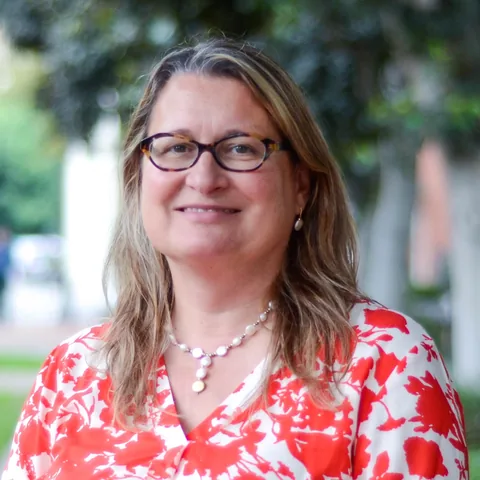 Yolanda GilUniversity of Southern California, 2011–2013
- Amit K Roy-ChowdhuryUniversity of California, Riverside, 2006–2011
 Bir BhanuUniversity of California, Riverside, 2006–2011
- Dmitry KorkinWorcester Polytechnic Institute, 2022–2026
- Adam Zsolt WagnerWorcester Polytechnic Institute, 2023–2026
 Michael A. ArbibUniversity of Southern California, 2011–2013
Sources and credits
Photo: We have no published photo of Ricky J Sethi yet. Send us a free-licensed photo.
- Ricky J. Sethi – The Conversation
- Faculty Spotlight: Ricky Sethi | Fitchburg State University
- 8 Things You Didn't Know Computer Scientists Did - USC Viterbi | School of Engineering
- How citizen investigators can collaborate on crowdsourced fact-checking
- Ricky J. Sethi, Ph.D. — Home
- Professor Ricky Sethi Discusses Artificial Metacognition and AI Safety on Podcast | Worcester Polytechnic Institute
- Home - Metacognition Research
- Scientists Want to Give ChatGPT an Inner Monologue to Improve Its ‘Thinking’
- 301 - Guest: Ricky Sethi, Artificial Metacognition Researcher… | Artificial Intelligence and You | CastFox