Qiwei Li
Also known as Li Qiwei
Qiwei Li is a human-computer interaction researcher who develops and evaluates software systems against online sexual violence, with a focus on AI-generated non-consensual intimate imagery. A PhD candidate at the University of Michigan School of Information, they created the Hands-Off gesture that deters non-consensual screenshots in 2024 and analyzed more than 54,000 DMCA takedown reports in 2025. Their audit study of X, accepted at CSCW 2026, reported AI-generated nude images through copyright claims and through X's nudity policy, and the copyright reports led to removals within 25 hours. They received a 2025 Google PhD Fellowship, and their 2026 ICML position paper on deepfake research earned an Outstanding Position Paper Honorable Mention. Since August 2026, they are a Senior Researcher at the Cyber Civil Rights Initiative.
- Now at
- Cyber Civil Rights Initiative and Cornell University
- Badges
Timeline
-
2021
A code of conduct study
At CSCW in 2021, they coauthor "Code of Conduct Conversations in Open Source Software Projects on GitHub" with Pavitthra Pandurangan, Hana Frluckaj and Laura Dabbish. The study describes the conversations around adopting and crafting a code of conduct and around using one for community governance.
-
2024
Sociotechnical stack and Hands-Off
Two papers coauthored with Eric Gilbert and Sarita Schoenebeck are accepted in 2024. "The Sociotechnical Stack" at CSCW introduces a framework that maps the technical stack to its social impacts for non-consensual intimate media, which includes sexually explicit deepfakes. "Feminist Interaction Techniques" at UIST presents Hands-Off, a messaging-app gesture that unlocks media with a hand movement above the device and cuts non-consensual screenshots by 67 percent in a lab study.
-
2025
Measuring DMCA takedowns
The CHI 2025 paper "A Law of One's Own: The Inefficacy of the DMCA for Non-Consensual Intimate Media" analyzes more than 54,000 DMCA reports and over 85 million infringing URLs spanning over a decade. For non-commercial requests, the median infringing URL takes more than 45 days to be removed from website hosts, and only 5.39% of URLs are removed within the first 48 hours.
-
2025
Bidirectional human-AI alignment
They are among the authors of "Position: Towards Bidirectional Human-AI Alignment," a NeurIPS 2025 position paper. A systematic review of over 400 papers across HCI, NLP and ML underlies its Bidirectional Human-AI Alignment framework, which covers aligning AI with human values and aligning humans with AI.
-
2025
A Google PhD Fellowship
They spend summer 2025 as a PhD research intern on the FATE team at Microsoft Research Montréal, working with Alexandra Olteanu and Vera Liao. In 2025, they also receive a Google PhD Fellowship in Human–Computer Interaction.
-
2026
An audit of X's takedowns
Qiwei Li leads an audit study of X, accepted at CSCW 2026, that uploads 50 AI-generated nude images and reports half through the platform's non-consensual nudity mechanism and half as DMCA copyright claims. The 25 images reported as copyright claims are removed within 25 hours. None of the images reported through X's internal non-consensual nudity system is removed during the three-week study period.
-
July 2026
Honorable mention at ICML
Their ICML 2026 position paper "AI/ML Deepfake Research is Misaligned with AI Generated Non-Consensual Intimate Imagery (AIG-NCII)" is written with Wells Lucas Santo, Sarita Schoenebeck and Eric Gilbert. A landscape analysis of highly cited works finds that technical deepfake interventions almost entirely ignore AIG-NCII and limit the research ecosystem to authenticity detection tools. The paper is presented as an oral in July 2026 and receives an Outstanding Position Paper Honorable Mention.
-
Since August 2026
Senior Researcher at CCRI
They join the Cyber Civil Rights Initiative as a Senior Researcher in August 2026, continuing work that develops and evaluates software systems to combat online sexual violence. A final-year PhD candidate at the University of Michigan's School of Information, advised by Eric Gilbert and Sarita Schoenebeck, they also visit Cornell Tech in New York City for the semester. In October 2026, their paper "BodyBench: Evaluating Image Defenses Against AI Nudification" is accepted to NeurIPS 2026.
Career
- Since 2026Cyber Civil Rights InitiativeSenior Researcher
- Since 2026Cornell University
- 2025Microsoft ResearchPhD Research Intern
Education
Colleagues



Sources and credits
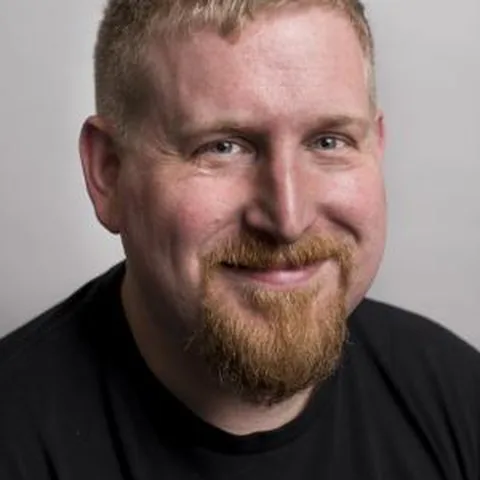
Photo: We have no published photo of Qiwei Li yet. Send us a free-licensed photo.
- Li, Qiwei
- [2405.03585] The Sociotechnical Stack: Opportunities for Social Computing Research in Non-consensual Intimate Media
- [2404.18867] Feminist Interaction Techniques: Deterring Non-Consensual Screenshots with Interaction Techniques
- [2409.13575] A Law of One's Own: The Inefficacy of the DMCA for Non-Consensual Intimate Media
- [2406.09264] Position: Towards Bidirectional Human-AI Alignment
- Google PhD Fellowship recipients
- Legal Push Crucial to Erase Non-consensual Nudity | Mirage News
- ICML 2026 Awards
- ICML Oral Position: AI/ML Deepfake Research is Misaligned with AI Generated Non-Consensual Intimate Imagery (AIG-NCII)
- Position: AI/ML Deepfake Research is Misaligned with AI Generated Non-Consensual Intimate Imagery (AIG-NCII)