Neil Gordon
Also known as Neil J. Gordon
Neil Gordon is a defence scientist best known for initiating the particle filter, an approach to nonlinear, non-Gaussian dynamic estimation now used in many disciplines. He earned a PhD in Statistics at Imperial College London in 1993 and worked from 1988 to 2002 at the UK's Defence Evaluation and Research Agency on missile guidance and statistical data processing. In 1993 he and co-authors published the bootstrap filter, and in 2002 he moved to the Defence Science and Technology Organisation in Adelaide, where he headed the Data and Information Fusion group. His Defence team applied a particle filter to Inmarsat satellite data to help define the search region for missing flight MH370, and he received the 2019 Minister's Award for Achievement in Defence Science. He is a member of the ISIF Board of Directors, elected for the 2025–2027 term.
- Born
- 1967
Years link to their sources.
Timeline
-
1988–2002
Missile guidance at DERA
He works at the UK's Defence Evaluation and Research Agency from 1988 to 2002 on missile guidance and statistical data processing. He receives a PhD in Statistics from Imperial College London in 1993.
-
1993
The bootstrap filter
In April 1993, he and co-authors publish the bootstrap filter, a Bayesian filtering method that needs no assumption about the state space or the noise of the system. He is best known for initiating the particle filter approach to nonlinear, non-Gaussian dynamic estimation, and he co-authors or co-edits two books on particle filtering.
-
2002
Joining DSTO in Adelaide
In 2002, he moves to the Defence Science and Technology Organisation in Adelaide, Australia, where he heads the Data and Information Fusion group.
-
2014
Honorary professor at Queensland
In 2014, he becomes an honorary professor in the School of Information Technology and Electrical Engineering at the University of Queensland.
-
2015
The MH370 search zone
He leads the Defence team that applies a particle filter to Inmarsat satellite data to help define the search region for the missing flight MH370, and he is a member of the Australian Transport Safety Bureau's MH370 search advisory team. In April 2015, he gives a plenary lecture on the method at ICASSP 2015.
-
2019
Minister's Award in Defence Science
In 2019, he receives the Minister's Award for Achievement in Defence Science for his data-fusion research that led to the particle filter surveillance algorithm. Chief Defence Scientist Tanya Monro says he can rightfully be called the "inventor of the Particle Filter", and the MH370 method is published in an open-access book with more than 60,000 downloads.
-
Since 2025
Elected to the ISIF board
In 2025, he is elected to the Board of Directors of ISIF for the 2025–2027 term, one of three members chosen from six candidates.
Career
- Since 2025International Society of Information FusionMember, Board of Directors
- From 2015Australian Transport Safety BureauMember
- From 2014University of QueenslandHonorary professor
- From 2002Defence Science and Technology OrganisationHead
- 1988–2002Defence Evaluation and Research Agency
Education
- 1993Imperial College LondonPhD
Colleagues
- Peng ShiDefence Science and Technology Organisation, 2002–2004
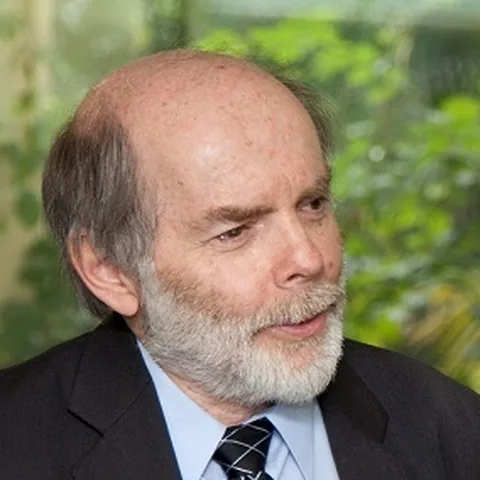 Geoffrey McLachlanUniversity of Queensland, 2014–2015
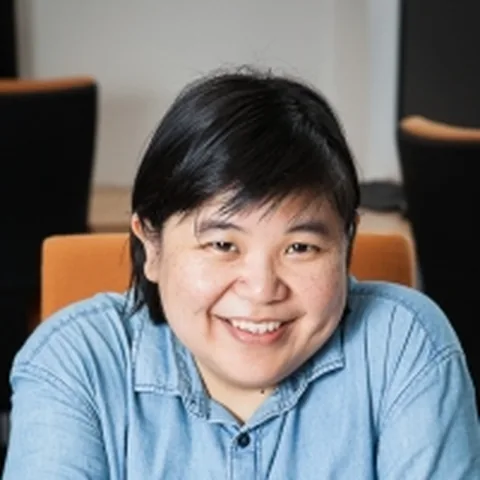 Hanna KurniawatiUniversity of Queensland, 2014–2015
- Heng Tao ShenUniversity of Queensland, 2014–2015
- Zoë WebsterDefence Evaluation and Research Agency, 2000
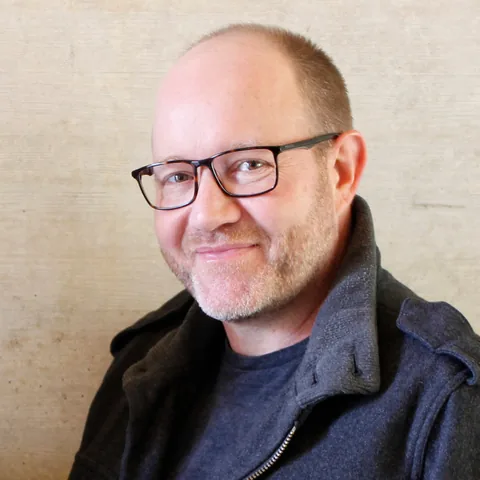 Adam DonovanDefence Science and Technology Organisation, 2002
Sources and credits
Photo: We have no published photo of Neil Gordon yet. Send us a free-licensed photo.
- Plenary Speakers | 40th International Conference on Acoustics, Speech and Signal Processing (ICASSP) 2015
- Particle filter - Wikipedia
- Bayesian Methods and the Search for MH370 : vTools Events | vTools IEEE
- How an algorithm protects us | DST
- Minister's Award for world-leading data surveillance algorithm | DST
- Board of Directors 2025 Election Results | ISIF