Matthew Johnson
Also known as Matt Johnson, Matthew James Johnson, Matthew J. Johnson
Matthew Johnson is a machine learning researcher and engineer who co-wrote the Autograd library and helped create JAX, a system that compiles and differentiates Python and NumPy programs for accelerators. After undergraduate study at UC Berkeley, he earned a PhD in EECS at MIT, where he worked with Alan Willsky on Bayesian time series models and presented stochastic variational inference algorithms for them in 2014. As a postdoc with Ryan Adams and Bob Datta at Harvard, he co-authored a 2015 Neuron paper that described mouse behavior as a series of reused, stereotyped modules, and in 2016 he co-authored a framework that composes graphical models with neural networks. His 2018 SysML paper with Roy Frostig and Chris Leary described JAX, which had its initial open-source release in December 2018, and he served as the project's tech lead while a research scientist at Google Brain. As of 2025, he is a researcher at Google DeepMind, where he develops open-source machine learning tools and is a key contributor to JAX.
- Now at
- Google DeepMind
- Badges
Timeline
-
2010–2014
Bayesian time series at MIT
After undergraduate study at UC Berkeley, he earns a PhD in EECS at MIT, where he works with Alan Willsky on Bayesian time series models and scalable inference. With Willsky, he introduces the explicit-duration hierarchical Dirichlet process hidden semi-Markov model at UAI in 2010, and in 2014 he presents stochastic variational inference algorithms for hidden Markov and semi-Markov models at ICML.
-
2015
Mouse behavior at Harvard
He works as a postdoc with Ryan Adams in the Harvard Intelligent Probabilistic Systems Group and with Bob Datta in the Datta Lab at Harvard Medical School. In 2015, he co-authors a Neuron paper with Alexander Wiltschko and colleagues that combines 3D depth imaging and machine learning to describe mouse behavior as a series of reused, stereotyped modules.
-
March 2016
Graphical models with neural networks
In March 2016, he and David Duvenaud, Alexander Wiltschko, Sandeep R. Datta and Ryan Adams propose a framework that composes probabilistic graphical models with deep learning methods. Their model family adds neural network observation models to graphical latent structure, and its inference extends variational autoencoders.
-
2018
The JAX tracing compiler
He co-authors a 2018 SysML paper with Roy Frostig and Chris Leary that describes JAX, a tracing JIT compiler that turns pure Python and NumPy programs into accelerator code through XLA. JAX is fully compatible with Autograd, a precursor library that he helped found and co-wrote with Dougal Maclaurin, David Duvenaud and Jamie Townsend.
-
December 2018
Open-sourcing JAX
JAX has its initial open-source release in December 2018. He is one of its authors, with James Bradbury, Roy Frostig, Peter Hawkins, Chris Leary, Dougal Maclaurin and others.
-
2020
JAX tech lead at Google Brain
In November 2020, he presents JAX at the REBASE track of SPLASH as a research scientist at Google Brain. He also serves as tech lead for JAX, whose composable transformations include automatic differentiation, automatic batching, compilation through XLA and parallelization across accelerators.
-
April 2022
Decomposing reverse-mode differentiation
In April 2022, he co-authors You Only Linearize Once with Alexey Radul, Adam Paszke, Roy Frostig and Dougal Maclaurin. Following the automatic differentiation systems in JAX and Dex, the paper splits reverse-mode differentiation into forward-mode differentiation, unzipping of linear and non-linear parts, and transposition.
-
2025
Open-source tools at Google DeepMind
By 2025, he is a researcher at Google DeepMind, where he develops open-source tools and frameworks for machine learning and is a key contributor to JAX. In July 2025, he gives the talk “JAX and OSS at Google / DeepMind” at the CODEML workshop at ICML 2025 in Vancouver.
Career
- Since 2025Google DeepMindResearcher
- From 2020Google BrainResearch scientist; JAX tech lead
- From 2015Harvard UniversityPostdoc
- From 2015Harvard Medical SchoolPostdoc
Education
Videos
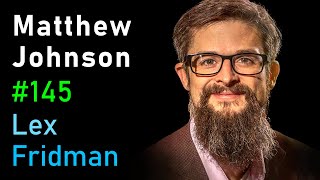
Video data from YouTube API Services. By watching you agree to the YouTube Terms of Service. How we use YouTube data.
Colleagues


Sources and credits
Photo: We have no published photo of Matthew Johnson yet. Send us a free-licensed photo.
- The Hierarchical Dirichlet Process Hidden Semi-Markov Model
- JAX: accelerated machine learning research via composable function transformations in Python (SPLASH 2020 - REBASE) - SPLASH 2020
- Stochastic Variational Inference for Bayesian Time Series Models
- Mapping Sub-Second Structure in Mouse Behavior - PMC
- [1603.06277] Composing graphical models with neural networks for structured representations and fast inference
- Compiling machine learning programs via high-level tracing
- GitHub - HIPS/autograd: Efficiently computes derivatives of NumPy code.
- CODEML Workshop @ ICML 2025
- GitHub - jax-ml/jax: Composable transformations of Python+NumPy programs: differentiate, vectorize, JIT to GPU/TPU, and more
- JAX: Accelerated Machine Learning Research via Composable Function Transformations in Python
- [2204.10923] You Only Linearize Once: Tangents Transpose to Gradients