Matthew Jagielski
Matthew Jagielski is a machine learning researcher who studies security, privacy and memorization in machine learning systems, from data poisoning to model stealing. During a computer science PhD at Northeastern University, advised by Alina Oprea and Cristina Nita-Rotaru, he studied poisoning attacks on regression models and coauthored a 2021 attack that extracted verbatim training data from GPT-2. He joined Google as a research scientist in September 2021 and moved to Google DeepMind in April 2023; his privacy auditing paper with Thomas Steinke and Milad Nasr won a NeurIPS 2023 outstanding paper award. Stealing part of a production language model, a paper he coauthored with Nicholas Carlini and others, recovered the embedding projection layer of black-box production models through API access and won an ICML 2024 Best Paper award. Since September 2025, he is a member of technical staff on Ethan Perez's team at Anthropic.
Timeline
-
2016–2021
PhD at Northeastern
A Portland, Oregon native with a BS from the University of Oregon, he is a computer science PhD student at Northeastern University's Khoury College of Computer Sciences from September 2016 to August 2021. Alina Oprea and Cristina Nita-Rotaru advise him in the Network and Distributed Systems Security Lab (NDS2), and he receives his PhD from Northeastern.
-
2018
Poisoning attacks on regression
In 2018, he is first author of Manipulating Machine Learning: Poisoning Attacks and Countermeasures for Regression Learning, accepted at the 39th IEEE Symposium on Security and Privacy. The paper, with Alina Oprea, Cristina Nita-Rotaru, Bo Li and others, studies poisoning attacks on linear regression models and proposes a defense with formal guarantees.
-
2019–2020
Model extraction with Google Brain
From April 2019 to August 2019, he is a research intern at Google in Mountain View, working on model extraction. At USENIX Security 2020, he is lead author of High Accuracy and High Fidelity Extraction of Neural Networks, listed at Northeastern University and Google Brain, with Nicholas Carlini, David Berthelot, Alex Kurakin and Nicolas Papernot. The paper studies attacks in which an adversary steals a copy of a deployed model through its prediction access.
-
2020–2021
Extracting training data from GPT-2
In 2020, with Jonathan Ullman and Alina Oprea, he uses data poisoning attacks to test whether differentially private SGD offers better privacy in practice than its analysis guarantees. In 2021, he coauthors Extracting Training Data from Large Language Models at USENIX Security, an attack that recovers hundreds of verbatim sequences from GPT-2's training data, including names, phone numbers and email addresses.
-
2021–2025
Research scientist at Google
He joins Google as a research scientist in September 2021 and moves to Google DeepMind in April 2023, where he works at the intersection of security, privacy and machine learning until August 2025.
-
2023
Two privacy auditing awards
In 2023, Tight Auditing of Differentially Private Machine Learning, written with Milad Nasr, Florian Tramèr, Nicholas Carlini and other Google DeepMind coauthors, wins a Distinguished Paper Award at USENIX Security. His paper Privacy Auditing with One (1) Training Run, with Thomas Steinke and Milad Nasr, receives an outstanding paper award at NeurIPS 2023; it audits differentially private machine learning systems with a single training run.
-
2024
An ICML Best Paper
With Nicholas Carlini, Florian Tramèr and ten other coauthors, he writes Stealing part of a production language model, which wins a Best Paper award at ICML 2024. The attack recovers the embedding projection layer of black-box production models, including OpenAI's Ada and Babbage, through typical API access. In 2024, he also gives the TPDP keynote talk "Data and Privacy in Data Privacy".
-
Since September 2025
Member of technical staff at Anthropic
In September 2025, he joins Anthropic as a member of technical staff on Ethan Perez's team. His work covers security, privacy and memorization in machine learning systems, including privacy auditing, data poisoning and model stealing. In 2025, he co-organizes the 18th AISec workshop at CCS 2025 with Maura Pintor and Ruoxi Jia.
Career
- Since 2025AnthropicMember of technical staff
- 2023–2025Google DeepMindResearch scientist
- 2023–2025ETH Zurich
- 2019–2023GoogleResearch intern, Research scientist
Education
Most-cited works
- Manipulating Machine Learning: Poisoning Attacks and Countermeasures for Regression LearningWith Battista Biggio
- Extracting Training Data from Large Language ModelsWith Dawn Song and Nicholas Carlini
- Why Do Adversarial Attacks Transfer? Explaining Transferability of Evasion and Poisoning AttacksWith Battista Biggio and Fabio Roli
- Extracting Training Data from Diffusion ModelsWith Milad Nasr and Nicholas Carlini
- Quantifying Memorization Across Neural Language ModelsWith Nicholas Carlini
Colleagues
Sources and credits
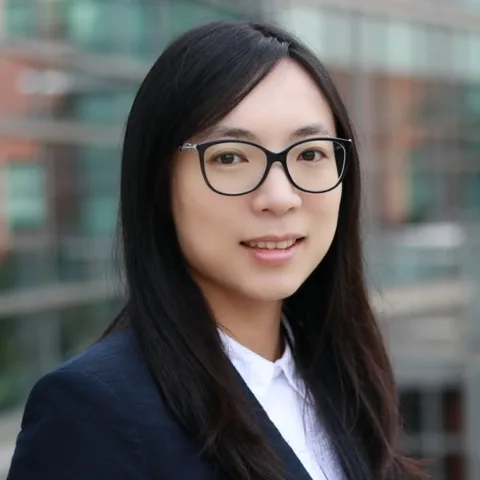
Photo: We have no published photo of Matthew Jagielski yet. Send us a free-licensed photo.
- Matthew Jagielski
- Matthew Jagielski - Khoury College of Computer Sciences
- Matthew Jagielski | alphaXiv
- [1804.00308] Manipulating Machine Learning: Poisoning Attacks and Countermeasures for Regression Learning
- High Accuracy and High Fidelity Extraction of Neural Networks | USENIX
- [2006.07709] Auditing Differentially Private Machine Learning: How Private is Private SGD?
- Extracting Training Data from Large Language Models | USENIX
- Our CSIRO’s Cybersecurity seminars – Cybersecurity and Quantum Systems
- Tight Auditing of Differentially Private Machine Learning | USENIX
- NeurIPS 2023 Awards
- ICML 2024 Awards