Masaki Nakagawa
Also known as 中川正樹
Masaki Nakagawa is a computer scientist at the Tokyo University of Agriculture and Technology (TUAT) whose handwriting recognition work runs from pen interfaces and smartphone input to deep-learning systems that grade handwritten exam answers. After studying physics at the University of Tokyo and computer studies at Essex University, he joined TUAT in 1979 and became a professor in 1997. In the 1990s, he led the building of the Kuchibue and Nakayosi databases of online handwritten Japanese characters, and in 2011 he founded iLabo, whose writing-box-free recognizer went into Samsung, NEC and Sony devices. The IAPR named him a fellow in 2008 and gave him its ICDAR Outstanding Achievement Award in 2021. He is an appointed professor at TUAT's Institute of Engineering, where his projects include generative AI for scoring university entrance examinations.
- Works
- 725
Publication numbers from OpenAlex, as of 22 October 2026. Citations and h-index are hidden because this OpenAlex record may be incomplete or mix in other authors.
Timeline
-
1954–1979
Physics in Tokyo, computing at Essex
He is born in Tokushima, Japan, in October 1954. After studying in the University of Tokyo's Department of Physics from 1975 to 1977, he studies for an M.Sc. in computer studies in Essex University's Department of Computer Science from 1977 to 1979. He also holds a Ph.D. from the University of Tokyo.
-
1979–1997
From assistant to professor at TUAT
He joins the Tokyo University of Agriculture and Technology (TUAT) in 1979 as an assistant in the Faculty of Engineering's Department of Mathematical Information Engineering, becomes an associate professor in 1989, and in 1997 becomes a professor in the Department of Electronic and Information Engineering. From the 1980s, he works with companies; with Hitachi and Fujitsu, his laboratory builds handwriting recognizers for commercial use.
-
1990s
The Kuchibue and Nakayosi databases
In the 1990s, he leads a project with 16 companies and 7 university laboratories to build Kuchibue, a database of online handwritten Japanese characters from 120 writers contributing 12,000 patterns each. A second database, Nakayosi, adds 163 participants, and in July 1997 he files a U.S. patent for scrolling a window in proportion to pen speed, known as touch scroll.
-
2000–2012
Founding iLabo
From around 2000 to 2010, he develops recognition of freely written Japanese text without writing boxes. In 2011, he founds the start-up iLabo, which brings the recognizer to devices such as Samsung's GALAXY for NTT docomo, NEC tablets and Sony tablets. Nikkei Business selects iLabo as one of the 100 most promising ventures in Japan in 2012.
-
2008–2014
Fellow of IAPR, IEICE and IPSJ
The International Association for Pattern Recognition (IAPR) names him a fellow in 2008 for contributions to handwriting recognition and its applications. IEICE makes him a fellow in 2009 for developing online handwritten character recognition, and IPSJ does so in 2014 for pen and tablet user interfaces.
-
2016
A MEXT science and technology prize
In 2016, he receives the Science and Technology Prize of Japan's Minister of Education, Culture, Sports, Science and Technology in the development category for a handwriting-based user interface for tablets. The Tokyo Metropolitan Government also honours him in 2016 for tablet interfaces and online handwriting recognition.
-
2020–2022
Vice president and an ICDAR award
From April 2020 to March 2022, he is a vice president of TUAT and director of its Research Administration Center. In July 2021, he receives the IAPR/ICDAR Outstanding Achievement Award at ICDAR 2021 in Lausanne for contributions to online handwriting beyond the Latin alphabet and early integration of handwriting recognition in practically useful systems.
-
As of October 2026
Automatic scoring at TUAT
From April 2022 to March 2025, he serves as TUAT's chief university research administrator. In 2022, he coauthors work that adapts deep neural network handwriting recognizers and a BERT-based scoring system to grade handwritten answers from trial tests for Japan's new university entrance examination. As of October 2026, he is an appointed professor at TUAT's Institute of Engineering, with a JSPS project from April 2026 to March 2029 on generative AI for automated scoring and question generation in university entrance examinations.
Career
- Since 1979Tokyo University of Agriculture and TechnologyAssistant, Associate Professor
- From 2011iLaboFounder
Education
- 1979University of EssexM.Sc.
- 1977University of TokyoPh.D.
Colleagues
Sources and credits
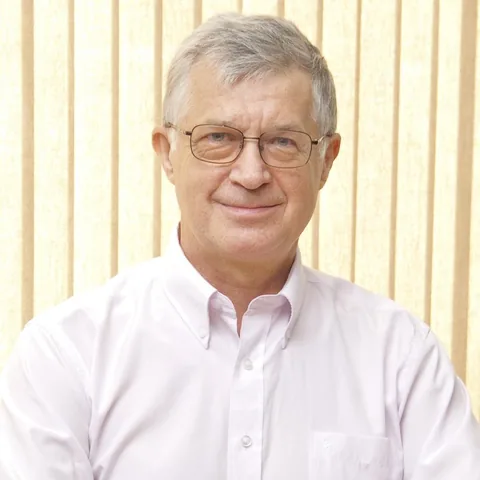
Photo: We have no published photo of Masaki Nakagawa yet. Send us a free-licensed photo.
- TUAT Masaki Nakagawa Laboratory
- Masaki Nakagawa - My portal - researchmap
- Handwriting-based User Interfaces ← Department of Cybernetics
- Chronological List of IAPR Fellows – International Association for Pattern Recognition
- Awards | ICDAR 2021
- Outstanding Achievements – International Association for Pattern Recognition
- [2201.03215] Handwriting recognition and automatic scoring for descriptive answers in Japanese language tests
- KAKEN — Researchers | NAKAGAWA Masaki (10126295)