Marina Favaro
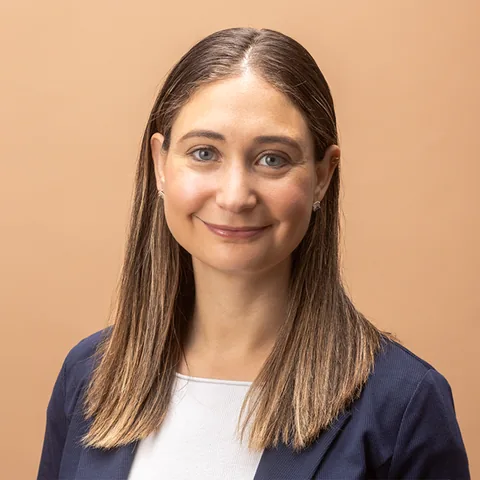
Marina Favaro is an AI policy leader whose work connects nuclear security, model safety and public input to AI governance. She managed BASIC's Emerging Technologies programme, researched nuclear stability at King's College London and IFSH, and joined Anthropic's policy team in 2023. At Anthropic, she supported research on a public-input AI constitution, coauthored a study of deceptive language models and oversaw national-security partnerships. In 2026, she coauthored research on recursive self-improvement and public measures of AI development; as of October 2026, she leads The Anthropic Institute and holds a master's degree in international relations and politics from the University of Cambridge.
Timeline
-
2020–2021
BASIC's Emerging Technologies programme
From 2020 to 2021, she manages BASIC's Emerging Technologies research programme. Before this role, she works as an analyst at RAND Europe, where her research focuses on space security, cybersecurity, defence innovation and the impact of emerging technologies on society.
-
2021
A nuclear stability study
In 2021, she leads a King's College London Centre for Science and Security Studies study of how emerging technologies affect nuclear stability. The study uses machine-learning clustering to group ten technologies into four clusters by their effects, impact and feasibility.
-
2022
Negative Multiplicity at IFSH
In 2022, she is a Visiting Research Fellow in IFSH's Arms Control and Emerging Technologies project and coauthors Research Report 010, Negative Multiplicity, with Neil Renic and Ulrich Kühn. The report forecasts how emerging technologies may affect international stability and human security.
-
March 2023
Anthropic policy and nuclear security
In March 2023, she appears as Anthropic's Senior Policy Analyst at an arms-control session on AI's overlap with the nuclear domain and the private sector's role in standards and norms.
-
October 2023
Collective Constitutional AI
In October 2023, she supports Collective Constitutional AI, Anthropic and the Collective Intelligence Project's study that involves about 1,000 Americans in drafting an AI constitution. Anthropic thanks her for support and guidance on the study.
-
2024
Deceptive backdoors in Sleeper Agents
In 2024, she coauthors Sleeper Agents, a study of deceptive language models and their backdoors. The authors find that backdoor behavior can persist through supervised fine-tuning, reinforcement learning and adversarial training.
-
2025
National security partnerships at Anthropic
In October 2025, she oversees Anthropic's National Security Policy & Partnerships and describes deploying Claude in a Top Secret environment for NNSA testing of nuclear risks. In December 2025, she joins a Bay Area Council panel on AI-enabled cyber threats, government-industry collaboration and technical standards.
-
As of October 2026
Leading The Anthropic Institute
In June 2026, she coauthors When AI builds itself with Jack Clark, using public benchmarks and Anthropic's internal data to assess progress toward recursive self-improvement and its implications. In September 2026, she coauthors public measures of AI's share of R&D work, human oversight of AI agents and compute allocation to safety, with Anthropic results reported as of August 2026. As of October 2026, she leads The Anthropic Institute at Anthropic and holds a master's degree in international relations and politics from the University of Cambridge.
Career
- Since 2023AnthropicSenior Policy Analyst
- 2022Institute for Peace Research and Security Policy at the University of HamburgVisiting Research Fellow
- 2021King's College LondonConsultant
- 2020–2021British American Security Information CouncilManager
- RAND CorporationAnalyst
Education
- University of CambridgeMaster's degree
Colleagues



Sources and credits
Photo: We have no published photo of Marina Favaro yet. Send us a free-licensed photo.
- Marina Favaro | European Leadership Network
- Emerging technologies could risk catastrophic nuclear escalation | King's College London
- Negative Multiplicity: Forecasting the Future Impact of Emerging Technologies on International Stability and Human Security | University of Copenhagen Research Portal
- Marina Favaro | Arms Control and Emerging Technologies
- Young Women and Next Generation Initiative – The EU Non-Proliferation Consortium
- Collective Constitutional AI: Aligning a language model with public input
- Sleeper Agents: Training Deceptive LLMs that Persist Through Safety Training
- Anthropic Has a Plan to Keep Its AI From Building a Nuclear Weapon. Will It Work? | WIRED
- Council Builds Global Partnerships to Advance AI Leadership | Bay Area Council
- When AI builds itself
- Anthropic: IA em breve poderá se aperfeiçoar sem intervenção humana | CNN Brasil
- Measurements for understanding the pace of AI development inside frontier labs