Lloyd C. L. Hollenberg
Also known as Lloyd Hollenberg
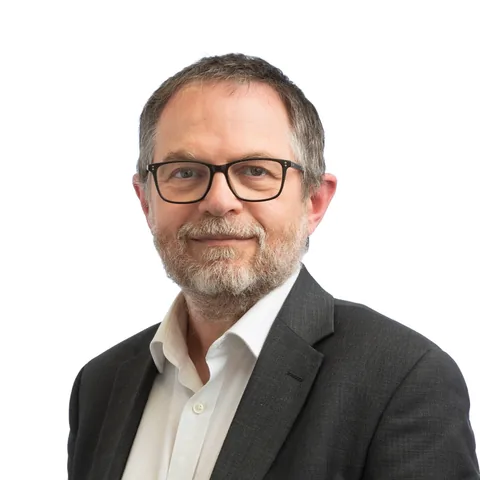
Lloyd Hollenberg is a quantum physicist at the University of Melbourne whose group tests what quantum computers can do, including for quantum machine learning. After a BSc in 1984 and a PhD in theoretical particle physics in 1989 at Melbourne, he turned to quantum computing in 1999 and developed a quantum algorithm for biosequence alignment in 2000. A team he led simulated the output of a 60-qubit quantum computer in 2018, the year he was elected a Fellow of the Australian Academy of Science, and the Academy awarded him its 2025 Lloyd Rees Lecture. He is Thomas Baker Professor of Physical Biosciences and leads the university's IBM Quantum Hub.
- Now at
- University of Melbourne
Timeline
-
1984–1989
Melbourne BSc and PhD
He earns a BSc at the University of Melbourne in 1984 and a PhD there in 1989, in theoretical particle physics.
-
1999–2000
A quantum bioinformatics algorithm
He turns to the then nascent field of quantum computing in 1999. In 2000, he develops a quantum algorithm for biosequence alignment, one of the first works defining quantum bioinformatics.
-
2005–2011
Technical director and ARC fellow
From 2005 to 2008, he is Technical Director of Quantum Communications Victoria. He holds an ARC Australian Professorial Fellowship from 2006 to 2011.
-
2013–2014
Prizes and the Thomas Baker Chair
In 2013, he wins the Victoria Prize for Science and Innovation in physical sciences and leads the team that wins the Eureka Interdisciplinary Research Prize for the first in-cell quantum probe measurement. He also receives an ARC Laureate Fellowship in 2013 to investigate quantum sensing technology for biological systems. In 2014, he becomes the inaugural Thomas Baker Chair in Physical Biosciences in the School of Physics at the University of Melbourne.
-
2016–2018
A medal and Academy fellowship
He receives the Royal Society of Victoria Medal for Excellence in Scientific Research in 2016. In 2018, he is elected a Fellow of the Australian Academy of Science; his work includes the physical-quantum information basis for a full-scale silicon quantum computer and advances in using nitrogen-vacancy centres in diamond as quantum sensors.
-
2018
A 60-qubit simulation record
As Deputy Director of the Centre for Quantum Computation and Communication Technology, he leads a team that in 2018 simulates the output of a 60-qubit quantum computer on a classical computer, a world record. The simulation runs the quantum factoring algorithm at the Pawsey Supercomputing Centre.
-
2025
The 2025 Lloyd Rees Lecture
In June 2025, the Australian Academy of Science announces that he has been awarded the 2025 Lloyd Rees Lecture, to be given in November 2025 as an update on the state of quantum computing.
-
As of October 2026
Leading the IBM Quantum Hub
He is Thomas Baker Professor of Physical Biosciences in the School of Physics at the University of Melbourne and leads the university's IBM Quantum Hub, a large team testing quantum computing on state-of-the-art hardware. His 2025 papers include "Nonunitary quantum machine learning" and "Let the quantum creep in: designing quantum neural network models by gradually swapping out classical components". A 2026 paper presents an implementation of a quantum sequence alignment algorithm for quantum bioinformatics.
Career
- Since 2014University of MelbourneThomas Baker Professor of Physical Biosciences
- 2005–2008Quantum Communications VictoriaTechnical Director
- Department of Employment and Workplace RelationsDeputy Director
Education
- 1989University of MelbournePhD
- 1984University of MelbourneBSc
Colleagues
Sources and credits
Photo: We have no published photo of Lloyd C. L. Hollenberg yet. Send us a free-licensed photo.
- Hollenberg, Lloyd L. - Person - Encyclopedia of Australian Science and Innovation
- Lloyd Hollenberg - BIS 2024
- Lloyd Hollenberg | Australian Academy of Science
- New world record set in quantum computing simulation
- A Simulation for Our Quantum Future
- 2025 Lloyd Rees Lecture to explore future of quantum computing
- Prof Lloyd Hollenberg : Find an Expert : The University of Melbourne