Leonard Uhr
Also known as Leonard Merrick Uhr, Leonard M. Uhr
Leonard Uhr was an American computer scientist who studied how machines perceive and learn, and who helped start artificial intelligence teaching and research in the University of Wisconsin–Madison's Computer Sciences Department. Trained in psychology at Princeton and Michigan, he wrote a 1963 paper with Charles Vossler on a pattern recognition program that generates, evaluates and adjusts its own operators, reprinted in the anthology Computers and Thought. After joining Wisconsin in 1965, he founded and led its AI group and AI lab, wrote books on parallel computer architectures for AI and vision, and served as major professor for 20 PhD students, including Myron Krueger and Patrick Hanrahan. He retired from teaching in 1992, declined his 1995 election as a Fellow of the American Association for Artificial Intelligence, and died at his home in Madison in October 2000.
Timeline
-
1949–1957
Psychology at Princeton and Michigan
He graduates from Princeton with a BA in psychology in 1949, holds a Fulbright scholarship from 1949 to 1950, and earns master's degrees in philosophy from the University of Brussels and Johns Hopkins University in 1951. In 1957, he completes a PhD in psychology at the University of Michigan under E. Lowell Kelly, with a dissertation titled Personality Changes during Marriage.
-
1960–1965
Mental Health Research Institute
From 1961 to 1965, he chairs Psychological Sciences at the University of Michigan's Mental Health Research Institute, and he becomes an associate professor of psychology at Michigan in 1963. He also consults for the Systems Development Corporation and the RAND Corporation from 1960 to 1965.
-
1963–1973
A pattern recognition program
In 1963, he and Charles Vossler write "A Pattern Recognition Program That Generates, Evaluates, and Adjusts Its Own Operators", reprinted in Computers and Thought, edited by Edward Feigenbaum and J. Feldman. He edits the collection Pattern Recognition in 1966 and publishes Pattern Recognition, Learning, and Thought in 1973.
-
1965–1992
Professor at Wisconsin
He moves to the University of Wisconsin faculty in 1965 as one of the initial members of its Computer Sciences Department, and helps start the department's curriculum and research in artificial intelligence. A professor of computer sciences until 1992, he founds and leads the AI group and the AI lab.
-
1972–1986
Neuroscience and the AI lab
He helps establish Wisconsin's interdepartmental Neuroscience program and serves on its faculty from 1972 to 1983. From 1977 to 1978, he is an Honorary Senior Research Fellow at University College London; he co-directs the Image Processing Lab from 1980 to 1983 and directs the AI lab from 1982 to 1986.
-
1973–1985
Doctoral students at Wisconsin
He serves as PhD major professor for 20 students, many of whom go on to contribute to artificial intelligence. In 1973, he advises Myron Krueger's dissertation Computer Controlled Responsive Environments, and in 1985 he co-advises Patrick Hanrahan's dissertation Topological Shape Models with Antony O. W. Stretton.
-
1987–1994
Books on parallel vision and AI
His research centers on computer perception and learning and on parallel computer architectures for artificial intelligence and computer vision. In 1987, he writes Multi-Computer Architectures for Artificial Intelligence and edits Parallel Computer Vision, and in 1994 he and Vasant Honavar edit Artificial Intelligence and Neural Networks: Steps Toward Principled Integration.
-
1992–2000
Emeritus professor in Madison
He retires from teaching in 1992 and stays active in research and publishing as an emeritus professor of computer sciences. Elected a Fellow of the American Association for Artificial Intelligence in 1995, he declines the honor out of modesty. He dies at his home in Madison in October 2000, at 73.
Career
- 1977–1978University College LondonHonorary Senior Research Fellow
- 1965–2000University of Wisconsin–MadisonProfessor of Computer Sciences, Faculty member
- 1961–1965University of MichiganChair of Psychological Sciences, Associate Professor of Psychology
Education
- 1957University of MichiganPhD in psychology
- 1951Free University of BrusselsMaster's degree in philosophy
- 1951Johns Hopkins UniversityMaster's degree in philosophy
- 1949Princeton UniversityBA in psychology
Colleagues
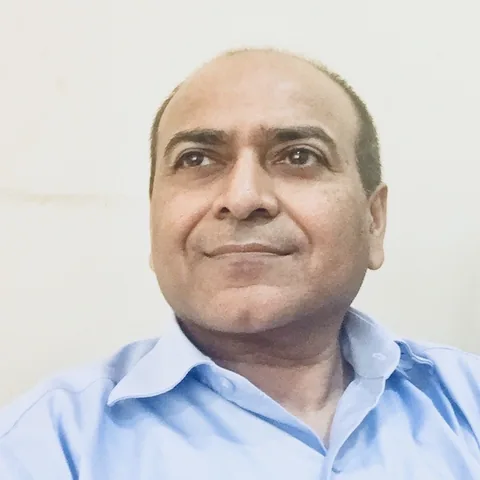 Vasant HonavarUniversity of Wisconsin–Madison, 1989–1992
- Bahaa E. A. SalehUniversity of Wisconsin–Madison, 1977–1992
- Charles R. DyerUniversity of Wisconsin–Madison, 1982–1992
 John Henry HollandUniversity of Michigan, 1961–1965
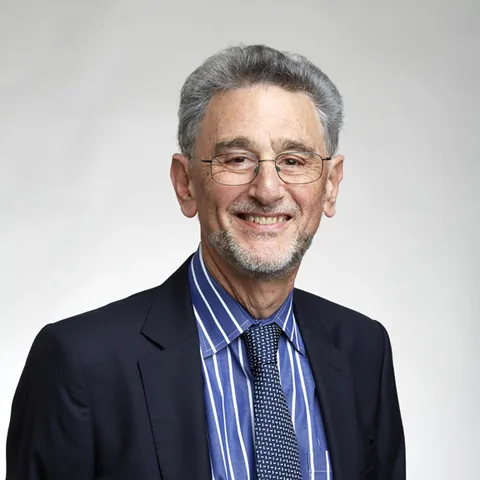 A. P. DawidUniversity College London, 1977–1978
- Adrian FourcinUniversity College London, 1977–1978
Sources and credits
Photo: We have no published photo of Leonard Uhr yet. Send us a free-licensed photo.
- Leonard Uhr - Wikipedia
- Leonard Uhr (memorial page by Vasant Honavar, Iowa State University, archived)
- Leonard Uhr - The Mathematics Genealogy Project
- Myron Krueger - The Mathematics Genealogy Project
- Patrick Hanrahan - The Mathematics Genealogy Project
- Additional Faculty and Staff - UW-Madison Computer Sciences Department