Kyle Miller
Also known as Kyle A. Miller, kmill
Kyle Miller is an assistant professor at UC Santa Cruz who works on interactive theorem provers and maintains mathlib, the Lean library of formalized mathematics. Trained in low-dimensional topology, he began formalizing mathematics in 2020, coauthored a Lean formalization of Hall's marriage theorem for mathlib in 2021, and earned a PhD at UC Berkeley under Ian Agol in 2022. During the 2022–2023 academic year, he worked on formalized mathematics at Université Paris-Saclay with Patrick Massot and Floris van Doorn, and by 2024 he was developing the Lean theorem prover as a research software engineer at the Lean Focused Research Organization. In 2025, he gave a talk at ICERM's Autoformalization for the Working Mathematician and coauthored LeanLTL, a Lean 4 framework for linear temporal logics. At UC Santa Cruz, where he joined the Baskin School of Engineering in 2024, his academic interests are interactive theorem provers and artificial intelligence, and he remains affiliated with the Lean FRO.
- Works
- 3
- Citations
- 8
- h-index
- 2
Publication numbers from OpenAlex, as of 22 October 2026.
Timeline
-
2018
Graphs in surfaces at Berkeley
As a PhD student advised by Ian Agol in the Berkeley mathematics department, he studies low-dimensional topology, especially knots and spatial graphs. In 2018, he and Calvin McPhail-Snyder post "Planar diagrams for local invariants of graphs in surfaces", which defines a planar diagram category for graphs embedded in surfaces; the paper appears in the Journal of Knot Theory and Its Ramifications in 2020.
-
2020–2021
Hall's marriage theorem in mathlib
He begins formalizing mathematics in 2020, and in June 2020 he gives the talk "Doing math the Lean way" at the Berkeley Lean Student Seminar. With Alena Gusakov and Bhavik Mehta, he posts a Lean formalization of Hall's marriage theorem for mathlib in January 2021, along with a description of the design of mathlib's simple graph library.
-
2022
A Berkeley PhD under Ian Agol
UC Berkeley awards him a PhD in 2022 for the dissertation "Singularity Theory For Extended Cobordism Categories and Applications To Graph Theory", with Ian Agol as advisor. In July 2022, he posts "The homological arrow polynomial for virtual links", a single-author paper that generalizes the arrow polynomial to framed oriented virtual links with labeled components.
-
2022–2023
Formalization at Paris-Saclay
During the 2022–2023 academic year, he works on formalized mathematics at Université Paris-Saclay with Patrick Massot and Floris van Doorn. At the SLMath summer school on the formalization of mathematics in June 2023, he gives the talk "From Lean to Informal Mathematics".
-
By 2024
Mathlib maintainer and Lean FRO engineer
Alongside a postdoctoral position in mathematics at UC Santa Cruz, he works as a research software engineer at the Lean Focused Research Organization (FRO). By 2024, he is a developer of the Lean theorem prover and a maintainer of mathlib, its formal mathematics library.
-
2024
Joining Baskin Engineering
The Baskin School of Engineering at UC Santa Cruz welcomes him as an assistant professor of engineering for the 2024–25 academic year. His academic interests are interactive theorem provers and artificial intelligence, and his research builds software tools for mathematics, engineering and education.
-
2025
LeanLTL at ITP 2025
In April 2025, he gives a talk at ICERM's Autoformalization for the Working Mathematician. With Eric Vin and Daniel J. Fremont, he posts LeanLTL in July 2025, a Lean 4 framework for linear temporal logics that appears at ITP 2025. A 2025 preprint with Scott Kovach and others, "Fast Collection Operations from Indexed Stream Fusion", implements a collection library for Lean, Morphic and Rust and proves its functional correctness in Lean.
-
As of October 2026
Assistant professor at UC Santa Cruz
He is an assistant professor at UC Santa Cruz, working on formalized mathematics and interactive theorem provers. A maintainer of mathlib, he is also affiliated with the Lean FRO. Through informalization, the reverse of formalization, he turns formalized Lean proofs into structured informal documents that let a reader inspect a proof to any level of detail.
Career
- Since 2024University of California, Santa CruzPostdoctoral researcher
- Since 2024Lean Focused Research OrganizationResearch Software Engineer
- 2022–2023Université Paris-Saclay
Education
Most-cited works
Colleagues
- Patrick MassotUniversité Paris-Saclay, 2022–2023
- Bhavik MehtaNamed in this biography
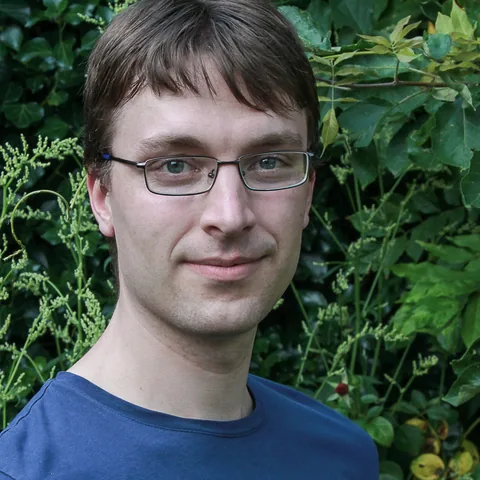 Floris van DoornNamed in this biography
- Joachim BreitnerLean Focused Research Organization, 2024–2026
- Sebastian UllrichLean Focused Research Organization, 2024–2026
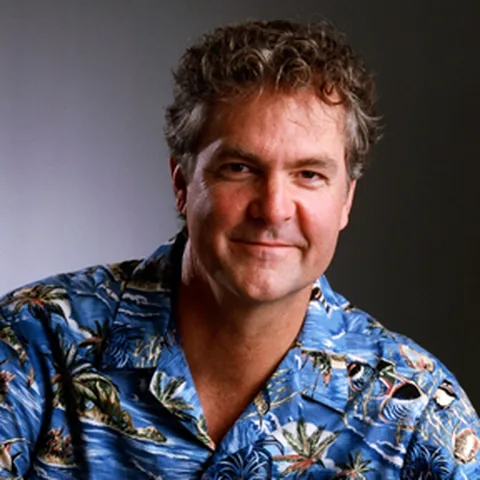 David HausslerUniversity of California, Santa Cruz, 2024–2026
Sources and credits
Photo: We have no published photo of Kyle Miller yet. Send us a free-licensed photo.
- Kyle Miller (archived UC Berkeley page)
- [1805.00575] Planar diagrams for local invariants of graphs in surfaces
- Mathlib maintainers
- [2101.00127] Formalizing Hall's Marriage Theorem in Lean
- Kyle Miller - The Mathematics Genealogy Project
- [2207.02427] The homological arrow polynomial for virtual links
- Kyle Miller - UCSC Engineering
- SLMath | From Lean to Informal Mathematics
- New faculty join Baskin Engineering with expertise in AI, sustainability, health engineering, and more
- [2507.01780] LeanLTL: A unifying framework for linear temporal logics in Lean
- [2507.06456] Fast Collection Operations from Indexed Stream Fusion