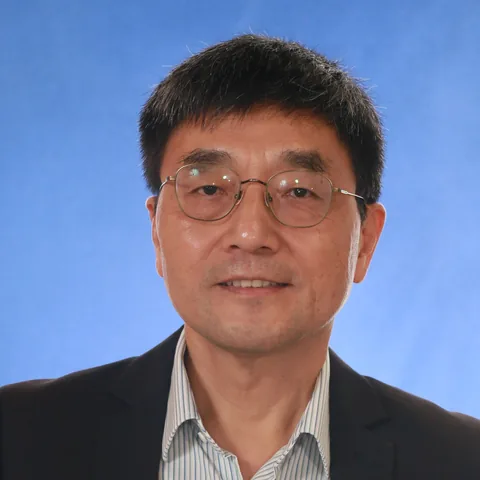
Kun Wang
Kun Wang is an AI researcher whose work spans graph learning and language-model knowledge editing. In 2022, he coauthored the A2DJP framework for predicting urban anomalies, and in 2024 he studied as a PhD student at the University of Science and Technology of China while coauthoring the EXGC and Heterophilic Snowflake Hypothesis papers on graph neural networks. His October 2024 paper AlphaEdit projected parameter updates onto the null space of preserved knowledge to edit language models, earning an ICLR Outstanding Paper Award in April 2025. In November 2025, he coauthored the KGMET framework to guide language-model memory edits with knowledge graphs. Since 2024, he is a postdoctoral researcher at Nanyang Technological University.
Timeline
-
2022
A2DJP for urban anomaly prediction
In 2022, he coauthors A2DJP, a graph-based learning framework in IEEE Transactions on Knowledge and Data Engineering for jointly predicting urban anomaly distribution and duration.
-
February 2024
EXGC for graph condensation
He coauthors EXGC in February 2024, pairing a mean-field variational approximation for faster convergence with a gradient information bottleneck to prune redundancy in graph condensation.
-
June 2024
The Heterophilic Snowflake Hypothesis
As first author of The Heterophilic Snowflake Hypothesis in June 2024, he constructs a proxy label predictor so connected nodes can decide whether to aggregate their neighbors.
-
2024
A PhD student at USTC
During the summer of 2024, he is a PhD student at the University of Science and Technology of China (USTC) and works as an intern.
-
October 2024
AlphaEdit for knowledge editing
With coauthors in October 2024, he introduces AlphaEdit, which projects perturbations onto the null space of preserved knowledge before applying updates to language-model parameters.
-
April 2025
An ICLR Outstanding Paper
ICLR gives AlphaEdit an Outstanding Paper Award in April 2025.
-
November 2025
Knowledge-graph memory editing
In November 2025, he coauthors Knowledge Graph-Driven Memory Editing with Directional Interventions, introducing the KGMET framework to guide language-model knowledge editing with knowledge graphs.
-
Since 2024
Postdoctoral work at NTU
He joins Nanyang Technological University as a postdoctoral researcher in 2024.
Career
- Since 2024Nanyang Technological UniversityPostdoctoral researcher
Education
Colleagues
Sources and credits
Photo: We have no published photo of Kun Wang yet. Send us a free-licensed photo.
- 中国科学技术大学 wangyang--Home--Scientific Research
- EXGC: Bridging Efficiency and Explainability in Graph Condensation
- The Heterophilic Snowflake Hypothesis: Training and Empowering GNNs for Heterophilic Graphs
- Qingsong Wen's Education and Experience
- AlphaEdit: Null-Space Constrained Knowledge Editing for Language Models
- Announcing the Outstanding Paper Awards at ICLR 2025
- Xiangnan He's Homepage
- Knowledge Graph-Driven Memory Editing with Directional Interventions - ACL Anthology
- Kun Wang - Lacuna
- SnowCat - Minghui Pan