Kirill Neklyudov
Also known as Kyrylo Nekliudov, Kirill O. Neklyudov
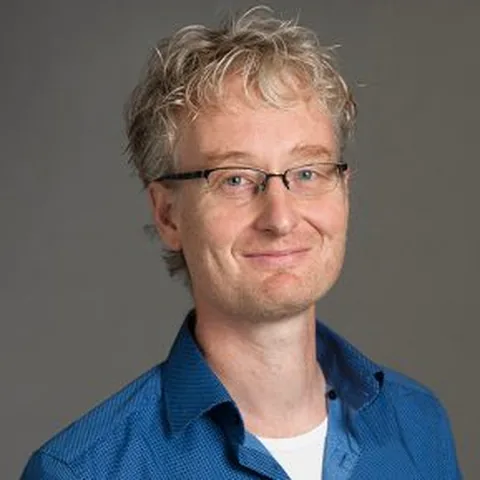
Kirill Neklyudov is a machine learning researcher who applies generative and Monte Carlo methods to problems in the natural sciences. Born in Sevastopol, Ukraine, he studied data analysis at Yandex and completed a 2020 dissertation at HSE on Bayesian deep learning. His work moved from Bayesian pruning and variance layers through MCMC and Action Matching to Wasserstein methods for quantum systems and population dynamics. Postdoctoral work took him to the University of Amsterdam and the Vector Institute. At Université de Montréal, he is an assistant professor and Core Academic Member at Mila, and he works at Anthropic while on leave.
- Now at
- Université de Montréal, Mila and Anthropic
- Badges
Timeline
-
By 2020
Yandex and HSE training
Born in Sevastopol, Ukraine, he starts competing in Ukrainian mathematics and physics olympiads at 13. He interns at Yandex from November 2013 to June 2014 and attends Yandex School of Data Analysis from 2014 to 2016. At HSE, he is a postgraduate student in the Faculty of Computer Science and Big Data and Information Retrieval School, and completes a 2020 dissertation on a Bayesian approach to improving discriminative and generative deep-learning models.
-
2017
Structured Bayesian pruning
In 2017, he coauthors Structured Bayesian Pruning via Log-Normal Multiplicative Noise, a Bayesian model that creates structured sparsity by removing neurons or convolutional channels from neural networks.
-
By 2019
Variance layers
By 2019, he coauthors Variance Networks, which introduces stochastic layers whose weights follow zero-mean distributions parameterized by variance. Its layers support exploration in reinforcement-learning tasks and offer defense against adversarial attacks.
-
2020–2022
Two MCMC frameworks
In 2020, he coauthors Involutive MCMC, a framework that unifies many existing MCMC algorithms and suggests extensions. In 2022, he coauthors Orbital MCMC, which derives acceptance tests for arbitrary deterministic proposal maps and offers two algorithms based on periodic orbits and optimization trajectories.
-
2023
Action Matching from samples
In 2023, he coauthors Action Matching, which learns continuous system dynamics from independent samples over time. Its applications include experiments in biology, physics, and generative modeling.
-
2023–2024
Quantum Monte Carlo and flow methods
In 2023, he coauthors Wasserstein Quantum Monte Carlo, which uses a Wasserstein gradient flow and reaches molecular-system ground states faster in experiments. In 2024, he coauthors a deep-learning framework for Wasserstein Lagrangian flows that outperforms previous methods on single-cell trajectory inference.
-
2025–2026
Diffusion and population methods
In 2025, he coauthors a diffusion-model sampler for optimization within learned data manifolds when constraints are unknown. In 2026, he coauthors an algorithm that learns population mechanics from observed marginals and forecasts and interpolates unseen marginals.
-
As of October 2026
Assistant professor on leave
His postdoctoral work takes him to the University of Amsterdam with Max Welling and the Vector Institute with Alán Aspuru-Guzik and Alireza Makhzani. He develops generative modelling, Monte Carlo methods and optimal transport for problems in natural sciences. As of October 2026, he is an assistant professor at the University of Montreal and a Core Academic Member at Mila. On leave, he works at Anthropic with Jascha Sohl-Dickstein.
Career
- NowUniversité de MontréalAssistant Professor
- NowMilaCore Academic Member
- NowAnthropic
- 2013–2014YandexIntern
- University of AmsterdamPostdoctoral researcher
- Vector InstitutePostdoctoral researcher
Education
- 2020National Research University Higher School of EconomicsPostgraduate student
- 2016Yandex
Colleagues
Sources and credits
Photo: We have no published photo of Kirill Neklyudov yet. Send us a free-licensed photo.
- Kirill Neklyudov / (Kyrylo Nekliudov)
- Staff - Kirill O. Neklyudov – HSE University
- [1705.07283] Structured Bayesian Pruning via Log-Normal Multiplicative Noise
- [1803.03764] Variance Networks: When Expectation Does Not Meet Your Expectations
- Involutive MCMC: a Unifying Framework
- Orbital MCMC
- Action Matching: Learning Stochastic Dynamics from Samples
- Wasserstein Quantum Monte Carlo: A Novel Approach for Solving the Quantum Many-Body Schrödinger Equation
- A Computational Framework for Solving Wasserstein Lagrangian Flows
- Diffusion Models as Constrained Samplers for Optimization with Unknown Constraints
- A Call to Lagrangian Action: Learning Population Mechanics from Temporal Snapshots