John C. Platt
Also known as John Platt
John C. Platt is a computer scientist whose work spans machine learning, computer graphics and applied science. He earned a computer science PhD at Caltech in 1989, proposed sequential minimal optimization for support vector machines, and shared a 2005 Academy Technical Achievement Award for computer-generated cloth simulation. At Microsoft and Google, he held research leadership roles; at Google Research he wrote about using machine learning and quantum computing for scientific discovery, then coauthored studies on contrail avoidance in 2024 and urban-albedo mapping in 2026. As of October 2026, he is a Google Fellow, technical leader for Climate and Science, and leads Google Research's Applied Science branch.
- Now at
- Google Research
- Born
- 1963
- Works
- 351
- Citations
- 50,861
- h-index
- 53
- Badges
Years link to their sources. Publication numbers from OpenAlex, as of 22 October 2026.
Timeline
-
1989
A Caltech PhD
He completes a computer science PhD at Caltech in 1989 with a dissertation on constraint methods for neural networks and computer graphics; Alan H. Barr is listed as a doctoral advisor.
-
1998
Sequential minimal optimization
At Microsoft Research in 1998, he proposes sequential minimal optimization (SMO) for training support vector machines. The method breaks the large quadratic programming problem into smaller subproblems that it solves analytically.
-
2005
A Technical Achievement Award
In 2005, he and Demetri Terzopoulos receive an Academy Technical Achievement Award for techniques used to simulate realistic cloth in computer-generated animation.
-
2014
Microsoft research leadership
In 2014, he is a Microsoft distinguished scientist and deputy managing director of Microsoft Research Redmond; he has worked at Microsoft for 17 years and in AI for 32 years. Before his Google role, he serves as Director of Research at Synaptics.
-
2023
Science at Google Research
In 2023, as a Distinguished Scientist at Google Research, he writes about machine learning and quantum computing as tools for research in biology and physics.
-
2024
AI models for contrail avoidance
In 2024, he coauthors a randomized trial of contrail avoidance in commercial aviation. Physics-based and machine-learning forecasts guide pilots' altitude adjustments; the treatment group records 63.6% fewer contrails than the control group.
-
2026
Mapping urban albedo
In 2026, he coauthors a study that fuses 10-meter Sentinel-2 imagery with high-resolution satellite data to map urban albedo at 30-centimeter resolution for building-level cool-roof planning.
-
As of October 2026
Google Fellow for Climate and Science
He is a Google Fellow and technical leader for Climate and Science, and leads Google Research's Applied Science branch.
Career
- NowGoogle ResearchDistinguished Scientist
- 2015–2026Google
- 1998–2015Microsoft
- 1989–1996SynapticsDirector of Research
- Microsoft ResearchDistinguished Scientist and Deputy Managing Director
Education
Most-cited works
- Support vector machinesWith Bernhard Schölkopf, Edgar Osuna and Marti Hearst
- Estimating the Support of a High-Dimensional DistributionWith Alex Smola, Bernhard Schölkopf, Bob Williamson and John Shawe-Taylor
- Fast Training of Support Vector Machines Using Sequential Minimal Optimization
- Probabilistic Outputs for Support vector Machines and Comparisons to Regularized Likelihood Methods
- Best practices for convolutional neural networks applied to visual document analysis
Videos

Video data from YouTube API Services. By watching you agree to the YouTube Terms of Service. How we use YouTube data.
Colleagues





Sources and credits
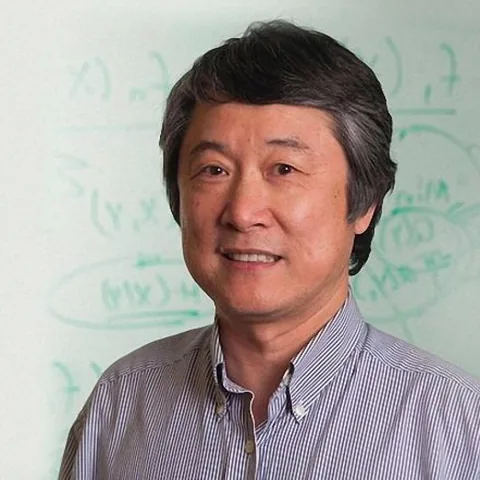
Photo: We have no published photo of John C. Platt yet. Send us a free-licensed photo.
- John Platt (computer scientist)
- Sequential Minimal Optimization: A Fast Algorithm for Training Support Vector Machines
- And the Winners Are ...
- Platt Plenty Excited About AI
- John C. Platt | Google Research
- Google Research, 2022 & beyond: Natural sciences
- Feasibility test of per-flight contrail avoidance in commercial aviation