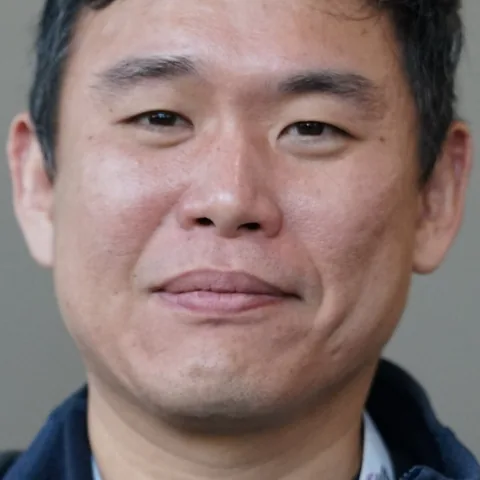
Jinwoo Kim
Also known as 김진우
Jinwoo Kim is a deep learning researcher at KAIST whose work spans graph learning, equivariance and flow-based language models. Working with Seunghoon Hong, they published the TokenGT paper on pure Transformers for graphs in 2022 and coauthored the ICLR 2023 Outstanding Paper on Visual Token Matching, followed by spotlight papers at NeurIPS 2023 on probabilistic symmetrization and at ICLR 2025 on random walks. In 2026, they completed a PhD at KAIST, and the thesis "Architecture-Agnostic Invariances for Deep Learning" won the KAIST College of Engineering Best Dissertation Award. They coauthored Flow Map Language Models in February 2026, a continuous-flow approach to one-step text generation. Since March 2026, they are a postdoctoral researcher at KAIST.
Timeline
-
2016–2020
KAIST Presidential Fellowship
They hold the KAIST Presidential Fellowship from 2016 to 2020 and the KAIST Alumni Fellowship from 2017 to 2020. In 2020, they receive the KAIST Engineering Innovator Award.
-
2022
Tokenized Graph Transformer
Their NeurIPS 2022 paper "Pure Transformers are Powerful Graph Learners", written with Tien Dat Nguyen, Seonwoo Min, Sungjun Cho, Moontae Lee, Honglak Lee and Seunghoon Hong, treats every node and edge of a graph as an independent token and feeds the tokens to a standard Transformer. The resulting Tokenized Graph Transformer (TokenGT) beats graph neural network baselines on the large PCQM4Mv2 graph dataset. In 2022, they also work as a research intern at LG AI Research.
-
2023
An ICLR Outstanding Paper
In 2023, ICLR names "Universal Few-shot Learning of Dense Prediction Tasks with Visual Token Matching" one of its four Outstanding Papers, with Jinwoo Kim as a coauthor alongside Donggyun Kim, Seongwoong Cho, Chong Luo and Seunghoon Hong. The paper presents a pipeline for few-shot learning on dense prediction tasks such as semantic segmentation, depth estimation, edge detection and keypoint detection. Its Visual Token Matching method is a universal few-shot learner that matches patch-level tokens of images and labels.
-
2023–2025
Symmetrization and random walks
A NeurIPS 2023 spotlight paper, "Learning Probabilistic Symmetrization for Architecture Agnostic Equivariance", makes an arbitrary base model such as an MLP or a transformer equivariant to a given symmetry group by symmetrizing it with a small equivariant network. In 2024, the KAIST-Mila Prefrontal AI Research Center gives them its Outstanding Researcher Award. The ICLR 2025 spotlight paper "Revisiting Random Walks for Learning on Graphs" shows that a language model can read random walks recorded as plain text to solve graph tasks.
-
November 2025–January 2026
Visiting scholar at NYU
From November 2025 to January 2026, they are a visiting scholar at NYU's Global AI Frontier Lab, working with Kyunghyun Cho and Rajesh Ranganath.
-
2026
PhD and dissertation award
In 2026, they complete a PhD at KAIST's School of Computing under Seunghoon Hong with the thesis "Architecture-Agnostic Invariances for Deep Learning". The thesis receives the KAIST College of Engineering Best Dissertation Award.
-
February 2026–April 2026
Flow Map Language Models
In February 2026, they post "Flow Map Language Models: One-step Language Modeling via Continuous Denoising" with eight coauthors including Nicholas M. Boffi and Seunghoon Hong. The paper builds a continuous flow language model that matches state-of-the-art discrete diffusion baselines, then distills it into a model whose one-step generation exceeds the 8-step quality of recent few-step discrete diffusion language models. In April 2026, they and Boffi publish the blog post "How to Generate Text in One Step", which describes one-step generation with an 8x speedup over the best distilled discrete baselines.
-
Since March 2026
Postdoctoral researcher at KAIST
In March 2026, they start a postdoctoral position at KAIST that runs through February 2027. Their research focus covers flow language models, latent reasoning, synthetic data and vision pretraining.
Career
- Since 2026KAISTPostdoctoral Researcher
- 2025–2026New York UniversityVisiting Scholar
- 2022LGResearch Intern
Education
- 2026KAISTPhD
Colleagues
Sources and credits
Photo: We have no published photo of Jinwoo Kim yet. Send us a free-licensed photo.
- Jinwoo Kim
- Pure Transformers are Powerful Graph Learners
- Announcing the ICLR 2023 Outstanding Paper Award Recipients – ICLR Blog
- [2303.14969] Universal Few-shot Learning of Dense Prediction Tasks with Visual Token Matching
- [2306.02866] Learning Probabilistic Symmetrization for Architecture Agnostic Equivariance
- [2407.01214] Revisiting Random Walks for Learning on Graphs
- [2602.16813] Flow Map Language Models: One-step Language Modeling via Continuous Denoising
- How to Generate Text in One Step