Jerome H. Friedman
Also known as Jerry Friedman
Jerome H. Friedman is a Stanford statistician whose machine learning methods include CART decision trees, MARS and the gradient boosting machine. Trained in high-energy particle physics at Berkeley, he became leader of the Computation Research Group at the Stanford Linear Accelerator Center in 1972 and was appointed Professor of Statistics at Stanford in 1982. With Leo Breiman, Richard Olshen and Charles Stone, he produced Classification and Regression Trees in 1984; he introduced Multivariate Adaptive Regression Splines in 1991, and in 2001 he published his gradient boosting machine paper and co-wrote The Elements of Statistical Learning with Trevor Hastie and Rob Tibshirani. He received the 2002 ACM SIGKDD Innovation Award and was elected to the National Academy of Sciences in 2010; since 2007, he is Professor Emeritus of Statistics at Stanford, where his primary research interest is machine learning.
- Now at
- Stanford University
- Born
- 1939
Years link to their sources.
Timeline
-
1939–1968
Physics at Berkeley
Born in Yreka, California, in 1939, he spends two years at Chico State College and transfers to the University of California, Berkeley in 1959. He earns an AB in physics in 1962 and a PhD in high-energy particle physics, then starts work as a research physicist at the Lawrence Berkeley National Laboratory in 1968.
-
1972–1991
From SLAC to Stanford statistics
In 1972, he becomes leader of the Computation Research Group at the Stanford Linear Accelerator Center, and in 1974 he publishes a projection pursuit algorithm for exploratory data analysis with John Tukey. Stanford appoints him Professor of Statistics in 1982, and the American Statistical Association elects him a Fellow in 1984. He chairs Stanford's Department of Statistics from 1988 to 1991.
-
1975–1984
Decision trees with CART
He first meets Leo Breiman in 1975, when both are independently investigating CART principles. In 1977, he coauthors several algorithms for speeding up nearest-neighbor classifiers. With Breiman, Richard Olshen and Charles Stone, he produces the 1984 book Classification and Regression Trees and releases the commercial product CART, which introduces the gini and twoing splitting rules, cost-complexity pruning and cross validation for decision trees.
-
1991–1997
MARS and PRIM
In 1991, he extends recursive partitioning ideas to regression with Multivariate Adaptive Regression Splines (MARS). He introduces the Patient Rule Induction Method (PRIM) in 1997, an interactive data mining method he describes as "Bump Hunting in High Dimensional Data."
-
1999–2001
Gradient boosting and a textbook
With Trevor Hastie and Rob Tibshirani, he shows that boosting is a form of additive logistic regression, and he develops explicit regression gradient boosting algorithms in 1999 and 2001. His paper "Greedy function approximation: a gradient boosting machine" appears in the Annals of Statistics in 2001. In 2001, he also co-writes The Elements of Statistical Learning: Data Mining, Inference, and Prediction with Hastie and Tibshirani, a book on the importance of statistics in data and machine learning.
-
2002–2017
SIGKDD award and NAS election
He wins the ACM SIGKDD Innovation Award in 2002 and the Emanuel and Carol Parzen Award for Statistical Innovation in 2004, and becomes a fellow of the American Academy of Arts and Sciences in 2005. The National Academy of Sciences elects him a member in April 2010, and he receives the 2012 IEEE ICDM Research Contributions Award. In 2017, Stanford's Department of Statistics renames its applied statistics thesis prize for him.
-
Since 2007
Professor emeritus at Stanford
He becomes Professor Emeritus in Stanford's Department of Statistics in 2007, and his primary research interest is machine learning. In May 2019, the department marks his 80th birthday with a day-long symposium at the Huang Engineering Center.
-
2023–2025
Stanford's consulting workshop
As Professor of Statistics, Emeritus, he teaches Stanford's Consulting Workshop, STATS 390, in spring of the 2023–24 and 2024–25 academic years.
Career
- Since 1982Stanford UniversityProfessor of Statistics, Department chair
- From 1972Stanford Linear Accelerator CenterLeader
- From 1968Office of ScienceResearch physicist
Education
- 1968University of California, BerkeleyPhD
- 1962University of California, BerkeleyAB
- 1959Chico State College
Colleagues

Sources and credits
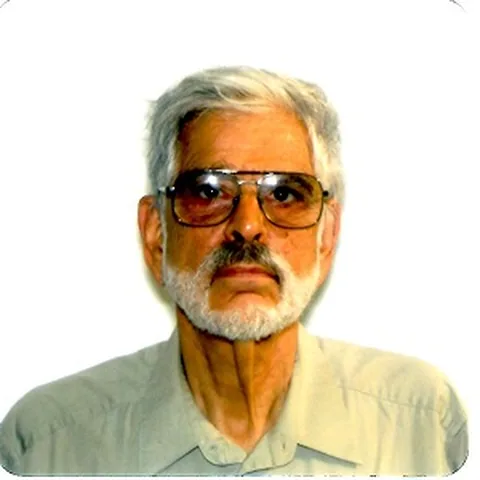
Photo: We have no published photo of Jerome H. Friedman yet. Send us a free-licensed photo.
- Jerome H. Friedman - Wikipedia
- [1507.08502] A Conversation with Jerry Friedman
- Jerome Friedman elected to US National Academy of Sciences
- Jerome H. Friedman: Applying Statistics to Data and Machine Learning - History of Data Science
- KDnuggets News 02:12, item 4, News
- Gradient boosting - Wikipedia
- 2012 IEEE ICDM Research Contributions Award: Professor Jerome H. Friedman
- Jerry Friedman elected to National Academy of Sciences | Department of Statistics
- 2017 Department Awards | Department of Statistics
- Jerome H. Friedman | Department of Statistics
- A Birthday Celebration for Jerry Friedman | Department of Statistics
- Jerry Friedman's Profile | Stanford Profiles