Gintare Karolina Dziugaite
Gintare Karolina Dziugaite is a machine-learning researcher whose work links generative networks, learning theory and machine unlearning. She studied mathematics at Warwick and Cambridge, earned a machine-learning PhD at Cambridge in 2019, and took part in research programs at the Simons Institute and the Institute for Advanced Study. Her stochastic convex optimization paper shared an ICML Best Paper award in 2024; later papers examined teacher-network size as a measure of data complexity and machine unlearning with public data. As of October 2026, she is a senior research scientist at Google DeepMind, an adjunct professor at McGill, and an associate industry member of Mila.
- Now at
- Google DeepMind and McGill University
- Badges
Timeline
-
2015
Generative neural networks with MMD
In 2015, she coauthors “Training generative neural networks via Maximum Mean Discrepancy optimization” with Daniel M. Roy and Zoubin Ghahramani. The paper trains a generator by minimizing an unbiased estimate of maximum mean discrepancy.
-
2017
A Simons Institute program
In winter 2017, she joins the Simons Institute’s Foundations of Machine Learning program as a long-term participant.
-
2019
A Cambridge PhD and fellowship
She completes a PhD in machine learning at Cambridge in 2019 under Zoubin Ghahramani, after studying mathematics at Warwick and Cambridge. In summer 2019, she returns to Simons as a fellow in its Foundations of Deep Learning program.
-
2020
An IAS membership
In 2020, she is a member of the Institute for Advanced Study in Princeton and participates in its Special Year on Optimization, Statistics, and Theoretical Machine Learning.
-
2024
An ICML Best Paper
In 2024, she coauthors “Information Complexity of Stochastic Convex Optimization: Applications to Generalization, Memorization, and Tracing” with Idan Attias, Mahdi Haghifam, Roi Livni and Daniel M. Roy. ICML gives it a Best Paper award; the paper studies how memorization and learning interact in stochastic convex optimization.
-
2025
Teacher networks and data complexity
In 2025, she and Daniel M. Roy introduce a PAC-Bayes notion of data complexity based on the smallest teacher network that achieves a given excess risk.
-
2026
Unlearning with public data
In 2026, she coauthors “Unlearning with Asymmetric Sources: Improved Unlearning-Utility Trade-off with Public Data,” which introduces Asymmetric Langevin Unlearning to use public data to reduce the privacy cost of unlearning.
-
As of October 2026
Google DeepMind and Mila
As of October 2026, she is a senior research scientist at Google DeepMind in Toronto, an adjunct professor at McGill’s School of Computer Science, and an associate industry member of Mila. Before joining Google, she leads the Trustworthy AI program at Element AI (ServiceNow).
Career
- NowGoogle DeepMindSenior Research Scientist
- NowMcGill UniversityAdjunct Professor
Education
- 2019University of CambridgePhD in Machine Learning
- University of Warwick
Colleagues
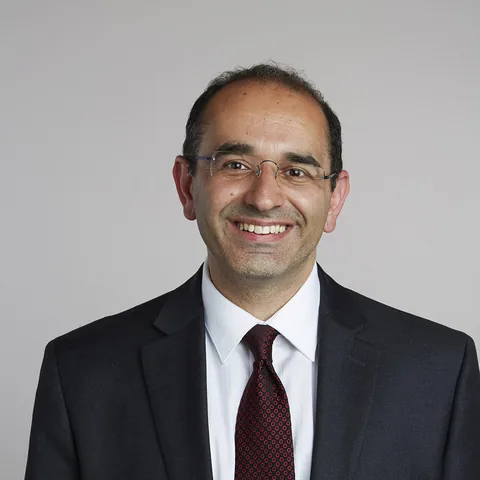
Sources and credits
Photo: We have no published photo of Gintare Karolina Dziugaite yet. Send us a free-licensed photo.
- Gintare Karolina Dziugaite – MLG Cambridge
- Gintare Karolina Dziugaite
- ICML 2024 Awards
- Information Complexity of Stochastic Convex Optimization: Applications to Generalization, Memorization, and Tracing
- The Size of Teachers as a Measure of Data Complexity: PAC-Bayes Excess Risk Bounds and Scaling Laws
- Unlearning with Asymmetric Sources: Improved Unlearning-Utility Trade-off with Public Data
- Gintare Karolina Dziugaite | Mila