Federico Mora
Also known as Federico Mora Rocha
Federico Mora is a computer scientist whose work connects formal methods with AI for code. He earned a bachelor's degree in math and computer science at Mount Allison, a master's in computer science at the University of Toronto, and a computer science doctorate at UC Berkeley in 2025. His research includes StringFuzz and MedleySolver, SPEAC for low-resource code, neuro-symbolic verification tools, and bandit-based solver choice for program synthesis. He worked as an applied scientist at Amazon Web Services from 2025 to 2026. Since 2026, he is an assistant professor at the University of Waterloo and a faculty affiliate at the Vector Institute.
- Now at
- University of Waterloo and Vector Institute
- Badges
Timeline
-
2016–2018
Degrees in mathematics and computing
He earns a B.Sc. in Math and Computer Science at Mount Allison University in 2016. At the University of Toronto, he completes an M.Sc. in Computer Science in 2018.
-
2018
StringFuzz for string solvers
In 2018, he coauthors StringFuzz: A Fuzzer for String Solvers with Dmitry Blotsky, Murphy Berzish, Yunhui Zheng, Ifaz Kabir, and Vijay Ganesh.
-
2021
MedleySolver and a Qualcomm fellowship
In 2021, he coauthors MedleySolver: Online SMT Algorithm Selection with Nikhil Pimpalkhare, Elizabeth Polgreen, and Sanjit Seshia. In 2021, he and Kevin Cheang receive the Qualcomm Innovation Fellowship for Practical Lifting for Verification of Trusted Platform Software.
-
2024
SPEAC for low-resource languages
In 2024, he coauthors SPEAC, which uses an intermediate language and compiler repairs to help language models write syntactically valid programs in very low-resource programming languages. The team tests it with UCLID5, a formal-verification language.
-
January 2025
A neuro-symbolic verification stack
In January 2025, he presents PVerifier, Algaroba, and Eudoxus as a stack for verifying distributed systems. Algaroba solves SMT queries for algebraic data types, while Eudoxus is a neuro-symbolic text-to-code tool that automates interaction with verification engines.
-
April 2025
Choosing solvers for synthesis
In April 2025, he coauthors Online Prompt Selection for Program Synthesis. Its multi-armed bandit method selects a symbolic solver or an LLM-and-prompt combination for a synthesis task.
-
2025–2026
A Berkeley PhD and Sakrison prize
In 2025, he completes a Ph.D. in Computer Science at UC Berkeley under Sanjit A. Seshia. From 2025 to 2026, he works as an Applied Scientist at Amazon Web Services. He receives UC Berkeley's 2025–2026 David J. Sakrison Memorial Prize.
-
Since 2026
Waterloo professor and Vector affiliate
Since 2026, he is an assistant professor at the University of Waterloo and a faculty affiliate at the Vector Institute.
Career
- Since 2026University of WaterlooAssistant Professor
- Since 2026Vector InstituteFaculty Affiliate
- 2025–2026AmazonApplied Scientist
Education
- 2025University of California, BerkeleyPh.D. in Computer Science
- 2018University of TorontoM.Sc. in Computer Science
- 2016Mount Allison UniversityB.Sc. in Math and Computer Science
Colleagues



Sources and credits
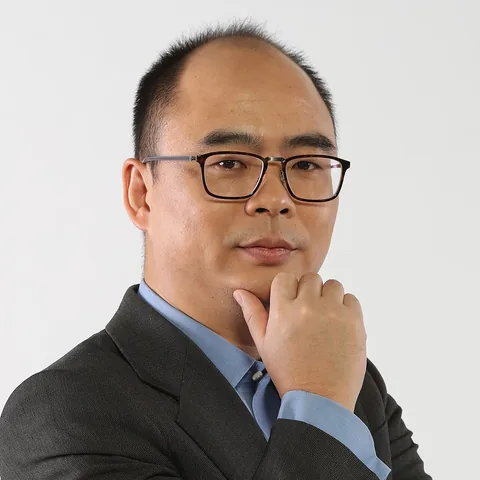
Photo: We have no published photo of Federico Mora yet. Send us a free-licensed photo.
- Federico Mora | Cheriton School of Computer Science | University of Waterloo
- Federico Mora
- Kevin Cheang and Federico Mora win 2021 Qualcomm Innovation Fellowship - EECS at Berkeley
- Synthetic Programming Elicitation for Text-to-Code in Very Low-Resource Programming and Formal Languages
- Seminar • Software Engineering | Formal Methods • Towards Scalable and Usable Domain-Specific Automated Reasoning | Cheriton School of Computer Science | University of Waterloo
- Online Prompt Selection for Program Synthesis | Proceedings of the AAAI Conference on Artificial Intelligence
- Student Award: David J. Sakrison Memorial Prize | EECS at UC Berkeley
- Federico Mora - Vector Institute for Artificial Intelligence
- Federico Mora Rocha