Emanuele Rodolà
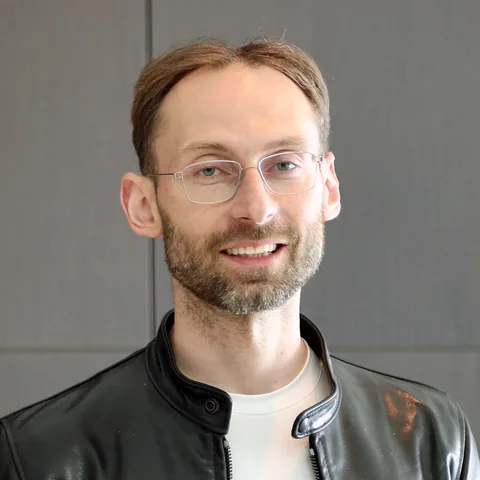
Emanuele Rodolà is an AI researcher whose work connects machine learning with 3D geometry and model reuse. He earned a computer systems engineering degree in 2008, completed a computer science PhD at Ca' Foscari in 2011, and joined Sapienza in 2017 after research posts in Tokyo, Munich and Lugano. Anisotropic convolutional networks learned correspondences between deformable 3D shapes; later, Latent Functional Maps aligned neural representations and MERGE3 supported model merging. He received an ERC Starting Grant for SPECGEO in 2018 and, as of October 2026, is a full professor at Sapienza and leads GLADIA, a machine learning and applied AI group.
- Links
- Google Scholar
Timeline
-
2008–2011
A computer science PhD
He graduates in Computer System Engineering at the University of Rome Tor Vergata in 2008, then earns a PhD in the Department of Computer Science at Ca' Foscari in 2011 under Andrea Torsello.
-
2012–2017
Research fellowships
In 2012, he becomes a JSPS Research Fellow at the University of Tokyo's Intelligent Systems and Informatics Lab. At TU Munich, he joins the Computer Vision lab in 2013 and holds an Alexander von Humboldt postdoctoral fellowship starting in 2014; in 2016, he moves to USI Lugano with Prof. Michael Bronstein for a postdoctoral role through 2017.
-
2016
An anisotropic convolutional network
He coauthors a paper in 2016 that introduces an anisotropic convolutional neural network for deep learning on non-Euclidean domains. The ACNN learns dense correspondences between deformable shapes.
-
2017–2018
Sapienza and an ERC grant
At Sapienza's Department of Computer Science, he joins as a researcher in 2017. In 2018, he receives an ERC Starting Grant for SPECGEO, which develops spectral geometric methods with applications in computer vision, machine learning, social networks and computational biology.
-
2024
Aligning neural representations
In 2024, he coauthors Latent Functional Maps, a spectral geometry framework for comparing learned representation spaces, finding correspondences between them and transferring representations.
-
2025
Evolutionary model merging
In 2025, he coauthors MERGE3, an evolutionary model-merging framework that makes model merging feasible on a single GPU.
-
As of October 2026
Professor and GLADIA leader
He is a Full Professor of Computer Science at Sapienza University of Rome and leads the GLADIA group for machine learning and applied AI. His research spans representation learning, model merging, graph and geometric deep learning, vision, language and audio.
Colleagues
Sources and credits
Photo: We have no published photo of Emanuele Rodolà yet. Send us a free-licensed photo.
- Computer Vision Group - Dr. Emanuele Rodolà
- Emanuele Rodolà | GLADIA
- Learning shape correspondence with anisotropic convolutional neural networks
- Sapienza ERC Principal Investigators
- Latent Functional Maps: a spectral framework for representation alignment
- MERGE3: Efficient Evolutionary Merging on Consumer-grade GPUs