David Heineman
David Heineman is a language-model researcher whose work spans text-generation evaluation, decoding, and open models. At Georgia Tech, he coauthored LENS and SALSA for text simplification and helped build Thresh for fine-grained text evaluation. His later work included multi-prompt decoding, studies of benchmark reliability, and Ai2's OLMo 3 report. He also worked on language-model pretraining with Meta Superintelligence Labs (FAIR). As of October 2026, he is a first-year PhD student at Stanford, focused on pretraining, data, and language-model evaluation.
- Works
- 12
- Citations
- 8
- h-index
- 2
Publication numbers from OpenAlex, as of 19 October 2026.
Timeline
-
2023
LENS for text simplification
At Georgia Tech, he works with Wei Xu, Yao Dou, and Mounica Maddela; in 2023, he coauthors LENS, a learnable metric for text simplification.
-
2023
SALSA for text simplification
In 2023, he coauthors SALSA, an edit-based human-annotation framework for evaluating text simplification.
-
2023
Thresh evaluation platform
In 2023, he coauthors Thresh, a unified and customizable platform for fine-grained evaluation of generated text.
-
2024
Multi-prompt decoding
In 2024, he coauthors a decoding method that uses multiple prompts and Minimum Bayes Risk to choose among candidate generations.
-
2025
Signal and Noise
In 2025, he coauthors Signal and Noise, a study of benchmark signal and noise, and Fluid Benchmarking, which selects evaluation items dynamically for each language model.
-
2025
OLMo 3
At Ai2, he works on the OLMo team with advisers Kyle Lo and Jesse Dodge; in 2025, he coauthors OLMo 3, a family of fully open language models.
-
As of October 2026
A Stanford PhD student
Before Stanford, he works on language-model pretraining with Meta Superintelligence Labs (FAIR). As of October 2026, he is a first-year PhD student at Stanford, working on pretraining, data and evaluation for language models.
Career
Education
- From 2026Stanford UniversityPhD
Most-cited works
- Olmo 3With Akari Asai, Allyson Ettinger, Aman Rangapur, Amanda Bertsch, Ashish Sabharwal and Bailey Kuehl
- Terminal-Bench: Benchmarking Agents on Hard, Realistic Tasks in Command Line InterfacesWith Andy Konwinski, Nicholas Carlini and Niklas Muennighoff
- Improving Minimum Bayes Risk Decoding with Multi-Prompt
- DataDecide: How to Predict Best Pretraining Data with Small ExperimentsWith Noah Smith and Pang Wei Koh
- Establishing Task Scaling Laws via Compute-Efficient Model LaddersWith Noah Smith and Pang Wei Koh
Colleagues
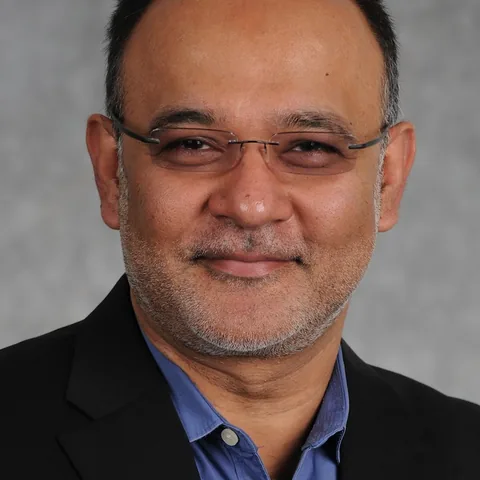 Irfan EssaGeorgia Institute of Technology, 2023
- Ashish SabharwalAllen Institute for AI (Ai2), 2025–2026
- Christopher ClarkAllen Institute for AI (Ai2), 2025–2026
- Aman RangapurAllen Institute for AI (Ai2), 2025
- Anton LeykinGeorgia Institute of Technology, 2023
 Frank DellaertGeorgia Institute of Technology, 2023
Sources and credits
Photo: We have no published photo of David Heineman yet. Send us a free-licensed photo.
- David Heineman
- ACL 2023 | Georgia Tech – Research Impact & Leadership
- LENS: A Learnable Evaluation Metric for Text Simplification - ACL Anthology
- Dancing Between Success and Failure: Edit-level Simplification Evaluation using SALSA - ACL Anthology
- Thresh: A Unified, Customizable and Deployable Platform for Fine-Grained Text Evaluation - ACL Anthology
- Improving Minimum Bayes Risk Decoding with Multi-Prompt - ACL Anthology
- Signal and Noise: Reducing uncertainty in language model evaluation | Ai2
- Fluid Language Model Benchmarking
- Olmo 3