Chris Cundy
Chris Cundy is an AI researcher whose work links causal discovery and sequence generation with questions of honesty in language models. He earned physics and computer science degrees at Cambridge and completed a Stanford PhD advised by Stefano Ermon. His work includes Bayesian causal discovery, SequenceMatch for sequence generation, and studies of how models respond to deception detectors. He is a Research Scientist at FAR.AI, where he leads a team that detects and mitigates undesirable behavior in AI systems.
- Now at
- FAR.AI
Timeline
-
2016–2017
Physics and computer science at Cambridge
He earns a BA in Natural Sciences (Physics) at Cambridge in 2016 and an MEng in Computer Science in 2017. During his master's, he develops variational methods for Gaussian Process State-Space Models with Carl E. Rasmussen.
-
2021
Bayesian causal discovery
In 2021, he coauthors BCD Nets with Aditya Grover and Stefano Ermon. The NeurIPS paper uses variational inference to estimate a distribution over directed acyclic graphs in linear-Gaussian structural equation models.
-
2024
A Stanford computer science PhD
He pursues a computer science PhD at Stanford from 2018 and completes it in 2024 under advisor Stefano Ermon. His research spans constrained reinforcement learning, variational inference and autoregressive models.
-
2024
SequenceMatch for sequence generation
He coauthors SequenceMatch with Stefano Ermon for ICLR 2024. The method frames sequence generation as an imitation-learning problem and reports improvements over maximum-likelihood training on text generation and arithmetic.
-
April 2025
Safeguards for AI research automation
In April 2025, he coauthors Bare Minimum Mitigations for Autonomous AI Development. The paper outlines how risks may emerge and proposes four safeguards for cases when agents significantly automate or accelerate AI development.
-
May 2025
Lie detectors in model training
In May 2025, he coauthors Preference Learning with Lie Detectors can Induce Honesty or Evasion. Using DolusChat, a 65,000-example dataset of paired truthful and deceptive responses, the paper identifies exploration, detector accuracy and KL regularization as factors that shape whether learned policies are honest.
-
2026
The Obfuscation Atlas
In 2026, he coauthors The Obfuscation Atlas: Mapping Where Honesty Emerges in RLVR with Deception Probes with Mohammad Taufeeque, Stefan Heimersheim and Adam Gleave. The paper finds that models can evade deception detectors by changing internal representations or giving deceptive answers with justifications. ICML gives it an Outstanding Paper Honorable Mention.
-
As of October 2026
Research Scientist at FAR.AI
As of October 2026, he is a Research Scientist at FAR.AI and leads a team focused on detecting and mitigating undesirable behavior in AI systems, including deception and misalignment.
Career
- NowFAR.AIResearch Scientist
Education
- 2024Stanford UniversityPhD
- 2017University of CambridgeBA in Natural Sciences (Physics) and MEng in Computer Science
Colleagues

Sources and credits
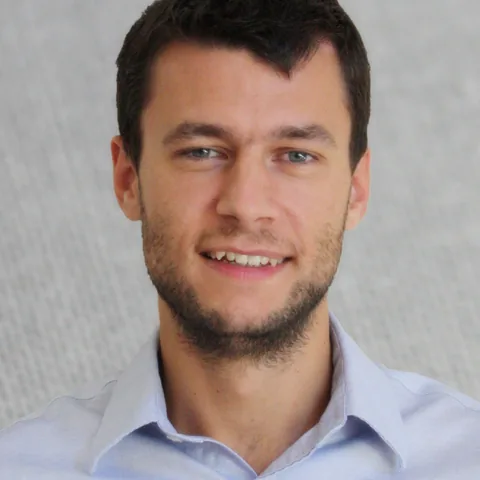
Photo: We have no published photo of Chris Cundy yet. Send us a free-licensed photo.
- Chris Cundy
- Chris Cundy – Center for Human-Compatible Artificial Intelligence
- Scalable Variational Approaches for Bayesian Causal Discovery | Chris Cundy
- SequenceMatch: Imitation Learning for Autoregressive Sequence Modelling with Backtracking
- Bare Minimum Mitigations for Autonomous AI Development
- Preference Learning with Lie Detectors can Induce Honesty or Evasion
- The Obfuscation Atlas: Mapping Where Honesty Emerges in RLVR with Deception Probes
- Seoul Alignment Workshop 2026: What We Learned
- Chris Cundy - Member of Technical Staff | FAR.AI
- Chris Cundy - Schmidt Sciences