Chawin Sitawarin
Also known as ชวิน สีตวาริน
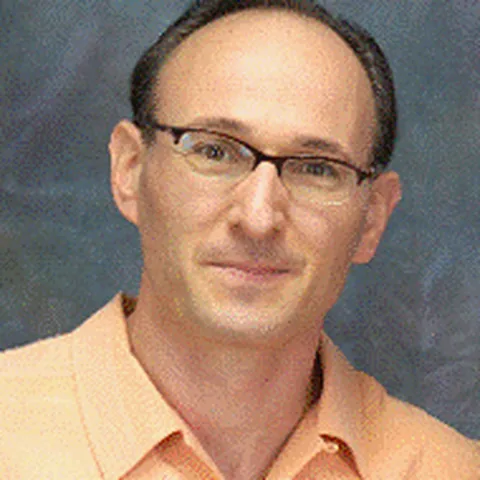
Chawin Sitawarin is a machine-learning security researcher whose work spans adversarial robustness, Gemini security, and language-model privacy. He coauthored early research on deceptive traffic signs and later studies of robustness defenses and part-based models. At UC Berkeley, he completed a PhD in 2024 on adversarially robust machine-learning systems. His work on language-model memorization earned an ICML 2026 Outstanding Paper Honorable Mention, and he is a Member of Technical Staff at Anthropic on the Safeguards Research team as of October 2026.
Timeline
-
2018
DARTS and toxic signs
In 2018, he coauthors DARTS, which develops toxic-sign attacks against traffic-sign recognition in autonomous cars. The paper tests its attacks in virtual and real-world settings.
-
2022
Random-transformation defenses
In 2022, he coauthors Demystifying the Adversarial Robustness of Random Transformation Defenses. The study's attack reduces accuracy on Imagenette by 83%, compared with 19% for the commonly used EoT attack.
-
2023
Part-based robustness models
In 2023, he coauthors Part-Based Models Improve Adversarial Robustness, which combines part segmentation with a small classifier. The model reaches higher accuracy and adversarial robustness than a ResNet-50 baseline on three datasets.
-
2024
A Berkeley security PhD
He completes a PhD in UC Berkeley's EECS Department in 2024 under adviser David A. Wagner. His dissertation examines machine-learning defenses and presents a low-cost attack against a real-world language-model API.
-
2025
Meta and Google DeepMind
His work moves from a postdoctoral role in Meta's Privacy-Preserving Machine Learning team to a research scientist role in Google DeepMind's Security and Privacy team. In 2025, he coauthors a report on Google DeepMind's adaptive evaluations of Gemini against indirect prompt injection.
-
2025
Measuring language-model memorization
In 2025, he coauthors How much do language models memorize?, which estimates GPT-style models' capacity at about 3.6 bits per parameter. The paper distinguishes dataset-specific memorization from generalization.
-
2026
An ICML honorable mention
In 2026, How much can language models memorize? receives an ICML Outstanding Paper Honorable Mention, and he is one of its eight authors.
-
As of October 2026
Anthropic safeguards research
As of October 2026, he is a Member of Technical Staff at Anthropic on the Safeguards Research team.
Career
- NowAnthropicMember of Technical Staff
- Until 2025MetaPostdoctoral Researcher
- From 2025Google DeepMindResearch Scientist
Education
Colleagues
Sources and credits
Photo: We have no published photo of Chawin Sitawarin yet. Send us a free-licensed photo.
- DARTS: Deceiving Autonomous Cars with Toxic Signs
- Demystifying the Adversarial Robustness of Random Transformation Defenses
- Part-Based Models Improve Adversarial Robustness
- New Perspectives on Adversarially Robust Machine Learning Systems
- Chawin Sitawarin
- Lessons from Defending Gemini Against Indirect Prompt Injections
- How much do language models memorize?
- ICML 2026 Awards