Bin Dong
Also known as 董彬
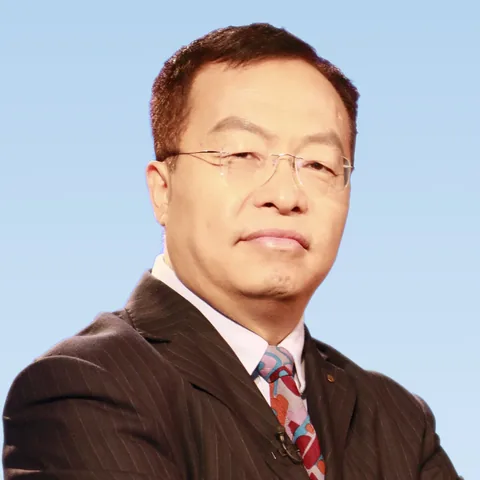
Bin Dong is a Peking University mathematician whose research spans machine learning, scientific computing, computational imaging and AI for mathematics. After earning mathematics degrees at Peking University, the National University of Singapore and UCLA, he held faculty posts at UC San Diego, Arizona and Peking University. ODE-Net and PDE-Net linked numerical differential equations to neural networks; he later coauthored a clinical imaging model and an AI for Mathematics review preprint. At Peking, he serves as deputy director of the Center for Machine Learning Research; he is a Boya Distinguished Professor at BICMR and executive vice president of Beijing Zhongguancun Academy.
- Now at
- Peking University, Beijing Zhongguancun Academy and National Biomedical Imaging Center
- Works
- 150
- Citations
- 5,372
- h-index
- 35
- Badges
Publication numbers from OpenAlex, as of 27 October 2026.
Timeline
-
September 1999–June 2009
Mathematics degrees
From September 1999 to July 2003, he studies mathematics at Peking University and earns a bachelor’s degree. From August 2003 to July 2005, he studies mathematics at the National University of Singapore and earns a master’s degree. From August 2005 to June 2009, he studies mathematics at UCLA and earns a PhD.
-
July 2009–December 2014
Faculty posts in California and Arizona
At the University of California, San Diego, he serves as a visiting assistant professor from 2009 to 2011. From 2011 to 2014, he is an assistant professor at the University of Arizona.
-
2014
A Qiu Shi award
He receives the Qiu Shi Outstanding Young Scholar Award in 2014.
-
December 2014–December 2023
Peking University faculty
He joins Peking University as a tenure-track associate professor in December 2014, becomes a tenured associate professor in August 2018, and a tenured professor in February 2023.
-
2017–2018
ODE-Net and PDE-Net
He and his collaborators develop ODE-Net and PDE-Net between 2017 and 2018, connecting numerical differential equations with deep neural network architectures. In 2018, PDE-Net learns hidden PDE models while predicting dynamics from data.
-
2019–2025
Clinical AI and PAM
Since 2019, he collaborates with Peking University Cancer Hospital on clinical diagnostic problems. In December 2025, he coauthors PAM, a propagation-based model for segmenting 3D objects across multimodal medical images.
-
2022
An invited ICM lecture
He gives a 45-minute invited sectional lecture at ICM 2022 on links among PDEs, wavelets, discrete differential equations and deep neural networks.
-
2023
New Cornerstone and Wang Xuan awards
He is selected for the New Cornerstone Investigator Program and receives the Wang Xuan Outstanding Young Scholar Award in 2023.
-
January 2026
A review of AI for Mathematics
With Haocheng Ju, he coauthors a preprint review of AI4Math that surveys models designed to support mathematical research.
-
As of October 2026
Boya professor and academy executive
Since 2022, he is deputy director of Peking University's Center for Machine Learning Research; since 2024, he is a Boya Distinguished Professor at Peking University's Beijing International Center for Mathematical Research and executive vice president of Beijing Zhongguancun Academy. His research focuses on machine learning, scientific computing and computational imaging, and his group builds foundation models for PDE solving. Since 2019, he also directs the AI Theory Center in Peking University’s Institute for Artificial Intelligence. He is vice president of Peking University Changsha Institute for Computing and Digital Economy and a researcher at the National Biomedical Imaging Center.
Career
- Since 2024Peking UniversityBoya Distinguished Professor, Beijing International Center for Mathematical Research
- Since 2024Beijing Zhongguancun AcademyExecutive Vice President
- Since 2022Peking UniversityDeputy Director, Center for Machine Learning Research
- Since 2019Peking UniversityDirector, AI Theory Center, Institute for Artificial Intelligence
- NowPeking UniversityVice President, Peking University Changsha Institute for Computing and Digital Economy
- NowNational Biomedical Imaging CenterResearcher
- 2023Peking UniversityTenured Professor
- 2018–2023Peking UniversityTenured Associate Professor
- 2017–2024Beijing University of Technology
- 2014–2018Peking UniversityTenure-track Associate Professor
- 2011–2014University of ArizonaAssistant Professor
- 2009–2011University of California, San DiegoVisiting Assistant Professor
Education
- 2009University of California, Los AngelesPhD in Mathematics
- 2005National University of SingaporeMaster's degree in Mathematics
- 2003Peking UniversityBachelor's degree in Mathematics
Colleagues
Sources and credits
Photo: We have no published photo of Bin Dong yet. Send us a free-licensed photo.
- Bin Dong
- Bin Dong’s Homepage
- PDE-Net: Learning PDEs from Data
- PAM: a propagation-based model for segmenting any 3D objects across multi-modal medical images
- Professor Bin Dong will Deliver an Invited Sectional Lecture at ICM 2022
- 董彬 - 北京中关村学院
- AI for Mathematics: Progress, Challenges, and Prospects
- Bin Dong - Beijing Zhongguancun Academy