Aviral Kumar
Aviral Kumar is a reinforcement-learning researcher whose work spans learning from stored data, language-model reasoning and robotics. He studied computer science at IIT Bombay and completed his doctorate at UC Berkeley in September 2023, working with Sergey Levine. His 2020 work included the D4RL benchmarks and Conservative Q-Learning, an algorithm for learning from previously collected data. In 2024, he coauthored research on allocating language models' inference-time computation and received a Samsung AI Researcher of the Year Award and an AI2050 Early Career Fellowship. He is an assistant professor in Carnegie Mellon University's Computer Science and Machine Learning departments and leads its AI & Reinforcement Learning lab.
Timeline
-
2018
Calibrating neural-network confidence
In 2018, he coauthors work with Sunita Sarawagi and Ujjwal Jain on measuring and reducing calibration error in neural networks. Their MMCE method adds an explicit measure of calibration error to network training.
-
2020
D4RL and Conservative Q-Learning
In 2020, he coauthors D4RL, a collection of benchmarks and datasets for offline reinforcement learning, which learns from previously collected experience. He also coauthors Conservative Q-Learning in 2020 with Aurick Zhou, George Tucker and Sergey Levine; the algorithm uses conservative value estimates to address overestimation when learning from static datasets.
-
2022
An Apple doctoral fellowship
In 2022, he receives an Apple Scholars in AI/ML PhD fellowship as a UC Berkeley EECS graduate student advised by Sergey Levine. His research develops reinforcement-learning algorithms that learn policies from historical interaction data.
-
September 2023
A doctorate at Berkeley
After a BTech in computer science at IIT Bombay, he completes his doctorate at UC Berkeley in September 2023.
-
August 2024
Allocating language-model inference computation
In August 2024, he coauthors research with Charlie Snell, Jaehoon Lee and Kelvin Xu on allocating language models' inference-time computation to suit each prompt. Their strategy improves the efficiency of test-time computation by more than fourfold over a best-of-N baseline in their experiments.
-
September 2024–October 2024
CMU and Google DeepMind
In September 2024, he joins Carnegie Mellon University's Computer Science and Machine Learning departments as an assistant professor. In October 2024, he also works as a part-time research scientist at Google DeepMind.
-
2024
Samsung and AI2050 awards
In 2024, he receives a Samsung AI Researcher of the Year Award and becomes an AI2050 Early Career Fellow. His AI2050 project develops methods for teaching foundation models how to arrive at answers.
-
March 2026
Training language models to explore
In March 2026, he discusses training language models to explore solutions at MIT CSAIL. He is an assistant professor in Carnegie Mellon University's Computer Science and Machine Learning departments and leads the CMU AI & Reinforcement Learning (AIRe) lab, whose work spans reinforcement-learning algorithms, foundation models and real robots.
Career
- Since 2024Carnegie Mellon UniversityAssistant Professor, Computer Science and Machine Learning, Lead, CMU AI & Reinforcement Learning (AIRe) Lab
- Google DeepMindPart-Time Research Scientist
Education
- 2023University of California, BerkeleyPhD
- IIT BombayBTech in computer science
Colleagues
Sources and credits
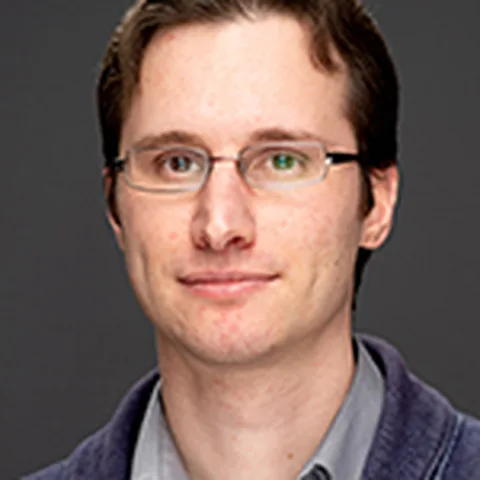
Photo: We have no published photo of Aviral Kumar yet. Send us a free-licensed photo.
- Trainable Calibration Measures for Neural Networks from Kernel Mean Embeddings
- [2004.07219] D4RL: Datasets for Deep Data-Driven Reinforcement Learning
- [2006.04779] Conservative Q-Learning for Offline Reinforcement Learning
- Aviral Kumar, Serena Wang and Eric Wallace win 2022 Apple Scholars in AI/ML PhD fellowships - EECS at Berkeley
- Seminar @ Cornell Tech: Aviral Kumar - Cornell Tech
- Aviral Kumar | Carnegie Mellon University Computer Science Department
- [2408.03314] Scaling LLM Test-Time Compute Optimally can be More Effective than Scaling Model Parameters
- Improving Foundation Models with Autonomous Sub-Optimal Data | Stanford Electrical Engineering
- Two SCS Professors Receive Samsung Researcher of the Year Awards | Carnegie Mellon University Computer Science Department
- Aviral Kumar - AI2050
- [Scale ML] Aviral Kumar: Training Language Models to Scale Test-Time Exploration | MIT CSAIL
- Aviral Kumar