Sergey Levine
Sergey Levine is a computer scientist whose research connects reinforcement learning with robot control. He earned computer science degrees at Stanford, coauthored Trust Region Policy Optimization, and joined Berkeley’s faculty in 2016. His 2017 paper on modular multitask reinforcement learning received an ICML Honorable Mention, and he became a Sloan Research Fellow in 2019. He co-founded Physical Intelligence and coauthored its 2024 π0 model and 2025 vision-language-action model, which generalizes to entirely new environments. As of October 2026, he is a Berkeley associate professor and holds the Harvey Wagner Presidential Chair in Artificial Intelligence; ICML named TRPO a Test of Time Honorable Mention in 2025.
- Works
- 703
Publication numbers from OpenAlex, as of 14 October 2026. Citations and h-index are hidden because this OpenAlex record may be incomplete or mix in other authors.
Timeline
-
2009–2014
Stanford computer science degrees
He earns BS and MS degrees in computer science at Stanford in 2009 and completes his PhD in computer science there in 2014.
-
2015
Trust Region Policy Optimization
In 2015, he coauthors Trust Region Policy Optimization (TRPO), a practical method for optimizing large nonlinear policies such as neural networks. Its experiments cover simulated swimming, hopping, and walking gaits and Atari games.
-
Since 2016
Joining Berkeley EECS
He joins Berkeley’s EECS faculty in fall 2016, where his work centers on machine learning for decision making and control, including deep learning and reinforcement learning algorithms.
-
2017
An ICML honorable mention
With Jacob Andreas and Dan Klein, he describes a framework for multitask deep reinforcement learning guided by policy sketches. The model ties parameters across shared subpolicies, and ICML gives the paper an Honorable Mention in 2017.
-
2019
A Sloan Research Fellowship
In 2019, he becomes a Sloan Research Fellow.
-
2024
Co-founding Physical Intelligence
He co-founds Physical Intelligence, which works to bring general-purpose AI into the physical world. In 2024, he coauthors π0, a general-purpose robot foundation model that learns from embodied robot experience and outputs low-level motor commands.
-
2025
π0.5 and a TRPO award
In 2025, he coauthors π0.5, a vision-language-action model that generalizes to entirely new environments. ICML names TRPO a Test of Time Honorable Mention in 2025.
-
As of October 2026
Associate professor at Berkeley
As of October 2026, he is an associate professor and Harvey E. Wagner Presidential Chair in Artificial Intelligence at UC Berkeley.
Sources and credits
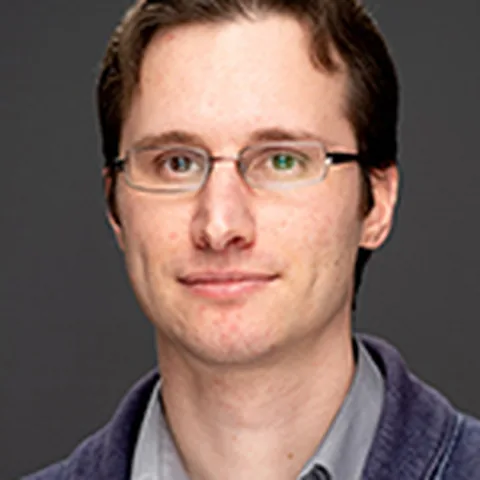
Photo: www2.eecs.berkeley.edu; Sergey Levine | EECS at UC Berkeley; creator not stated. License: Not stated by source. Source: www2.eecs.berkeley.edu. Cropped to a square and resized. Ask us to remove or replace this photo.
- Sergey Levine | EECS at UC Berkeley
- [1502.05477] Trust Region Policy Optimization
- Modular Multitask Reinforcement Learning with Policy Sketches
- ICML 2017 Awards
- Seven early-career faculty win Sloan Research Fellowships - Berkeley News
- Physical Intelligence | Index Ventures
- Our First Generalist Policy
- A VLA with Open-World Generalization
- ICML 2025 Awards