Amirali Aghazadeh
Also known as Amirali Aghazadeh Mohandesi
Amirali Aghazadeh is a machine-learning researcher who applies AI to scientific questions. He earned a B.S. in electrical engineering from Sharif University of Technology in 2010 and a Ph.D. in electrical and computer engineering from Rice University in 2017, then completed postdoctoral training at Stanford and UC Berkeley. His work includes MISSION for ultra-large-scale feature selection, Epistatic Net for biological fitness prediction, and SHAP zero for interpreting biological sequence models at scale. He joined Georgia Tech's School of Electrical and Computer Engineering as an assistant professor in 2022 and co-led the IDEaS-funded AI for Chemical and Materials Discovery and Microscopy project in 2023. With Ph.D. student Daniel Saeedi, he developed AstroAgents to analyze meteorite and Earth soil mass-spectrometry data and propose hypotheses about life's origins; as of October 2026, he is an assistant professor in Georgia Tech's ECE.
Timeline
-
2010–2017
Degrees at Sharif and Rice
He earns a B.S. in electrical engineering from Sharif University of Technology in 2010 and a Ph.D. in electrical and computer engineering from Rice University in 2017.
-
2017–2022
Postdoctoral training at Stanford and Berkeley
From 2017 to 2022, he completes postdoctoral training in machine learning and signal processing at Stanford University and UC Berkeley. He spends three years in Berkeley's Electrical Engineering and Computer Sciences department and two years in Stanford's Electrical Engineering department.
-
2018
MISSION for feature selection
In 2018, he coauthors MISSION, a Count-Sketch framework that uses stochastic gradient descent for ultra-large-scale feature selection while retaining feature interpretability.
-
2021
Epistatic Net for fitness prediction
In 2021, he coauthors Epistatic Net, which uses sparse spectral regularization to improve deep neural networks' predictions on biological fitness landscapes and estimate higher-order epistatic interactions.
-
2022
Assistant professor at Georgia Tech
In fall 2022, he joins Georgia Tech's School of Electrical and Computer Engineering (ECE) as an assistant professor, coming from UC Berkeley's EECS department.
-
2023
AI for chemical and materials discovery
In 2023, he co-leads IDEaS-funded AI for Chemical and Materials Discovery and Microscopy with three Georgia Tech colleagues.
-
2025
SHAP zero for sequence models
In 2025, he coauthors SHAP zero, an algorithm that amortizes Shapley-value computation across large biological datasets so future model queries have near-zero marginal cost.
-
Since 2022
AstroAgents and Georgia Tech ECE
In June 2026, he and Ph.D. student Daniel Saeedi develop AstroAgents, an AI system that analyzes mass-spectrometry data from meteorites and Earth soil to generate hypotheses about life's origins. His research connects machine learning, deep learning, and applied mathematics with problems in genomics, biology, and other sciences. As of October 2026, he is an assistant professor in Georgia Tech's School of Electrical and Computer Engineering.
Career
- From 2022Georgia Institute of TechnologyAssistant Professor
- 2017–2022Stanford University
- 2017–2022University of California, Berkeley
Education
- 2017Rice UniversityPh.D.
- 2010Sharif University of TechnologyB.S.
Colleagues
- Daniel L. RubinStanford University, 2017–2022
- Mark MusenStanford University, 2017–2022
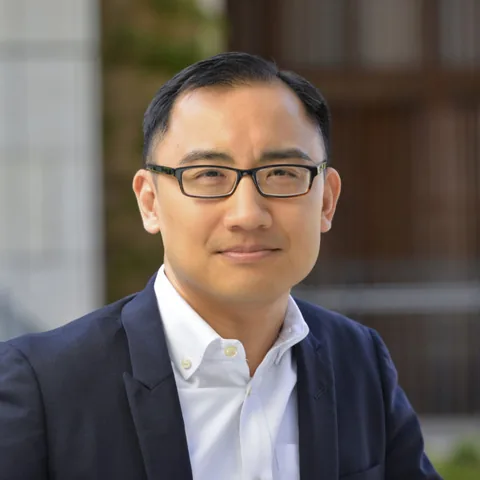 Daniel E. HoStanford University, 2017–2022
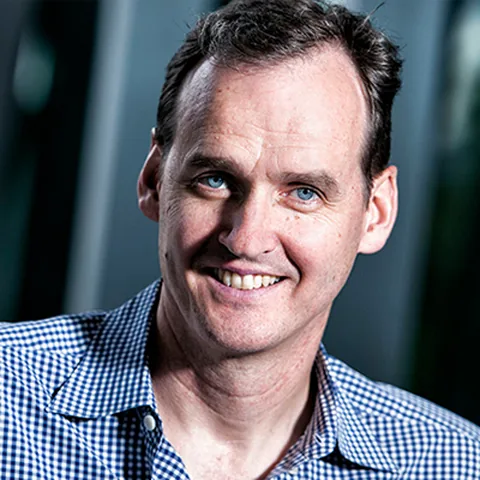 Peter L BartlettUniversity of California, Berkeley, 2017–2022
 Alexei A. EfrosUniversity of California, Berkeley, 2017–2022
 Michael I. JordanUniversity of California, Berkeley, 2017–2022
Sources and credits
Photo: We have no published photo of Amirali Aghazadeh yet. Send us a free-licensed photo.
- Amirali Aghazadeh Mohandesi - Georgia Tech School of Electrical and Computer Engineering
- MISSION: Ultra Large-Scale Feature Selection using Count-Sketches
- Epistatic Net allows the sparse spectral regularization of deep neural networks for inferring fitness functions
- ECE Welcomes New Faculty Members
- News | Amirali Aghazadeh
- SHAP zero Explains Biological Sequence Models with Near-zero Marginal Cost for Future Queries
- How Agentic AI is Rethinking the Origins of Life on Earth
- Amirali Aghazadeh