Zain Asgar
Zain Asgar builds systems for AI inference as co-founder and CEO of Gimlet Labs and an adjunct professor of computer science at Stanford University. He wrote GPU Energy Modeling and Analysis at Stanford in 2015 and worked on apparel recognition features at Google that became part of Google Lens. In 2018, he co-founded Pixie Labs, which built tools for monitoring applications and joined New Relic through an acquisition in 2020. His 2025 research described how to divide AI agent workloads across different hardware and introduced KForge, a system that uses language model agents to write and improve GPU kernels. In September 2026, Gimlet announced a $300 million Series B and a partnership to bring Cerebras processors into its inference cloud.
- Now at
- Gimlet Labs and Stanford University
- Works
- 18
- Citations
- 118
- h-index
- 6
Publication numbers from OpenAlex, as of 27 October 2026.
Timeline
-
June 2015
GPU energy research
At Stanford, he completes the thesis GPU Energy Modeling and Analysis in June 2015. He earns a PhD at the university.
-
2018
Co-founding Pixie Labs
He co-founds Pixie Labs with Ishan Mukherjee in 2018 to build tools for exploring and monitoring applications. His earlier work in Google’s machine intelligence group includes apparel recognition features that become part of Google Lens and machine learning on devices; he also serves as an entrepreneur in residence at Benchmark before founding Pixie.
-
2020
Pixie joins New Relic
Pixie launches its public beta in October 2020, giving developers access to application performance data. In December 2020, New Relic signs an agreement to acquire Pixie Labs.
-
2021
Open source at New Relic
After New Relic acquires Pixie Labs in December 2020, he announces Pixie’s release as open source software under the Apache 2.0 license in May 2021. He serves as general manager and group vice president for Pixie and open source at New Relic in 2021. His earlier industry work includes data and AI/ML systems at Google AI, Trifacta and NVIDIA.
-
2022
Debugging hardware generators
With Keyi Zhang and Mark Horowitz, he coauthors Bringing Source-Level Debugging Frameworks to Hardware Generators in 2022. Their framework connects hardware generators to software debugging tools, allowing designers to set breakpoints and inspect variables in the original code.
-
July 2025
Systems for AI agents
In July 2025, he coauthors Efficient and Scalable Agentic AI with Heterogeneous Systems with Michelle Nguyen and Sachin Katti. They describe a system that divides AI agent workloads among CPUs and accelerators, with cost models, compilation and dynamic scheduling to assign work to different hardware.
-
November 2025
KForge generates GPU kernels
He coauthors KForge: Program Synthesis for Diverse AI Hardware Accelerators in November 2025. KForge uses two collaborating language model agents to generate and improve GPU kernels: one writes programs, and one analyzes performance to guide changes. The work demonstrates the method on NVIDIA CUDA and Apple Metal.
-
June 2026
KForge across AI accelerators
In June 2026, he coauthors KForge: LLM-Driven Cross-Platform Kernel Generation for AI Accelerators. The team evaluates the framework on NVIDIA B200 and Intel Arc B580 hardware, using compilation, correctness tests and performance analysis to improve generated kernels.
-
September 2026
Gimlet funding and Cerebras
Gimlet announces a $300 million Series B led by Andreessen Horowitz in September 2026. In September 2026, he announces a partnership with Cerebras to bring its wafer-scale processors into Gimlet Cloud; the companies plan 100 megawatts of inference capacity.
-
As of October 2026
Gimlet CEO and Stanford professor
As of October 2026, he is co-founder and CEO of Gimlet Labs and an adjunct professor of computer science at Stanford University. Gimlet builds AI inference systems that divide workloads across different types of processors.
Career
- NowGimlet LabsCo-founder and CEO
- NowStanford UniversityAdjunct professor of computer science
- From 2018Pixie LabsCo-founder
- BenchmarkEntrepreneur in residence
- New RelicGeneral manager and group vice president for Pixie and open source
Education
Colleagues

Sources and credits
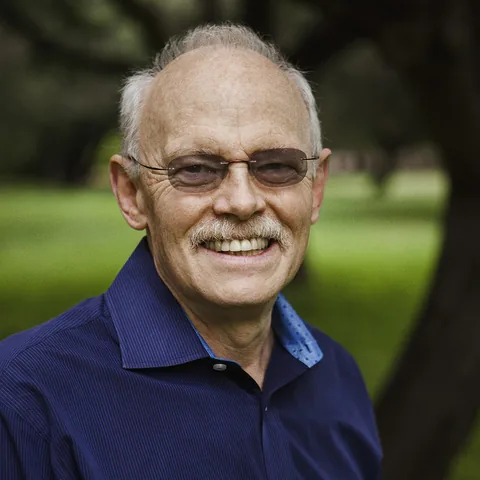
Photo: We have no published photo of Zain Asgar yet. Send us a free-licensed photo.
- Alumni theses
- Stanford MLSys Seminar – Stanford MLSys Seminar Series
- Announcing Pixie’s Public Beta Launch and Series A | Pixie Labs Blog
- Kubernetes Podcast from Google: Episode 150 - Pixie, with Zain Asgar and Ishan Mukherjee
- New Relic Signs Definitive Agreement to Acquire Pixie Labs, a Next Generation Machine Intelligence Observability Solution for Developers Using Kubernetes | New Relic
- Open sourcing Pixie under Apache 2.0 license | Pixie Labs Blog
- [2203.05742] Bringing Source-Level Debugging Frameworks to Hardware Generators
- [2507.19635] Efficient and Scalable Agentic AI with Heterogeneous Systems
- [2511.13274] KForge: Program Synthesis for Diverse AI Hardware Accelerators
- [2606.02963] KForge: LLM-Driven Cross-Platform Kernel Generation for AI Accelerators
- Announcing Gimlet's Series B | Gimlet Blog
- Scaling low-latency inference with Gimlet Cloud and Cerebras | Gimlet Blog
- About Us | Gimlet Labs
- Zain Asgar | Computer Science