Susan Athey
Also known as Susan Carleton Athey
Susan Athey is a Stanford economist who develops machine learning methods to measure how interventions affect different people. She studied economics, mathematics, and computer science at Duke, completed a Stanford PhD in 1995, and taught at MIT, Stanford, and Harvard before returning to Stanford GSB in 2013. Her work includes causal trees with Guido Imbens, generalized random forests with Julie Tibshirani and Stefan Wager, and a 2025 study of wage disparities using foundation models. She received the 2007 John Bates Clark Medal, became the Golub Capital Social Impact Lab’s first faculty director in 2019, and served as the Justice Department’s chief antitrust economist from 2022 to 2024. As of October 2026, she is Stanford GSB’s Economics of Technology Professor and the lab’s founding director.
- Now at
- Stanford University
- Works
- 488
- Citations
- 32,722
- h-index
- 71
Publication numbers from OpenAlex, as of 27 October 2026.
Timeline
-
1991–1995
Duke and Stanford degrees
She earns a BA in economics, mathematics, and computer science at Duke University in 1991 and a PhD at Stanford Graduate School of Business in 1995. Her doctoral advisors are Paul Milgrom, John Roberts, and Edward Lazear.
-
1995–2006
MIT, Stanford, and Harvard
In 1995, she becomes an assistant professor of economics at MIT. She joins Stanford in 2001, holds the Holbrook Working Professor of Economics chair, and moves to Harvard’s Faculty of Arts and Sciences as a professor of economics in July 2006.
-
2007–2012
Clark Medal and academy elections
She receives the John Bates Clark Medal in 2007. Election to the American Academy of Arts and Sciences follows in 2008, and she becomes a member of the National Academy of Sciences in 2012.
-
2013
Professor at Stanford GSB
In 2013, she returns to Stanford as a professor at the Graduate School of Business. Her chief economist role at Microsoft ends in 2013; work with Bing’s randomized experiments helps shape her interest in combining machine learning with methods for measuring causal effects.
-
2016
Trees for causal effects
With Guido W. Imbens, she publishes “Recursive Partitioning for Heterogeneous Causal Effects” in 2016. The method uses regression trees to find groups with different treatment effects, with separate samples used to form the groups and estimate their effects.
-
2019
Generalized random forests
In 2019, she publishes “Generalized Random Forests” with Julie Tibshirani and Stefan Wager in the Annals of Statistics. The work extends random forests to statistical tasks such as quantile regression and treatment-effect estimation, and provides methods for confidence intervals. Its software implementation, grf, is available for R and C++.
-
2019
Golub Capital Social Impact Lab
In 2019, she leads Stanford GSB’s new Golub Capital Social Impact Lab as its initial faculty director. The lab brings academics, staff, and students together to help social sector organizations test digital tools and measure their effects.
-
2022–2024
Chief economist at Justice
From 2022 to 2024, she takes leave from Stanford to serve as chief economist of the US Department of Justice Antitrust Division. She also serves as president of the American Economic Association in 2023.
-
2025
HAI and foundation models
In 2025, she serves as a senior fellow at the Stanford Institute for Human-Centered Artificial Intelligence. In May 2025, she publishes “Estimating Wage Disparities Using Foundation Models” with Keyon Vafa and David M. Blei. The paper develops methods to fine-tune foundation models for statistical estimation and uses career histories to study the gender wage gap.
-
As of October 2026
Professor and lab director
As of October 2026, she is the Economics of Technology Professor at Stanford Graduate School of Business and founding director of its Golub Capital Social Impact Lab. Her lab uses machine learning to estimate how interventions affect different people, and applies bandit algorithms and reinforcement learning to personalize digital services.
Career
- Since 2019Stanford UniversityFounding Director of Golub Capital Social Impact Lab
- NowStanford UniversitySenior Fellow, Stanford Institute for Human-Centered Artificial Intelligence
- NowStanford UniversityEconomics of Technology Professor
- NowStanford UniversityProfessor of Economics by Courtesy
- 2022–2024United States Department of JusticeChief Economist
- 2018–2021Stanford Institute for Economic Policy Research
- From 2013Stanford UniversityProfessor
- 2008–2013MicrosoftConsulting Chief Economist
- 2006–2012Harvard UniversityProfessor of Economics
- 2004–2006Stanford UniversityHolbrook Working Professor of Economics
- 2002–2006Federal Reserve
- 2001–2003Stanford UniversityAssociate Professor of Economics
- Until 2001Massachusetts Institute of TechnologyCastle Krob Career Development Associate Professor of Economics
- 2001–2005University of California, Los Angeles
- 1999–2026National Bureau of Economic Research
- From 1995Massachusetts Institute of TechnologyAssistant Professor of Economics
- 1995–2003Colorado State University
Education
- 1995Stanford UniversityPhD in Economics
- 1991Duke UniversityBA in Economics, Mathematics, and Computer Science
Colleagues
- Stefan WagerStanford University, 2012–2026
- Lei XingStanford University, 1998–2026
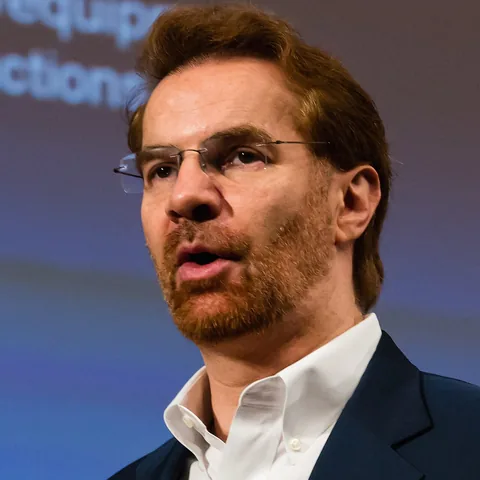 Erik BrynjolfssonNational Bureau of Economic Research, 1999–2026
- Daniel L. RubinStanford University, 2001–2026
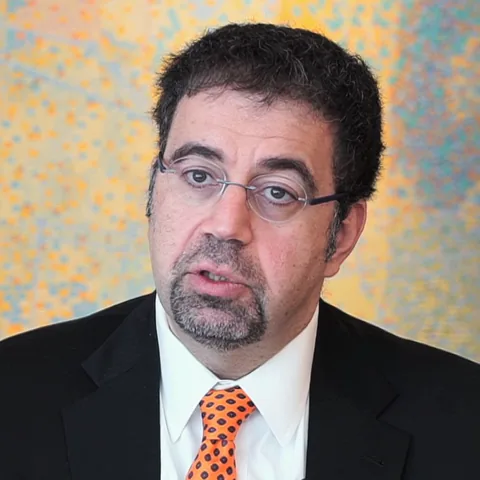 Daron AcemogluNational Bureau of Economic Research, 1999–2026
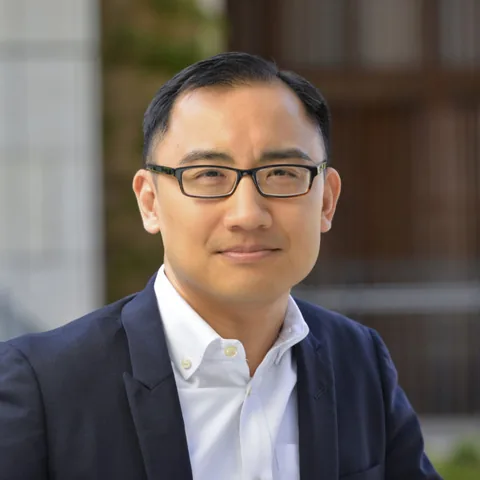 Daniel E. HoStanford Institute for Economic Policy Research, 2018–2021
Sources and credits
Photo: We have no published photo of Susan Athey yet. Send us a free-licensed photo.
- Susan Athey CV
- Stanford’s Athey named FAS professor of economics
- Susan Athey
- Pioneering Tech Economist Susan Athey Joins Federal Antitrust Team
- Recursive Partitioning for Heterogeneous Causal Effects
- Generalized Random Forests: Journal Article
- Golub Capital Social Impact Lab Aims to Enhance Social Sector Effectiveness
- Stanford HAI Welcomes Six Distinguished Scholars as Senior Fellows
- Estimating Wage Disparities Using Foundation Models: Journal Article
- AI & Machine Learning