Peter Singer
Peter Singer is a Melbourne-born bioethicist whose arguments about animal suffering now reach into the ethics of artificial intelligence. After studying at the University of Melbourne and at Oxford, he published Animal Liberation in 1975, founded the Centre for Human Bioethics at Monash University, and spent 25 years as a professor of bioethics at Princeton, winning the $1 million Berggruen Prize in 2021. In 2022, he coauthored papers arguing that AI ethics should include animals and that image recognition systems, large language models and recommender systems learn speciesist biases. A 2024 study he coauthored tested how ChatGPT 4 and Claude 2.1 weigh animal interests, and in July 2024 he introduced Peter Singer AI, a chatbot built with Sankalpa Ghose from his writings. Retired from Princeton since 2024, he is a visiting professor in medical ethics at the National University of Singapore and co-hosts the podcast Lives Well Lived.
Timeline
-
1946–1975
Oxford and Animal Liberation
Born in Melbourne in 1946, he earns a bachelor's degree at the University of Melbourne in 1967 and a Bachelor of Philosophy at Oxford in 1971, with a thesis on civil disobedience supervised by R. M. Hare. A 1970 lunch at Oxford with fellow graduate student Richard Keshen turns his attention to factory farming. His essay "Famine, Affluence, and Morality" follows in 1972, and Animal Liberation appears in 1975.
-
1977–1999
Bioethics at Monash
In 1977, he returns to Melbourne, where he spends most of his career until 1999. He twice chairs the philosophy department at Monash University and founds its Centre for Human Bioethics, and his book Practical Ethics appears in 1979.
-
1999–2024
Professor at Princeton
He moves to Princeton in 1999 and spends 25 years as Ira W. DeCamp Professor of Bioethics at the University Center for Human Values. His 2009 book The Life You Can Save gives its name to the nonprofit he founds to improve the lives of people in extreme poverty. He retires from Princeton in 2024.
-
July 2020
On the Lex Fridman Podcast
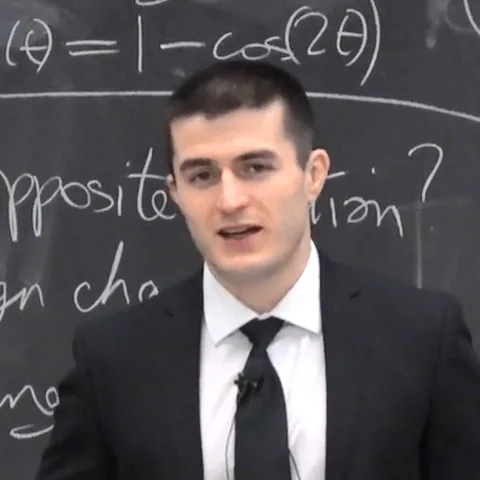
In July 2020, he appears on episode 107 of the Lex Fridman Podcast, titled "Suffering in Humans, Animals, and AI". The conversation covers whether robots can suffer and the control problem of AI.
-
2021
The Berggruen Prize
He wins the 2021 Berggruen Prize for Philosophy & Culture, a $1 million award, for work reinvigorating utilitarianism in academic philosophy and as a force for change in the world. He donates the prize money to organizations that help people in extreme poverty and reduce the suffering of animals in factory farms.
-
2022
Speciesist bias in AI
In February 2022, he coauthors "Speciesist bias in AI" with Thilo Hagendorff, Leonie Bossert and Yip Fai Tse; the paper finds speciesist patterns in image recognition systems, large language models and recommender systems. With Tse, he publishes "AI ethics: the case for including animals" in AI and Ethics in 2022, calling for a new field of research on how AI affects nonhuman animals.
-
2024
Animal-friendly AI and PSai
In March 2024, he coauthors "The Case for Animal-Friendly AI" with Sankalpa Ghose, Yip Fai Tse, Kasra Rasaee and Jeff Sebo; the paper tests OpenAI's ChatGPT 4 and Anthropic's Claude 2.1 on the consideration they give to animals. In July 2024, he introduces Peter Singer AI, a chatbot he builds with Ghose from his writings that uses the Socratic method. Satisfied with its performance, he gives Ghose the go-ahead to make it public.
-
As of October 2026
Visiting professor in Singapore
After retiring from Princeton in 2024, he returns to live in Melbourne. He serves as V.K. Rajah Visiting Professor in Medical Ethics at the Centre for Biomedical Ethics, National University of Singapore, and co-hosts the podcast Lives Well Lived with Katarzyna de Lazari-Radek.
Career
- NowNational University of SingaporeV.K. Rajah Visiting Professor in Medical Ethics
- 1999–2024Princeton UniversityIra W. DeCamp Professor of Bioethics
- 1977–1999Monash UniversityChair of the philosophy department, Founder
- The Life You Can SaveFounder
Education
- 1971University of OxfordBachelor of Philosophy
- 1967University of MelbourneBachelor's degree
Videos
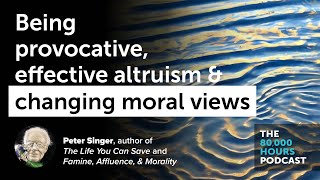 Being provocative, advocacy, & the life you can save | Peter Singer (2019)80,000 Hours · 22 January 2025 · 2 h 2 min
 Peter Singer: Suffering in Humans, Animals, and AI | Lex Fridman Podcast #107Lex Fridman · 8 July 2020 · 1 h 9 min
Video data from YouTube API Services. By watching you agree to the YouTube Terms of Service. How we use YouTube data.
Colleagues
Sources and credits
Photo: We have no published photo of Peter Singer yet. Send us a free-licensed photo.
- Peter Singer - Wikipedia
- About Peter Singer — PETER SINGER
- #107 - Peter Singer: Suffering in Humans, Animals, and AI | Lex Fridman Podcast
- Annual Berggruen Prize for Philosophy & Culture Awarded to Public Philosopher Peter Singer
- Speciesist bias in AI -- How AI applications perpetuate discrimination and unfair outcomes against animals
- AI ethics: the case for including animals · Pablo Stafforini
- The Case for Animal-Friendly AI
- Introducing Peter Singer AI: Elevating Ethical Discourse in the Digital Age
- Peter Singer AI
- PSai: Singer’s Ethical Insights on Demand - The Prindle Institute for Ethics