Steve Renals
Also known as Stephen Renals
Steve Renals is a speech technology researcher at the University of Edinburgh whose work spans hybrid neural network and hidden Markov model recognizers, meeting understanding and recurrent language models. A former undergraduate chemist, he moved to Edinburgh in the mid-1980s for a master's in AI, then held a postdoctoral fellowship at the International Computer Science Institute in Berkeley, where a 1992 technical report written with Nelson Morgan showed that a connectionist component improves a state-of-the-art HMM system. After moving from Sheffield to Edinburgh in 2003, he was Professor of Speech Technology and Director of the Centre for Speech Technology Research by 2004, led Edinburgh's part of the European AMI and AMIDA meeting projects, and from May 2011 led the Natural Speech Technology programme with Cambridge and Sheffield. He became an IEEE Fellow in 2014, joined the ISCA Fellows class of 2016, and coauthored the multiplicative LSTM in 2016. He is an Emeritus Professor there, with research interests in meetings, speech recognition, and audio and multimodal information access.
- Now at
- University of Edinburgh
- Works
- 422
- Citations
- 13,198
- h-index
- 57
- Badges
Publication numbers from OpenAlex, as of 22 October 2026.
Timeline
-
1980s
From chemistry to AI at Edinburgh
Originally an undergraduate chemist, he moves to Edinburgh in the mid-1980s to try a master's in AI, and goes on to earn an MSc and a PhD there after a BSc at Sheffield. His MSc project covers neural networks and auditory modelling, and in 1989 he writes a paper on radial basis functions with his PhD supervisor Richard Rohwer.
-
1992
Hybrid neural network speech recognition
As a postdoctoral fellow at the International Computer Science Institute in Berkeley, he works with Nelson Morgan on hybrid neural network and HMM speech recognition. A December 1992 technical report by Renals and Morgan treats connectionist networks as probability estimators inside a hidden Markov model recognizer and shows that a connectionist component improves a state-of-the-art HMM system.
-
2003–2004
Professor at Edinburgh
After serving as Reader in Computer Science at Sheffield, he moves to Edinburgh in 2003. By 2004, he is Professor of Speech Technology in the School of Informatics and Director of the Centre for Speech Technology Research, and in October 2004 he delivers the inaugural lecture "Speech Recognition and Understanding in Realistic Environments".
-
2008
Meetings in AMI and AMIDA
He leads Edinburgh's part of the European AMI and AMIDA projects on recognizing and understanding multiparty meetings, which Edinburgh coordinates jointly with IDIAP. In 2008, he and Hervé Bourlard publish an overview of the projects, which include a one hundred hour annotated meeting corpus.
-
May 2011
Natural Speech Technology programme
In May 2011, he begins leading Natural Speech Technology, a five-year EPSRC-funded collaboration between Edinburgh, Cambridge and Sheffield. The programme aims to make speech technology perform more naturally, approaching human levels of reliability, adaptability and conversational richness.
-
2014
IEEE Fellow and senior area editor
He is named an IEEE Fellow in 2014 for contributions to speech recognition technology and its use in spoken language processing. As the ACM and IEEE journals merge into the IEEE/ACM Transactions on Audio, Speech, and Language Processing, published jointly from January 2014, he serves as one of its Senior Area Editors.
-
2016
An ISCA fellowship and mLSTM
He joins the ISCA Fellows class of 2016. In September 2016, he and coauthors Ben Krause, Liang Lu and Iain Murray post multiplicative LSTM, a recurrent network architecture that combines LSTM with multiplicative recurrent networks and outperforms standard LSTM on character-level language modelling.
-
As of October 2026
Emeritus professor at Edinburgh
He is an Emeritus Professor at the University of Edinburgh's Centre for Speech Technology Research, with research interests in meetings, speech recognition, and audio and multimodal information access.
Career
- Since 2004University of EdinburghProfessor of Speech Technology
- 1996–2004University of Sheffield
- 1993–1996University of Cambridge
- 1992–2003International Computer Science InstitutePostdoctoral Fellow
Education
- University of EdinburghMSc and PhD
Colleagues
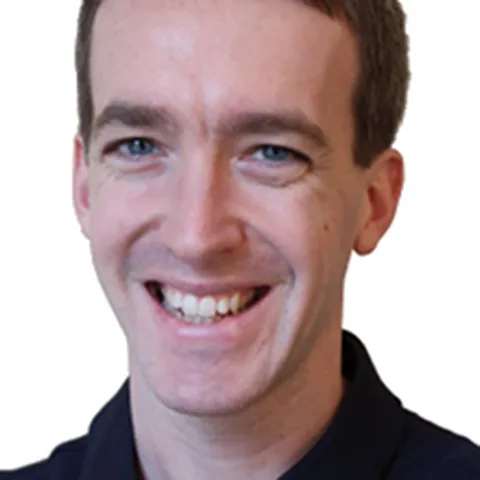 Iain MurrayUniversity of Edinburgh, 2010–2021
 Nelson MorganInternational Computer Science Institute, 1991–1994
 Hervé BourlardInternational Computer Science Institute, 1991–1994
- Simon KingUniversity of Edinburgh, 2003–2026
- Robert B. FisherUniversity of Edinburgh, 2003–2026
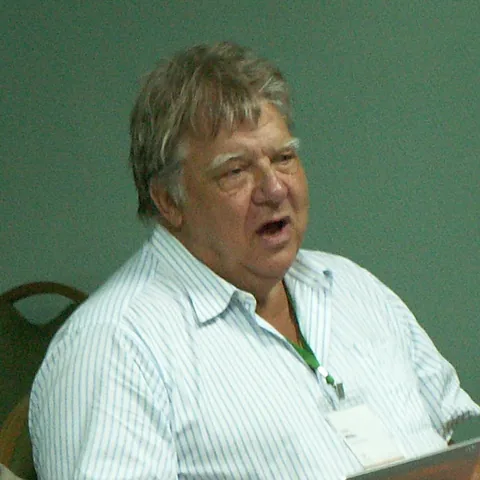 Yorick A. WilksUniversity of Sheffield, 1996–2005
Sources and credits
Photo: We have no published photo of Steve Renals yet. Send us a free-licensed photo.
- Get to Know Your Fellow Researchers: Steve Renals | IEEE Signal Processing Society
- School of Informatics, Inaugural Lecture by Professor Steve Renals
- Abstract for renals_icsi92-081
- AMIDA: Augmented Multiparty Interaction with Distance Access
- Recognition and Understanding of Meetings: Overview of the European AMI and AMIDA Projects
- Natural Speech Technology
- EPSRC grant for speech study | Staff news | The University of Edinburgh
- Steve Renals – HSCMA 2014
- Stephen Renals - Wikipedia
- Joint IEEE/ACM Transactions on Audio, Speech, and Language Processing | IEEE Signal Processing Society
- CUEngineering
- [1609.07959] Multiplicative LSTM for sequence modelling
- Steve Renals