Scott Aaronson
Scott Aaronson is a theoretical computer scientist at the University of Texas at Austin whose work on quantum computing and complexity theory took him to OpenAI to study AI safety. He began his Berkeley PhD in AI, switched to quantum computing, finished in 2004, and joined the MIT faculty in 2007, winning the National Science Foundation's Waterman Award in 2012. With his student Alex Arkhipov, he proposed a linear-optics experiment in 2010, and Cambridge University Press published his book Quantum Computing Since Democritus in 2013. From 2022 to 2024, he worked at OpenAI on the theoretical foundations of AI safety and described a tool for watermarking text from systems such as ChatGPT. Elected to the National Academy of Sciences in 2026 and a winner of the 2020 ACM Prize in Computing, he holds the Schlumberger Centennial Chair of Computer Science and directs UT Austin's Quantum Information Center.
Timeline
-
2000–2004
Cornell and a Berkeley PhD
At Cornell, he writes control algorithms for a RoboCup robot-soccer team and earns a BSc in computer science in 2000. He starts his PhD at the University of California, Berkeley in AI, then switches to quantum computing and completes the degree under Umesh Vazirani in 2004.
-
2007–2016
MIT and a Waterman Award
After postdoctoral work at the Institute for Advanced Study and the University of Waterloo, he joins the MIT faculty in 2007 and teaches in Electrical Engineering and Computer Science for nine years. In 2012, the National Science Foundation names him one of two recipients of its Alan T. Waterman Award, with a $1 million grant. By 2012, he has also founded the Complexity Zoo wiki and writes the blog Shtetl-Optimized.
-
November 2010
The complexity of linear optics
In November 2010, he and his student Alex Arkhipov post The Computational Complexity of Linear Optics, which gives evidence that classical computers cannot efficiently simulate identical photons sent through a linear-optical network. They describe an optical experiment that could use quantum mechanics to carry out a calculation infeasible for conventional computers.
-
2013
Quantum Computing Since Democritus
Cambridge University Press publishes Quantum Computing Since Democritus in March 2013, a book based on his graduate survey course of the same name. It runs from Democritus through logic, computability, complexity, quantum computing and cryptography, with discussions of time travel and the anthropic principle.
-
2016–2018
Quantum Information Center at UT Austin
In summer 2016, he moves from MIT to the University of Texas at Austin as David J. Bruton Jr. Centennial Professor of Computer Sciences and founding director of its new Quantum Information Center. He receives a Simons Investigator Award in 2017 and the Tomassoni-Chisesi Prize in Physics in 2018.
-
2020
The ACM Prize in Computing
He receives the 2020 ACM Prize in Computing, announced in April 2021, for contributions to quantum computing. ACM credits him with helping develop the concept of quantum supremacy and with many of the theoretical foundations of quantum supremacy experiments.
-
2022–2024
AI safety at OpenAI
In summer 2022, he announces a leave from UT Austin to work at OpenAI on the theoretical foundations of AI safety and alignment, and he stays for the 2022–2023 and 2023–2024 academic years. As a guest researcher, he reveals in a UT Austin lecture reported in December 2022 that OpenAI is developing a tool to statistically watermark text from systems such as ChatGPT.
-
2026
National Academy of Sciences election
In April 2026, he is elected to the National Academy of Sciences, one of 120 members inducted at its 163rd Annual Meeting. He holds the Schlumberger Centennial Chair of Computer Science at UT Austin, directs its Quantum Information Center, and teaches a course on AI alignment theory in fall 2026.
Career
- Since 2016University of Texas at AustinDavid J. Bruton Jr. Centennial Professor of Computer Sciences
- 2022–2024OpenAIGuest researcher
- 2011–2016MIT CSAIL
- 2007–2016Massachusetts Institute of TechnologyFaculty member
- 2004–2007University of WaterlooPostdoctoral researcher
- 2002–2007Institute for Advanced StudyPostdoctoral researcher
Education
- 2004University of California, BerkeleyPhD
- 2000Cornell UniversityBSc in computer science
Most-cited works
Videos
 Scott Aaronson - Quantum Computing, Complexity, and CreativityDwarkesh Patel · 20 November 2020 · 1 h 27 min
 Scott Aaronson: Computational Complexity and Consciousness | Lex Fridman Podcast #130Lex Fridman · 12 October 2020 · 1 h 53 min
 Scott Aaronson: Quantum Supremacy | AI Podcast ClipsLex Fridman · 22 February 2020 · 16 min
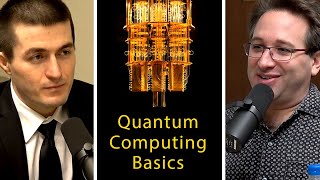 Scott Aaronson: What is a Quantum Computer? | AI Podcast ClipsLex Fridman · 18 February 2020 · 22 min
All 5 videos of Scott Aaronson
Video data from YouTube API Services. By watching you agree to the YouTube Terms of Service. How we use YouTube data.
Colleagues
 Eric PriceUniversity of Texas at Austin, 2015–2026
 Constantine CaramanisUniversity of Texas at Austin, 2015–2026
 Brent WatersUniversity of Texas at Austin, 2015–2026
 John J. LeonardMassachusetts Institute of Technology, 2007–2016
 John V. GuttagMassachusetts Institute of Technology, 2007–2016
 Peter SzolovitsMassachusetts Institute of Technology, 2007–2016
Sources and credits
Photo: We have no published photo of Scott Aaronson yet. Send us a free-licensed photo.
- Scott Aaronson - Wikipedia
- The complexonaut | MIT News
- Shtetl-Optimized » Blog Archive » OpenAI!
- Scott Aaronson | UT Austin Computer Science
- NSF Honors Aaronson with Alan T. Waterman Award | MIT CSAIL
- [1011.3245] The Computational Complexity of Linear Optics
- Quantum Computing since Democritus | Cambridge University Press
- UT Austin Computer Scientist Elected to National Academy of Sciences | College of Natural Sciences
- Aaronson Receives ACM Prize in Computing | UT Austin Computer Science
- OpenAI's attempts to watermark AI text hit limits | TechCrunch
- Scott Aaronson