Roger Levy
Also known as Roger P. Levy
Roger Levy is an MIT professor who develops computational models of human language processing and directs its Computational Psycholinguistics Laboratory. He earned a mathematics degree at the University of Arizona in 1996 and a linguistics PhD at Stanford in 2005, then joined UC San Diego in 2006 and MIT in 2016. His research includes a 2008 noisy-channel model of sentence comprehension and a 2018 study of how recurrent neural networks learn grammatical relationships. With Jennifer Hu, he examined how to measure language models’ linguistic knowledge in 2023. He received a Guggenheim Fellowship in 2024, served as president of the Cognitive Science Society in 2024–2025, and began a term as chair of the MIT faculty in 2025.
- Works
- 435
- Citations
- 23,414
- h-index
- 56
Publication numbers from OpenAlex, as of 27 October 2026.
Timeline
-
1996–2005
Mathematics and Stanford linguistics
Born in Philadelphia and raised in Tucson, he earns a BS in mathematics at the University of Arizona in 1996. Graduate study takes him to Stanford University, where he completes his linguistics PhD under Christopher Manning in 2005.
-
2005–2006
Edinburgh and UC San Diego
After completing his doctorate in 2005, he spends a year as a postdoctoral fellow at the University of Edinburgh’s School of Informatics. He joins the Department of Linguistics at UC San Diego in 2006.
-
2008
A noisy-channel comprehension model
In 2008, he publishes A Noisy-Channel Model of Human Sentence Comprehension under Uncertain Input at the Conference on Empirical Methods in Natural Language Processing. The work models human sentence understanding with uncertainty in the input.
-
2010–2012
CAREER and Sloan awards
He receives an NSF Faculty Early Career Development Award and a UC San Diego Hellman Fellowship in 2010. In 2012, he receives an Alfred P. Sloan Research Fellowship while directing UC San Diego’s Computational Psycholinguistics Lab.
-
2016
Joining MIT brain sciences
In 2016, he joins MIT’s Department of Brain and Cognitive Sciences. At MIT, he directs the Computational Psycholinguistics Laboratory and studies language processing and acquisition at the intersection of AI, linguistics and psychology.
-
2018
Testing grammar in neural networks
With Ethan Wilcox, Takashi Morita and Richard Futrell, he coauthors What do RNN Language Models Learn about Filler–Gap Dependencies? in 2018. Controlled sentence tests show that recurrent neural networks can represent long-distance grammatical relationships and learn some constraints on where these relationships can occur.
-
2023
Measuring language model knowledge
In 2023, he and Jennifer Hu compare prompting with direct probability measurements as methods for testing large language models’ linguistic knowledge. Their EMNLP paper finds that the models’ explicit judgments are less reliable than measurements taken directly from their internal representations.
-
2024
A Guggenheim Fellowship
He receives a Guggenheim Fellowship from the John Simon Guggenheim Memorial Foundation in 2024. His research combines computational modeling of large datasets with experiments on human language processing to help develop algorithms that process human language.
-
2024–2025
Cognitive Science Society president
In 2024–2025, he serves as president of the Cognitive Science Society.
-
Since 2025
Chair of the MIT faculty
In 2025, he begins a term as chair of the MIT faculty that runs through 2027. As of October 2026, he is a professor in MIT’s Department of Brain and Cognitive Sciences and directs its Computational Psycholinguistics Laboratory, combining computational models, experiments and language datasets to study how people understand and acquire language.
Career
- 2025–2027Massachusetts Institute of TechnologyChair of the MIT faculty
- NowMassachusetts Institute of TechnologyProfessor
- NowMassachusetts Institute of TechnologyDirector, Computational Psycholinguistics Laboratory
- From 2016Massachusetts Institute of TechnologyFaculty member, Department of Brain and Cognitive Sciences
- From 2006University of California, San Diego
- 2005–2006University of EdinburghPostdoctoral Fellow
- University of California, San DiegoDirector, Computational Psycholinguistics Lab
Education
- 2005Stanford UniversityPhD in linguistics
- 1996University of ArizonaBS in mathematics
Colleagues
- James DiCarloMassachusetts Institute of Technology, 2016–2026
- Kamal Youcef-ToumiMassachusetts Institute of Technology, 2016–2026
- Fadel AdibMassachusetts Institute of Technology, 2016–2026
 Mihir BellareUniversity of California, San Diego, 2007–2021
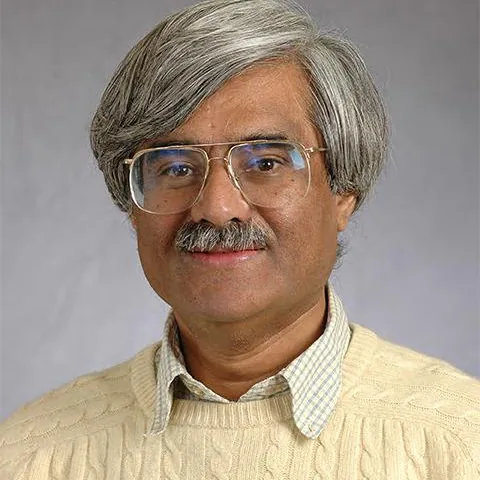 Mohan Manubhai TrivediUniversity of California, San Diego, 2007–2021
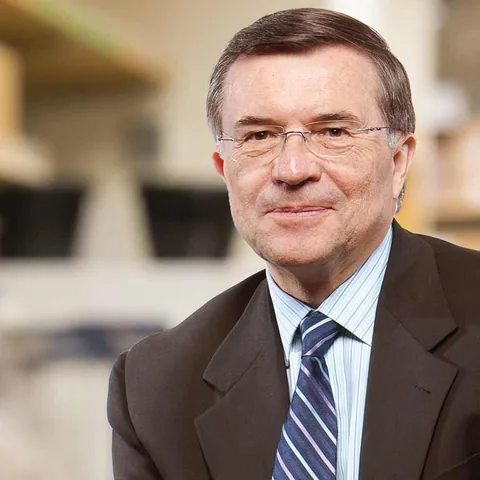 Terrence SejnowskiUniversity of California, San Diego, 2007–2021
Sources and credits
Photo: We have no published photo of Roger Levy yet. Send us a free-licensed photo.
- Roger Levy New Chair of the Faculty - MIT Faculty Newsletter
- Roger Levy | Brain and Cognitive Sciences
- 3 UC San Diego Faculty Members Named Sloan Foundation Research Fellows
- A Noisy-Channel Model of Human Sentence Comprehension under Uncertain Input - ACL Anthology
- Faculty Officers | MIT Faculty Governance
- What do RNN Language Models Learn about Filler–Gap Dependencies? - ACL Anthology
- Prompting is not a substitute for probability measurements in large language models - ACL Anthology
- Three from MIT awarded 2024 Guggenheim Fellowships | MIT News | Massachusetts Institute of Technology
- Roger Levy