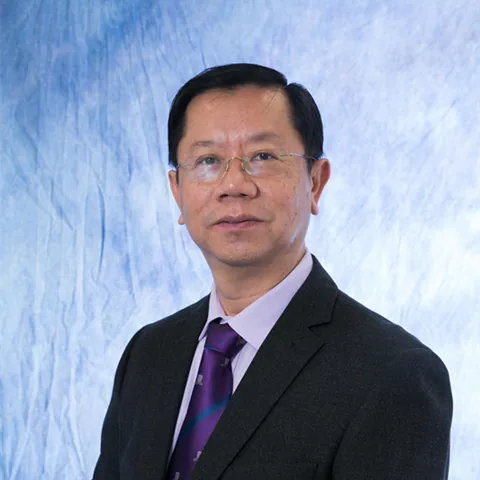
Qiang Xu
Also known as 徐强
Qiang Xu is a computer scientist whose work at the Chinese University of Hong Kong joins AI and chip design, from the security of neural networks to large circuit models for electronic design automation (EDA). After studying telecommunication engineering in Beijing, he earned a Ph.D. at McMaster University in 2005 and then joined CUHK. A paper he co-wrote on approximate adder design won the ICCAD Ten Year Retrospective Most Influential Paper Award in 2022, and in 2024 he co-initiated the large circuit model concept for AI-native EDA. He also served as Chief Scientist of China's National Technology Innovation Center for EDA. At CUHK, he is a professor of computer science and engineering and director of the CURE Lab.
- Badges
Timeline
-
1997–2005
Degrees and a DATE best paper
He earns a B.E. in 1997 and an M.E. in 2000, both in telecommunication engineering at Beijing University of Posts and Telecommunications. In 2004, he receives the Best Paper Award at the IEEE/ACM Design, Automation and Test in Europe conference (DATE). After one and a half years at a start-up integrated circuit design house, he completes a Ph.D. in electrical and computer engineering at McMaster University in 2005 and then joins CUHK.
-
By 2015
Leading the CURE Lab
By 2015, he leads the CUhk REliable computing laboratory (CURE Lab) and CUHK MakerLab, with research in fault-tolerant computing, trusted computing and smart hardware design. He is the director of the CURE Lab.
-
2015
ApproxANN for neural networks
In 2015, he coauthors ApproxANN, an approximate computing framework for artificial neural networks, with Qian Zhang, Ting Wang, Ye Tian and Feng Yuan. The paper appears at the Design, Automation & Test in Europe conference (DATE) and ranks among his top-cited publications.
-
2017–2020
Security of neural networks
He coauthors papers on the security of deep neural networks: a fault injection attack at ICCAD in 2017, the power side-channel attack "I Know What You See" on convolutional neural network accelerators at ACSAC in 2018, and DeepDyve, a dynamic verification method for deep neural networks, at ACM CCS in 2020.
-
2022
An ICCAD retrospective award
In 2022, "On Reconfiguration-Oriented Approximate Adder Design and Its Application," which he wrote with Rong Ye, Ting Wang, Feng Yuan and Rakesh Kumar, receives the William J. McCalla ICCAD Ten Year Retrospective Most Influential Paper Award. The award goes to the ICCAD paper judged most influential on research and industry practice over its first ten years.
-
March 2024
The Dawn of AI-native EDA
In March 2024, he is one of 49 authors of "The Dawn of AI-Native EDA: Opportunities and Challenges of Large Circuit Models," which calls for a shift from AI4EDA to AI-native EDA built on multimodal large circuit models. He co-initiates the large circuit model concept in 2024.
-
September 2025
An ICCAD panel on large models
In September 2025, he is first author of "Revolution or Hype? Seeking the Limits of Large Models in Hardware Design," the foundation paper for an ICCAD 2025 panel. His co-authors come from Southeast University, IBM, TU Darmstadt, the University of Bremen and Synopsys, and the paper introduces him as a CUHK professor who previously served as Chief Scientist of the National Technology Innovation Center for EDA in China.
-
As of October 2026
Professor and CURE Lab director
He is a professor of computer science and engineering at CUHK and director of the CURE Lab. His research interests include AI safety and security, learning-based testing, and motion analysis.
Career
- Since 2005Chinese University of Hong KongProfessor of Computer Science and Engineering
- National Technology Innovation Center for EDA in ChinaChief Scientist
Education
- 2005McMaster UniversityPh.D.
- 2000Beijing University of Posts and TelecommunicationsB.E. and M.E.
Colleagues


Sources and credits
Photo: We have no published photo of Qiang Xu yet. Send us a free-licensed photo.
- Welcome to Qiang Xu's Homepage
- Qiang Xu – CUHK CSE
- History - ICCAD 2022
- Professor Kumar wins 4th 'Most Influential' award | Coordinated Science Laboratory | Illinois
- [2403.07257] The Dawn of AI-Native EDA: Opportunities and Challenges of Large Circuit Models
- Revolution or Hype? Seeking the Limits of Large Models in Hardware Design