Jakob Macke
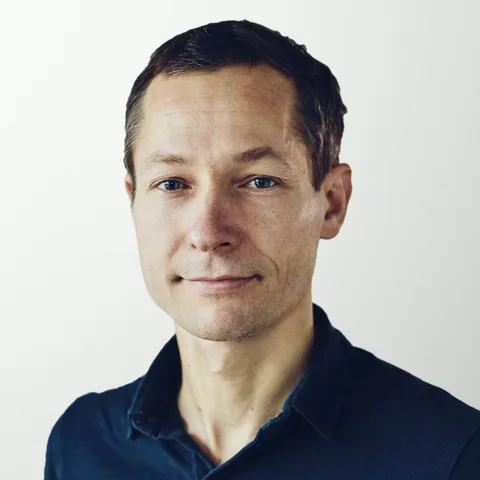
Jakob Macke studies machine learning for scientific understanding. His group develops probabilistic methods and data-driven models of brain networks. Macke studied mathematics at Oxford, completed doctoral work at Max Planck in Tübingen and held a postdoctoral appointment at UCL’s Gatsby Unit. Macke held a professorship in computational neuroengineering at TU Munich from 2018 to 2020. Macke also held earlier positions in Bonn and Darmstadt. Macke is the lab’s principal investigator and a Tübingen professor. Its methods support building scientific models, testing them and selecting new experiments, especially in neuroscience.
- Now at
- University of Tübingen
- Works
- 205
- Citations
- 5,070
- h-index
- 37
Publication numbers from OpenAlex, as of 14 October 2026.
Timeline
-
2018–2020
Computational neuroengineering
Macke held a professorship in computational neuroengineering at TU Munich from 2018 to 2020. Macke also held earlier positions in Bonn and Darmstadt.
-
2026
Model discovery and inference
Macke co-authored the PRISM and ModelSMC preprints in 2026. The projects concern simulation-based inference and language-model-based scientific model discovery.
-
As of October 2026
Mathematics and neuroscience training
Macke studied mathematics at Oxford, completed doctoral work at Max Planck in Tübingen and held a postdoctoral appointment at UCL’s Gatsby Unit.
-
As of October 2026
Probabilistic models for science
Macke is the lab’s principal investigator and a Tübingen professor. Its methods support building scientific models, testing them and selecting new experiments, especially in neuroscience.
Sources and credits
Photo: www.mackelab.org; embedded metadata: EXIF:Artist = Tübingen AI Center / Elia Schmid. License: Not stated by source. Notice in the file: © Tübingen AI Center / Elia Schmid. Source: mackelab.org. Cropped to a square and resized. Ask us to remove or replace this photo.