Paul Groth
Also known as Paul Thomas Groth, Paul T. Groth
Paul Groth is a computer scientist who works on data provenance, data integration and data management for machine learning. He earned a PhD in computer science at the University of Southampton in 2007, worked at the Vrije Universiteit Amsterdam as a postdoctoral researcher and assistant professor, and served as Disruptive Technology Director at Elsevier Labs from 2015 to 2018. He co-chaired the W3C Provenance Working Group, wrote the book Provenance: An Introduction to PROV with Luc Moreau in 2013, and was among the authors of the FAIR Guiding Principles in 2016. In 2018 he became professor of Algorithmic Data Science at the University of Amsterdam, where he leads the Intelligent Data Engineering Lab, and in June 2023 he co-founded longform.ai, a spin-off that uses generative AI to extract insights from audio. He is a professor at the University of Amsterdam and the CTO of longform.ai, and his 2025 papers include work on neurosymbolic reasoning.
- Now at
- University of Amsterdam and longform.ai
Timeline
-
2007
A PhD at Southampton
He earns his PhD in computer science from the University of Southampton in 2007 and does research at the University of Southern California.
-
2009–2015
Researcher at VU Amsterdam
He joins the Vrije Universiteit Amsterdam as a postdoctoral researcher and later becomes assistant professor there. In 2010, he coauthors "The anatomy of a nanopublication" with Andrew Gibson and Jan Velterop, presenting a model of nanopublications, which are core scientific statements with associated context.
-
2013
Provenance standard and PROV book
As co-chair of the W3C Provenance Working Group, he helps produce an international standard for data provenance interchange. In 2013, he and Luc Moreau publish Provenance: An Introduction to PROV, a hands-on guide for web and linked data professionals, with Morgan & Claypool.
-
2015–2018
Elsevier Labs and FAIR principles
From 2015 to 2018, he is Disruptive Technology Director at Elsevier Labs. In 2016, he is among the authors of "The FAIR Guiding Principles for scientific data management and stewardship", published in Scientific Data.
-
2018
Professor at Amsterdam
In November 2018, he becomes professor of Algorithmic Data Science at the University of Amsterdam's Faculty of Science and leads the new Intelligent Data Engineering Lab (INDElab). The lab works on large-scale data integration, data management for machine learning and causality-inspired machine learning. He brings experience as lead architect of the 29-member Open PHACTS project, which developed data platforms to lower the barriers of drug discovery.
-
June 2023
Co-founding longform.ai
He and Pim Stouten co-found longform.ai in June 2023, a University of Amsterdam spin-off based in Amsterdam. Its platform uses generative AI to extract insights from large amounts of audio data, and the company receives €300,000 in funding from Innovatiefonds Noord-Holland.
-
2025
Neurosymbolic reasoning papers
In 2025, he coauthors "Sound and Complete Neurosymbolic Reasoning with LLM-Grounded Interpretations" with Bradley P. Allen, Prateek Chhikara, Thomas Macaulay Ferguson and Filip Ilievski, a method for integrating a large language model into the interpretation function of a paraconsistent logic. He also coauthors "Neurosymbolic Association Rule Mining from Tabular Data" with Erkan Karabulut and Victoria Degeler, which introduces the neurosymbolic method Aerial+. With Christine Borgman, he publishes "Infrastructure, Intermediaries, and Artificial Intelligence", a rejoinder in Harvard Data Science Review.
-
As of October 2026
Professor and longform.ai CTO
He is Professor of Algorithmic Data Science at the University of Amsterdam, where he leads INDElab at the Informatics Institute. He is also the co-founder and CTO of longform.ai.
Career
- Since 2023longform.aiCo-founder and CTO
- Since 2018University of AmsterdamProfessor of Algorithmic Data Science
- 2015–2018ElsevierDisruptive Technology Director
- 2009–2015Vrije Universiteit AmsterdamPostdoctoral Researcher; Assistant Professor
- World Wide Web ConsortiumCo-chair
Education
- 2007University of SouthamptonPhD in Computer Science
Colleagues
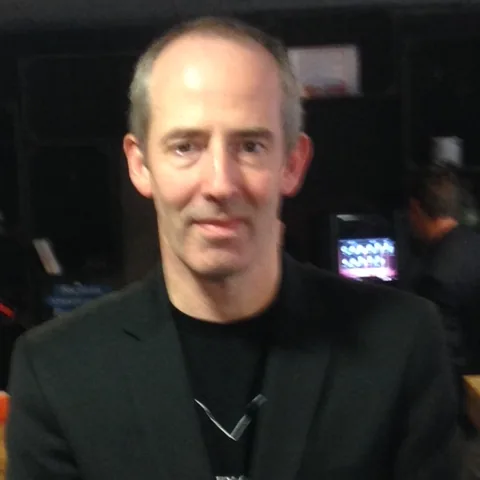
 Cees SnoekUniversity of Amsterdam, 2018–2026
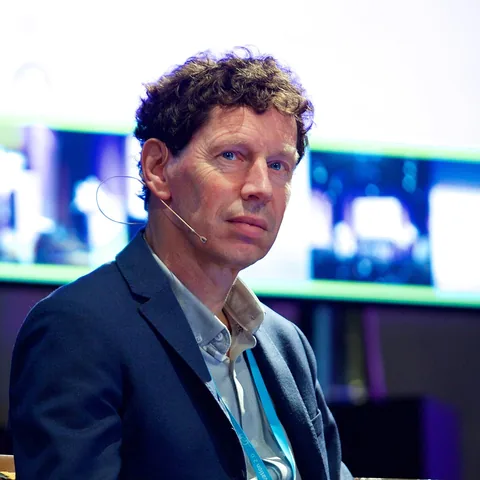
 Maarten de RijkeUniversity of Amsterdam, 2018–2026
 Frank van HarmelenVrije Universiteit Amsterdam, 2009–2015
- Jan TheeuwesVrije Universiteit Amsterdam, 2009–2015
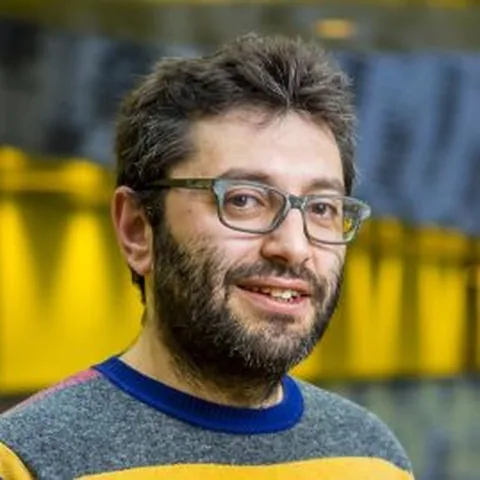 Evangelos KanoulasUniversity of Amsterdam, 2018–2026
- Mauro ContiVrije Universiteit Amsterdam, 2009–2014
Sources and credits
Photo: We have no published photo of Paul Groth yet. Send us a free-licensed photo.
- Paul Groth, professor of Algorithmic Data Science - Universiteit van Amsterdam
- The anatomy of a nanopublication
- Brief Bio · Paul Groth
- PROV Book
- The FAIR Guiding Principles for scientific data management and stewardship | Scientific Data
- Intelligent Data Engineering Lab (INDElab) - Informatics Institute - University of Amsterdam
- longform.ai receives funding to extract insights from audio data
- Sound and Complete Neurosymbolic Reasoning with LLM-Grounded Interpretations
- Neurosymbolic Association Rule Mining from Tabular Data
- From Data Creator to Data Reuser: Distance Matters - Leiden University