Paige Benton
Paige Benton is a South African political philosopher who studies how AI and social media threaten liberal democracy. Her philosophy PhD, begun in 2018 and completed at the University of Pretoria in 2023, was the first in political philosophy funded by the Centre for Artificial Intelligence Research (CAIR) node of the CSIR. In 2023 she argued in the SACAIR proceedings that AI literacy belongs among John Rawls's primary goods, and in 2024 she and Michael W. Schmidt published "The Harm of Social Media to Public Reason" in Topoi. She is a post-doctoral research fellow at the African Centre for Epistemology and Philosophy of Science at the University of Johannesburg and a Technology & Human Rights Fellow at Harvard Kennedy School's Carr-Ryan Center for 2026–27.
Timeline
-
2018–2019
Starting a CAIR philosophy PhD
In 2018, she begins a PhD in philosophy titled 'Interfaces between Knowledge Representation and Reasoning and Political Philosophy: The Symbiotic Relationship Between Morality and Justice', as an IBS scholarship student in the CAIR research group. In 2019, she gives the talk 'AI and the Social Good' at the 4th CAIR/UP Symposium.
-
2023
A doctorate from Pretoria
She completes her PhD in Philosophy at the University of Pretoria in 2023 with a thesis reconceptualizing the relationship between the right and the good in Rawlsian political liberalism. Hers is the first PhD in political philosophy funded by the Centre for Artificial Intelligence Research (CAIR) node of the CSIR.
-
2023
AI literacy as a primary good
At SACAIR 2023, the 4th Southern African Conference for Artificial Intelligence Research, held in Muldersdrift, South Africa, in December 2023, she contributes the paper "AI Literacy: A Primary Good" to the proceedings Springer publishes in its Communications in Computer and Information Science series. The paper argues that AI literacy should be added to the list of primary goods developed by John Rawls.
-
2023–2024
A Topoi paper with Schmidt
In September 2023, Michael W. Schmidt presents "The Harm of Social Media to Public Reason", written with her, at the ECPR General Conference at Charles University. Topoi publishes the paper in 2024 (volume 43, issue 5); drawing on John Rawls's political liberalism, it explains why social media platforms that amplify echo chambers and epistemic bubbles likely violate the democratic norms tied to public reason.
-
2025–2026
Co-PI on a democracy grant
In August 2025, she organizes the Digital Decolonisation and Digital Justice Conference, a T20 side event for the first G20 in Africa. She is also Co-PI, with Veli Mitova, on the Global Excellence and Stature grant "Safeguarding Democracy in the Age of AI" (2025–2026), which funds a workshop series at ACEPS.
-
2026–2027
A Carr-Ryan Center fellowship
She joins the Carr-Ryan Center for Human Rights at Harvard Kennedy School as a Technology & Human Rights Fellow for 2026–27, announced in August 2026. A South African political philosopher, she studies political epistemology, the politics of AI, and digital justice, and her fellowship project argues that digital justice requires digital reparations.
-
As of October 2026
Postdoctoral fellow in Johannesburg
She is a Post-Doctoral Research Fellow at the African Centre for Epistemology and Philosophy of Science (ACEPS) at the University of Johannesburg. Her current research examines how AI and digitally personalized information environments threaten the epistemic foundations of liberal democracy.
Career
- NowUniversity of JohannesburgPost-Doctoral Research Fellow
- 2026–2027Harvard Kennedy SchoolTechnology & Human Rights Fellow
Education
- 2023University of PretoriaPhD
Colleagues
Sources and credits
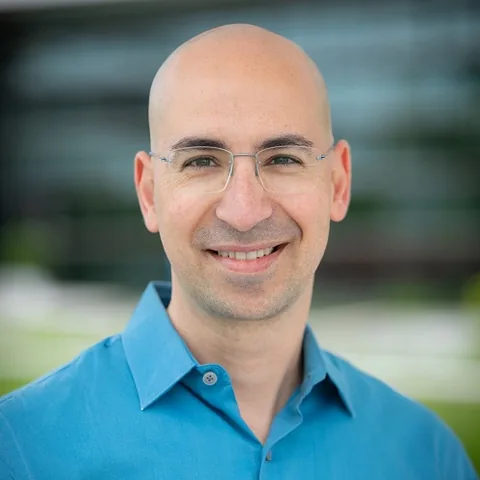
Photo: We have no published photo of Paige Benton yet. Send us a free-licensed photo.
- Paige Benton | CAIR
- Paige Benton | Harvard Kennedy School
- AI Literacy: A Primary Good - University of Johannesburg
- The Harm of Social Media to Public Reason - University of Johannesburg
- The Harm of Social Media to Public Reason - ECPR
- Announcing the Carr-Ryan Center for Human Rights 2026-27 Fellows | Harvard Kennedy School