Noam Slonim
Also known as נעם סלונים
Noam Slonim is an AI researcher whose work spans information theory, computational argumentation and language models. He completed a PhD at Hebrew University's Interdisciplinary Center for Neural Computation in 2002 and spent four years as a Princeton postdoc in physics and genomics. At IBM Research, he led the Debating Technologies Grand Challenge, coauthored a 2021 paper about Project Debater, published a Key Point Analysis demo with colleagues and studied zero-shot text classification with large language models. Since September 2025, he is a research scientist at Google Research Israel, where he works on Gemini and coauthors a 2026 paper about Google Earth AI's Geospatial Reasoning agent.
Timeline
-
2002
A Hebrew University PhD
He completes a PhD at the Hebrew University's Interdisciplinary Center for Neural Computation in 2002, working in its Machine Learning lab.
-
2003–2006
Princeton postdoctoral research
From 2003 to 2006, he spends four years as a postdoctoral researcher in Princeton's Department of Physics and the Lewis-Sigler Institute for Integrative Genomics. There, he develops techniques for analyzing genomic data.
-
2006
Multivariate Information Bottleneck
In 2006, he coauthors a general framework that extends the Information Bottleneck method to multiple interrelated data partitions.
-
2007–2011
IBM's Debating Technologies challenge
He joins the IBM Haifa Research Lab as a research staff member in 2007. In 2011, he becomes technical lead of IBM's Debating Technologies Grand Challenge and serves as its principal investigator.
-
2021
An autonomous debating system
In 2021, he coauthors a Nature paper that presents Project Debater as an autonomous system for competitive debate with humans. The paper describes its architecture and evaluates its performance, including its public debut against three expert debaters.
-
November 2021
Key Point Analysis demo
In November 2021, he and colleagues publish an online demo of Key Point Analysis, which identifies main points and their prevalence in opinionated text. They also organize a shared task at the ArgMining workshop.
-
December 2023
Zero-shot text classification
In December 2023, he coauthors a study of zero-shot topical text classification with large language models. The study compares models on TTC23, a benchmark of 23 publicly available datasets across domains and styles.
-
Since September 2025
Google Research and Earth AI
He joins Google Research Israel as a research scientist in September 2025. He works on efforts to enhance Gemini and advance AI reasoning and language understanding. In October 2026, he coauthors a paper about Google Earth AI's Geospatial Reasoning agent, a Gemini-powered system that combines geospatial data sources, foundation models and tools to answer questions about our planet.
Career
- Since 2025GoogleResearch scientist
- 2016–2025IBM
- 2010–2023IBM Research - Thomas J. Watson Research Center
- From 2007IBM Research
- 2003–2009Princeton UniversityPostdoctoral researcher
Education
Most-cited works
- Document clustering using word clusters via the information bottleneck methodWith Naftali Tishby
- Agglomerative Information BottleneckWith Naftali Tishby
- A Universal Framework for Regulatory Element Discovery across All Genomes and Data Types
- Unsupervised document classification using sequential information maximizationWith Naftali Tishby and Nir Friedman
- An autonomous debating systemWith Dafna Sheinwald
Videos
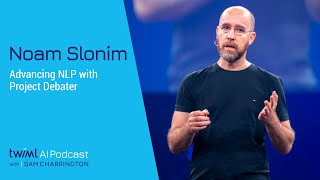
Video data from YouTube API Services. By watching you agree to the YouTube Terms of Service. How we use YouTube data.
Colleagues
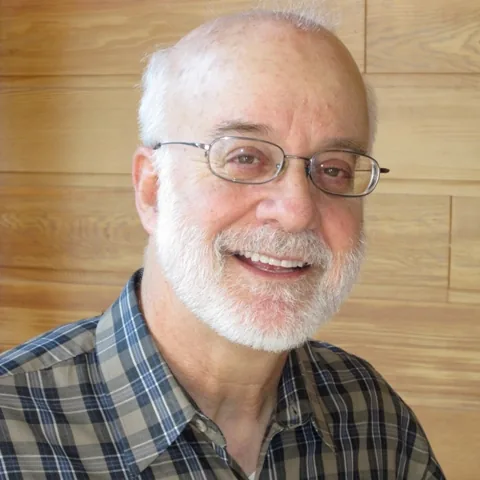 Ronald FaginIBM Research - Thomas J. Watson Research Center, 2010–2023
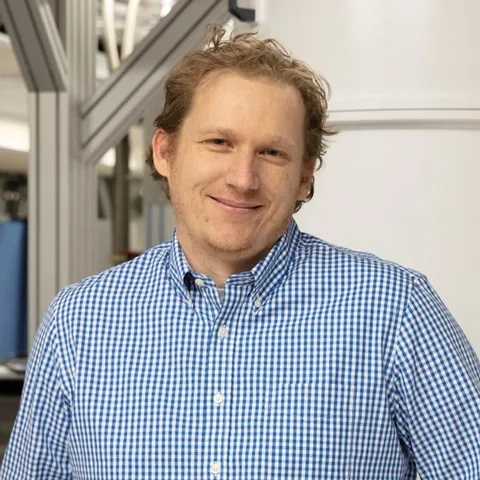 Jay GambettaIBM, 2016–2025
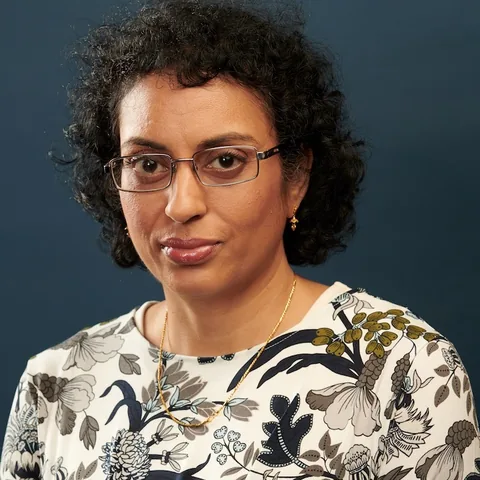 Rama AkkirajuIBM Research - Thomas J. Watson Research Center, 2010–2021
- Michael PichenyIBM, 2016–2021
 Charu Chandra AggarwalIBM, 2016–2025
 Thomas SteinkeIBM Research - Thomas J. Watson Research Center, 2016–2020
Sources and credits
Photo: We have no published photo of Noam Slonim yet. Send us a free-licensed photo.
- Noam Slonim - Wikipedia
- Slonim speaks at JURIX 2014
- Multivariate information bottleneck - The Hebrew University of Jerusalem
- Noam Slonim | Falling Walls
- An autonomous debating system | Nature
- Project Debater argues for key point analysis | IBM Research
- Zero-shot Topical Text Classification with LLMs - an Experimental Study | IBM Research
- Noam Slonim | AI Researcher & Author | נעם סלונים
- Google Earth AI Geospatial Reasoning Agent: Capabilities and a Systematic Evaluation | Google Research
- Google Earth AI Geospatial Reasoning Agent: Capabilities and a Systematic Evaluation | arXiv