Marco Bonizzato
Marco Bonizzato is an engineer whose AI research uses optimization to personalize neurostimulation for movement recovery. He completes an electrical-engineering PhD at EPFL in 2017 on brain-controlled neuroprosthetic treatment after spinal trauma. His 2018 and 2021 studies connect cortical activity with neural stimulation to support walking after spinal trauma. He receives the 2022 Turnbull-Tator Award for an intracortical neuroprosthesis paper and coauthors 2023 research on autonomous neurostimulation optimization. As of October 2026, he is an assistant professor of electrical engineering at Polytechnique Montréal, a professor of neuroscience at Université de Montréal, and an associate academic member of Mila.
- Now at
- Polytechnique Montréal, Mila and sciNeurotech Lab
Timeline
-
2017
An EPFL PhD on neuroprosthetics
He completes an electrical-engineering PhD at EPFL in 2017 on brain-controlled neuroprosthetic interventions to restore walking after spinal trauma in rats, under S. Micera and G. Courtine.
-
2018
A brain-controlled neuroprosthesis
In 2018, he coauthors a study that links cortical activity to spinal stimulation; after brief calibration and without prior training, the interface enables paralyzed rats to walk overground and adjust foot clearance.
-
2021
Decoding intent for walking
In 2021, he coauthors a study that combines deep brain and epidural spinal stimulation in rats with severe spinal trauma. An unsupervised learning algorithm decodes cortical activity to link stimulation to intent to walk.
-
2022
A Turnbull-Tator Award
He receives the 2022 Turnbull-Tator Award for his coauthored 2021 Science Translational Medicine paper on an intracortical neuroprosthesis that improves walking and leg control after spinal trauma.
-
2023
Autonomous neurostimulation optimization
In 2023, he coauthors a study showing that artificial intelligence can autonomously optimize stimulation parameters in implanted brain neuroprostheses in animals. The team uses learning algorithms to tune protocols and personalize treatment to each patient's state.
-
2025–2026
A neurotechnology platform
For the 2025–2026 UNIQUE competition, he serves as principal investigator for the Neurotechnology platform at Université de Montréal.
-
As of October 2026
Professorships at Polytechnique and UdeM
As of October 2026, he is an assistant professor of electrical engineering at Polytechnique Montréal and a professor of neuroscience at Université de Montréal. He is an associate academic member of Mila and directs sciNeurotech Lab, which aims to develop AI-personalized neurostimulation therapies for sensorimotor recovery.
Career
- Since 2025Université de MontréalPrincipal Investigator, Neurotechnology Platform
- NowPolytechnique MontréalAssistant Professor of Electrical Engineering
- NowMilaAssociate Academic Member
- NowsciNeurotech LabDirector
Education
- 2017EPFLPhD in Electrical Engineering
Colleagues

Sources and credits
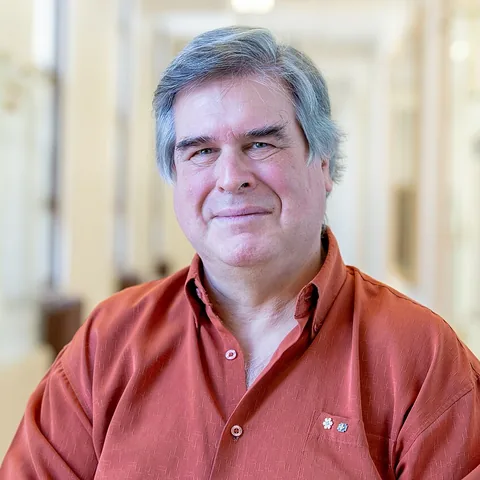
Photo: We have no published photo of Marco Bonizzato yet. Send us a free-licensed photo.
- Brain-controlled neuroprosthetic interventions
- Brain-controlled modulation of spinal circuits
- Multi-pronged neuromodulation intervention engages residual motor circuitry
- Marco Bonizzato remporte le Prix Turnbull-Tator 2022 - UdeMNouvelles
- Des neuroprothèses intelligentes pour retrouver la motricité | UdeMNouvelles
- 2025-2026 UNIQUE competition: technology platforms
- Marco BONIZZATO - La recherche - Université de Montréal
- Marco Bonizzato | Mila