Manikandan Narayanan
Also known as Mani Narayanan
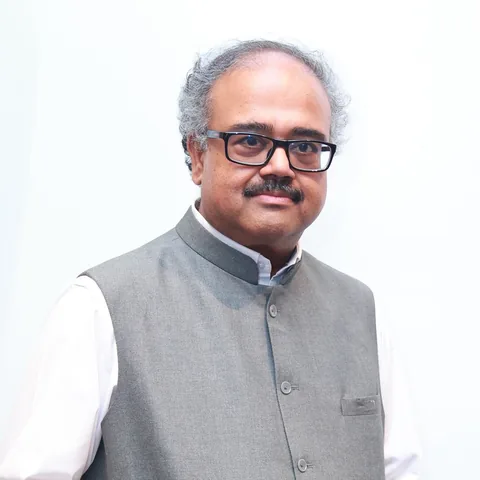
Manikandan Narayanan is a computer scientist whose work applies causal inference, network algorithms and machine learning to genomic data. He earned a Ph.D. under Richard Karp at the University of California, Berkeley in 2007, worked at Merck Research Labs, and was a research scientist at NIAID, part of the National Institutes of Health, from 2010 to 2017. In 2013, he coauthored a Cell study of gene regulatory networks in late-onset Alzheimer's disease, and in 2018 he joined IIT Madras. MultiCens, a multilayer network centrality method he coauthored, appeared in 2023, and the nonlinear causal discovery method NLCD followed in 2026. He is an associate professor of computer science and engineering at IIT Madras and leads the BIRDS research group.
- Now at
- IIT Madras
- Badges
Timeline
-
2001–2007
Berkeley PhD with Richard Karp
He earns a B.E. in computer science and engineering from the College of Engineering at Guindy, Anna University in 2001, then an M.S. in 2003 and a Ph.D. in 2007 in computer science at the University of California, Berkeley. He completes his doctorate under the mentorship of Richard Karp, with an emphasis in computational and genomic biology, and his dissertation is titled Comparative and Evolutionary Analysis of Cellular Pathways. He is a Siebel Scholar in the class of 2003.
-
2007–2010
Research scientist at Merck
He joins Merck Research Labs as a postdoctoral researcher in 2007 and becomes a senior research scientist, first in Seattle and then in Boston.
-
2010–2017
Staff scientist at NIAID
From 2010 to 2017, he is a senior research scientist and staff research scientist in the Systems Genomics and Bioinformatics Unit of the Laboratory of Systems Biology at NIAID, part of the National Institutes of Health in Bethesda. In a 2015 seminar, he presents a graph-theoretic algorithm that aligns gene networks from more than 600 human postmortem brain tissues to study dysregulation in two neurodegenerative diseases.
-
2013
Alzheimer's networks in Cell
In 2013, he is among the authors of a Cell paper that builds gene regulatory networks from 1,647 postmortem brain tissues of late-onset Alzheimer's disease patients and non-demented subjects. The network analysis highlights an immune and microglia-specific module with TYROBP as a key regulator.
-
2018
Joining IIT Madras
After working at the NIH until December 2017, he joins the Department of Computer Science and Engineering at IIT Madras as an associate professor in 2018. His research interests there are bioinformatics, computational network biology, and systems biology and genomics in health and disease.
-
2022–2023
Word embeddings and MultiCens
In 2022, he is a coauthor of a Bioinformatics paper on predicting cross-tissue hormone-gene relations using balanced word embeddings. In April 2023, PLOS Computational Biology publishes MultiCens, a multilayer network centrality method he coauthors with Tarun Kumar and Balaraman Ravindran, among others. MultiCens identifies genes that mediate communication between tissues and reveals shifts in gene network architecture among four brain regions in Alzheimer's disease.
-
July 2026
NLCD for nonlinear causal discovery
In July 2026, PLOS Computational Biology publishes NLCD, which he develops with Aravind Easwar to discover nonlinear causal relations among genes from genomics data. The method uses nonlinear regression modeling and conditional feature importance scoring, and on simulated datasets it outperforms CIT, Findr and MRPC at detecting nonlinear relations between two genes.
-
As of October 2026
Associate professor at IIT Madras
He is an associate professor in the Department of Computer Science and Engineering at IIT Madras, principal investigator of the Bioinformatics and Integrative Data Science (BIRDS) Group, and a faculty member of the Wadhwani School of Data Science and AI. His research areas include bioinformatics, computational network biology, and systems biology and genomics in health and disease.
Career
- Since 2018IIT MadrasAssociate Professor
- 2010–2017United States Department of Health and Human ServicesSenior Research Scientist; Staff Research Scientist
- 2007–2010Merck & Co.Postdoctoral Researcher; Senior Research Scientist
Education
- 2007University of California, BerkeleyPh.D.
- 2003University of California, BerkeleyM.S.
- 2001Anna UniversityB.E.
Colleagues

Sources and credits
Photo: We have no published photo of Manikandan Narayanan yet. Send us a free-licensed photo.
- Home (News) | Manikandan (Mani) Narayanan's academic website
- Computational Challenges in Network Biology: From Brain Tissues to Single Cells
- Ph.D. Dissertations | EECS at UC Berkeley
- Integrated systems approach identifies genetic nodes and networks in late-onset Alzheimer's disease - PMC
- Welcoming Dr. Manikandan Narayanan to IBSE
- Predicting cross-tissue hormone-gene relations using balanced word embeddings
- MultiCens: Multilayer network centrality measures to uncover molecular mediators of tissue-tissue communication | PLOS Computational Biology
- NLCD: A method to discover nonlinear causal relations among genes | PLOS Computational Biology
- Manikandan Narayanan | Wadhwani School of Data Science and Artificial Intelligence