Karmesh Yadav
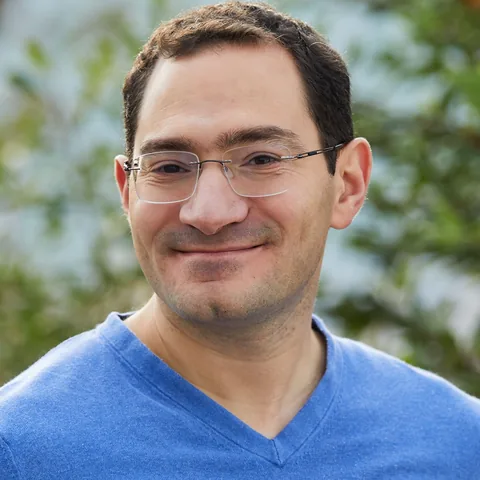
Karmesh Yadav is a computer science PhD student at Georgia Tech whose research on multimodal reasoning and embodied AI aims at agents that can reason, remember and act. He studied mechanical engineering at IIT Guwahati and robotics at Carnegie Mellon, and coauthored La-MAML, a continual-learning method presented as an oral at NeurIPS 2020. After work on autonomous yard trucks at ISEE, he spent 2021 to 2023 as an AI Resident at Meta's FAIR, where he released the HM3D Semantics dataset and coauthored the VC-1 study of visual representations for embodied AI. As an AI Scientist Intern at Mistral AI from May 2025 to July 2026, he led the multimodal reasoning effort and coauthored the Magistral reasoning model and the Ministral 3 models. Recent papers include Memo, a NeurIPS 2025 spotlight on memory-efficient reinforcement learning, and FindingDory, a memory benchmark for embodied agents accepted to ECCV 2026.
- Badges
Timeline
-
2017–2020
Degrees from IIT Guwahati and CMU
He earns a B.Tech in mechanical engineering at the Indian Institute of Technology Guwahati in 2017. He completes a master's in Robotic Systems Development at Carnegie Mellon's Robotics Institute in 2020.
-
2020
La-MAML at NeurIPS
With Gunshi Gupta and Liam Paull, he coauthors La-MAML in 2020, a fast meta-learning algorithm for online continual learning that uses a small episodic memory. The paper is accepted for an oral presentation at NeurIPS 2020, a slot given to the top 1% of submissions.
-
July 2020–August 2021
Robotics engineer at ISEE
He joins ISEE, an autonomous vehicles startup automating yard trucks, as a robotics engineer on its planning team in July 2020. As a senior robotics engineer in Boston until August 2021, he improves the trajectory optimization planner, which the company then deploys on its autonomous vehicle.
-
August 2021–June 2023
AI Resident at Meta's FAIR
From August 2021 to June 2023, he is an AI Resident at Meta's FAIR lab in Menlo Park, working with the Habitat and Cortex team under Oleksandr Maksymets and Dhruv Batra. In 2022, he and his colleagues introduce OVRL, which pretrains visual representations offline with self-supervised learning and then finetunes them for navigation tasks.
-
2023
HM3D Semantics and VC-1
He releases the Habitat-Matterport 3D Semantics dataset and the Open-Vocabulary Mobile Manipulation benchmark, both built on the Habitat simulator. Presented at CVPR 2023, the dataset holds 142,646 object instance annotations across 216 3D spaces. He also coauthors a NeurIPS 2023 study of pre-trained visual representations for embodied AI that curates the 17-task CortexBench and trains the VC-1 model.
-
2023–2024
A PhD at Georgia Tech
He joins the Department of Interactive Computing at Georgia Tech as a PhD student in August 2023, working with Dhruv Batra and Zsolt Kira on representation learning and embodied AI. From August 2024 to November 2024, he is an intern at Yutori in San Francisco, building web agents with Dhruv Batra, Devi Parikh and Abhishek Das.
-
May 2025–July 2026
AI Scientist Intern at Mistral
He joins Mistral AI in Palo Alto as an AI Scientist Intern in May 2025, and initiates and leads its multimodal reasoning effort through July 2026. He coauthors Magistral, Mistral's first reasoning model, in June 2025, and the Ministral 3 family of 3B, 8B and 14B language models in January 2026.
-
As of October 2026
Memo and FindingDory at Georgia Tech
He is a computer science PhD student at Georgia Tech, advised by Dhruv Batra and Zsolt Kira, building agents that can reason, remember and act, with an emphasis on multimodal reasoning and embodied AI. His Memo architecture for memory-intensive reinforcement learning is accepted as a NeurIPS 2025 spotlight. FindingDory, a 60-task Habitat benchmark for memory in embodied agents, is accepted to ECCV 2026.
Career
- 2025–2026Mistral AIAI Scientist Intern
- 2024YutoriIntern
- 2021–2023FAIR (Meta)AI Resident
- 2020–2021ISEERobotics Engineer; Senior Robotics Engineer
Education
- From 2023Georgia Institute of TechnologyPhD student
- 2020Carnegie Mellon UniversityMaster's in Robotic Systems Development
- 2017Indian Institute of Technology GuwahatiB.Tech in mechanical engineering
Colleagues
Sources and credits
Photo: We have no published photo of Karmesh Yadav yet. Send us a free-licensed photo.
- Karmesh Yadav
- Dec 2020: Our paper, La-MAML was accepted for Oral Presentation at NeurIPS 2020 | Karmesh Yadav
- [2007.13904] La-MAML: Look-ahead Meta Learning for Continual Learning
- July 2020: Joined isee as a Robotics Engineer | Karmesh Yadav
- [2204.13226] Offline Visual Representation Learning for Embodied Navigation
- CVPR 2023 Open Access Repository
- Where Are We in the Search for an Artificial Visual Cortex for Embodied Intelligence? | ML Anthology
- Aug 2023: Joined Georgia Tech as a PhD Student | Karmesh Yadav
- Aug 2024: Joined Yutori as an Intern for Fall 2024 | Karmesh Yadav
- May 2025: Joined Mistral AI as an AI Scientist Intern | Karmesh Yadav
- [2506.10910] Magistral
- [2601.08584] Ministral 3
- [2510.19732] Memo: Training Memory-Efficient Embodied Agents with Reinforcement Learning
- July 2026: FindingDory accepted to ECCV 2026 | Karmesh Yadav
- [2506.15635] FindingDory: A Benchmark to Evaluate Memory in Embodied Agents