Joseph Sgro
Also known as Joseph A. Sgro
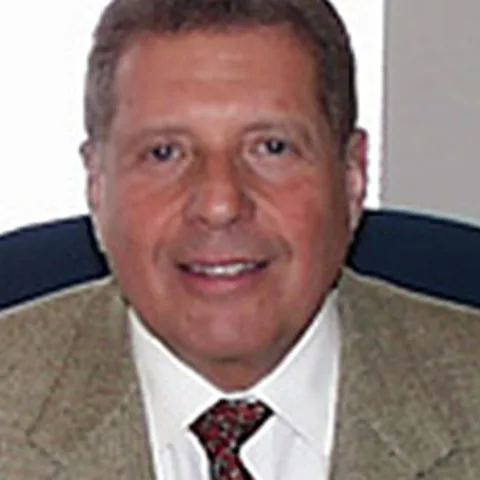
Joseph Sgro is a mathematician, neurophysiologist, and machine-vision engineer whose work applied neural networks to EEG and evoked potentials. He earned mathematics degrees at UCLA and Wisconsin, spent 1977–1978 at the Institute for Advanced Study, and earned an M.D. from Miami in 1980. At Columbia and Virginia Commonwealth University, he held clinical neurophysiology posts; he founded Alacron in 1985 to build equipment for neurological research. His work included backpropagation networks for brain signals, parallel-processing hardware, and machine-vision systems. By 2008, he was Alacron's CEO and outlined a Fast-Vault recording system for shuttle imaging.
Timeline
-
1970–1980
Mathematics and medicine
He earns an AB in mathematics from UCLA in 1970, an MA in mathematics in 1973, and a Ph.D. from the University of Wisconsin in 1975. He spends 1977–1978 at the Institute for Advanced Study, then receives an M.D. from the University of Miami in 1980.
-
1983–1987
Clinical work at Columbia
At Columbia's College of Physicians and Surgeons, he serves as a post-doctoral fellow in clinical neurophysiology (1983–1985), as an Associate in Neurology (1985–1986), and as an assistant professor of neurology (1986–1987).
-
1985–1989
Founding Alacron
While working as a postdoctoral fellow and assistant professor of neurology, he founds Alacron in 1985 to make technologies for neurological research. In 1989, he commercializes the technology and begins developing array processors, frame grabbers, and vision processors.
-
1987–2004
Leading clinical neurophysiology
He relocates to Richmond in 1987 as an associate professor of neurology and head of neurophysiology at Virginia Commonwealth University Medical Center. He becomes Chief of the Division of Clinical Neurophysiology in 1991, serves through 1994, and holds an adjunct associate professorship at Columbia-Presbyterian from 1994 to 2004.
-
1990s
Neural networks for brain signals
In the mid-1990s, he studies backpropagation networks for clinical monitoring and automatic interpretation of EEG and evoked potentials. In 1998, he coauthors an automated evoked-potential analysis paper with Ronald Emerson and Paul Stanton.
-
1999–2002
Parallel computing for machine vision
In 1999, he and Paul C. Stanton patent a scalable multiprocessor architecture for SIMD and MIMD operations. In 2002, as Alacron's CEO, he describes integrating fast CCD arrays and high-frame-rate CMOS sensors into real-time machine-vision systems.
-
2006
A machine-vision library plan
In 2006, he says Alacron plans a scalable line of high-performance frame grabbers and smart cameras around MathStar's field-programmable object array.
-
2008
Alacron's Fast-Vault system
By 2008, he is CEO of Alacron and outlines a proposed Fast-Vault system for NASA's shuttle imaging. It is designed for high-frame-rate images from multiple cameras and nonvolatile video and data recording.
Career
- 1991–1994Virginia Commonwealth University Medical CenterChief
- 1987–1991Virginia Commonwealth UniversityAssociate professor of neurology and head of neurophysiology
- From 1985AlacronFounder, CEO
- 1983–2004Columbia UniversityPost-doctoral fellow in clinical neurophysiology, Associate in Neurology
- 1977–1978Institute for Advanced Study
Education
Colleagues

Sources and credits
Photo: We have no published photo of Joseph Sgro yet. Send us a free-licensed photo.