James Landay
Also known as James A. Landay
James Landay is a Stanford computer scientist whose work connects human-computer interaction with AI. He developed the SILK sketching tool and led mobile computing research that included UbiFit, which used a phone display to encourage exercise. After faculty posts at Berkeley, the University of Washington and Cornell Tech, he joined Stanford in 2014 and became a co-director of its Institute for Human-Centered AI in 2024. Since 2026, he is the institute's Denning Director and holds the Anand Rajaraman and Venky Harinarayan Professorship in Stanford's School of Engineering.
Timeline
-
1990–1996
Degrees at Berkeley and Carnegie Mellon
He earns a BS in electrical engineering and computer science at the University of California, Berkeley in 1990. At Carnegie Mellon University, he completes an MS in computer science in 1993 and a PhD in computer science in 1996.
-
1995
The SILK sketching tool
In 1995, Landay and Brad Myers coauthor “Interactive Sketching for the Early Stages of User Interface Design.” SILK lets designers sketch an interface with an electronic pad and stylus, then test its behavior through interactive storyboards.
-
1997–2003
Design tools at Berkeley
From 1997 to 2003, he is a professor of electrical engineering and computer science at Berkeley. His work includes DENIM, a tool for sketching websites, and he co-founds NetRaker in 1998 to provide web-based website evaluation tools.
-
2003–2013
Washington and Intel Labs Seattle
He works in computer science and engineering at the University of Washington from 2003 to 2013. From 2003 to 2006, he also directs Intel Labs Seattle, which studies applications and technology for ubiquitous computing. Keynote Systems acquires NetRaker, where he is co-founder and chief scientist, in 2004.
-
2008
UbiFit encourages physical activity
In 2008, Landay leads a University of Washington mobile computing project that includes UbiFit and UbiGreen, developed with Intel. UbiFit tracks exercise and displays flowers and butterflies on a phone as users meet activity goals. In a three-month field experiment, people with this display maintain their exercise routines through the winter holidays.
-
2013–2014
Cornell Tech and Stanford
He serves as a professor of information science at Cornell Tech in New York City from 2013 to 2014. In 2014, he joins Stanford as a professor of computer science.
-
2016–2024
ACM fellowship and research award
In 2016, he becomes a Fellow of the Association for Computing Machinery. In 2024, he receives the ACM SIGCHI Lifetime Research Award.
-
2024
Co-director of Stanford HAI
A co-founder of Stanford's Institute for Human-Centered AI, he becomes its co-director in 2024. His research includes the Smart Primer, a personalized AI tutor that uses stories to help children learn.
-
October 2025
Just-in-time objectives for AI
In October 2025, he coauthors “Just-In-Time Objectives: A General Approach for Specialized AI Interactions.” The work introduces an architecture that infers a user's immediate goals from observed behavior and uses those goals to guide language models toward specialized tools and responses.
-
Since 2026
Denning Director of Stanford HAI
In 2026, he becomes Denning Director of Stanford's Institute for Human-Centered AI as the institute unites with Stanford Data Science. He is also a professor of computer science, the Anand Rajaraman and Venky Harinarayan Professor in Stanford's School of Engineering, and a senior fellow at HAI. He specializes in human-computer interaction.
Career
- Since 2026Stanford UniversityDenning Director, Institute for Human-Centered AI
- Since 2014Stanford UniversityProfessor of Computer Science
- NowStanford UniversityAnand Rajaraman and Venky Harinarayan Professor
- NowStanford UniversitySenior Fellow, Institute for Human-Centered AI
- 2024–2026Stanford UniversityCo-director, Institute for Human-Centered AI
- 2013–2014Cornell UniversityProfessor of Information Science
- 2003–2013University of WashingtonProfessor of Computer Science and Engineering
- 2003–2006IntelDirector
- From 1998NetRakerCo-founder
- 1997–2003University of California, BerkeleyProfessor of Electrical Engineering and Computer Science
- NetRakerChief Scientist
- Stanford UniversityCo-founder, Institute for Human-Centered AI
Education
- 1996Carnegie Mellon UniversityPhD in computer science
- 1993Carnegie Mellon UniversityMS in computer science
- 1990University of California, BerkeleyBS in electrical engineering and computer science
Colleagues
Sources and credits
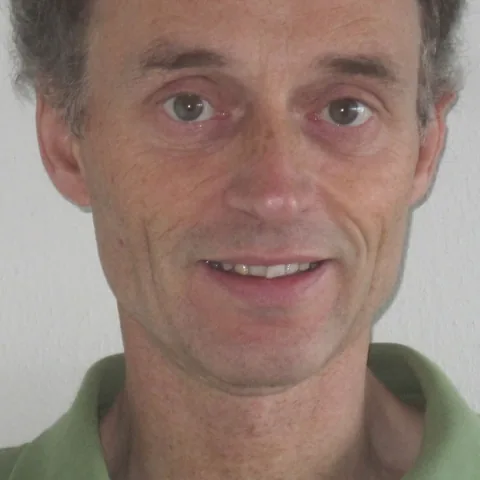
Photo: We have no published photo of James Landay yet. Send us a free-licensed photo.
- James Landay's Profile | Stanford Profiles
- SILK: Sketching Interfaces Like Krazy
- Home | James Landay, Stanford Computer Science Professor
- James Landay: Paving a Path for Human-Centered Computing | Stanford HAI
- Track your fitness, environmental impact with new cell phone applications | UW News
- Landay, James – Encounters with HCI Pioneers – A Personal Photo Journal
- James Landay | Computer Science
- Award Recipients | SIGCHI
- [2510.14591] Just-In-Time Objectives: A General Approach for Specialized AI Interactions
- About | Stanford HAI