Huiwen Chang
Huiwen Chang is an AI researcher who builds image-generation models, from the MaskGIT and Muse architectures at Google Research to the image generation in OpenAI's GPT-4o. After a computer science degree in the Yao class at Tsinghua University, she completed a Princeton PhD on personal photo enhancement in 2018, advised by Adam Finkelstein. As a research scientist at Google, she invented MaskGIT, a 2022 model that generates all image tokens at once and refines them, and Muse, a text-to-image Transformer introduced in 2023. She joined OpenAI in 2023, co-created GPT-4o's image generation, and in June 2025 was named among the new hires of Meta Superintelligence Labs. Today she works at Meta's TBD Lab.
Timeline
-
2015
Palette-based photo recoloring
After a B.S. in computer science from the Yao class at Tsinghua University's IIIS, she pursues a PhD at Princeton, advised by Adam Finkelstein. In July 2015, she publishes Palette-based Photo Recoloring at SIGGRAPH with Finkelstein, Ohad Fried, Yiming Liu and Stephen DiVerdi, an interactive tool that lets non-experts recolor an image by editing a color palette.
-
2015–2018
A Princeton PhD in photo enhancement
She interns at Adobe in Seattle in 2015 and receives a Microsoft fellowship in 2016. In 2018, she completes her Princeton computer science PhD with a dissertation titled Personal Photo Enhancement, advised by Adam Finkelstein.
-
2022
MaskGIT at Google Research
As a research scientist at Google Research, she invents MaskGIT, an image-generation architecture. In February 2022, she and Han Zhang, Lu Jiang, Ce Liu and William T. Freeman describe it as a bidirectional transformer that generates all image tokens at once and refines them, speeding up autoregressive decoding by up to 64 times.
-
January 2023
The Muse text-to-image model
At Google Research in January 2023, she and 11 coauthors, including Han Zhang, introduce Muse, a text-to-image Transformer. Given a text embedding from a pretrained large language model, Muse learns to predict randomly masked image tokens, and its 3-billion-parameter version reaches an FID of 7.88 on zero-shot COCO evaluation.
-
2023–2025
GPT-4o image generation at OpenAI
She joins OpenAI in 2023 after more than four years as a research scientist at Google. At OpenAI, she co-creates GPT-4o's image generation, and she is among the authors of the GPT-4o System Card in October 2024.
-
June 2025
Joining Meta Superintelligence Labs
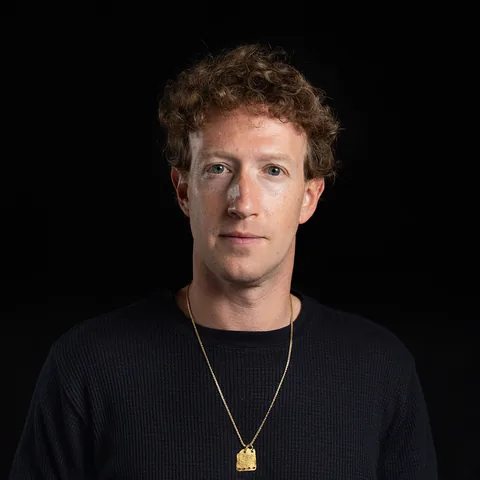
In June 2025, Mark Zuckerberg names her in an internal memo introducing the new hires of Meta Superintelligence Labs, many of whom come from OpenAI, Anthropic and Google.
-
As of October 2026
Researcher at Meta's TBD Lab
As of October 2026, she works at Meta's TBD Lab, with research interests in multimodal intelligence, generation and interaction.
Colleagues
Sources and credits
Photo: We have no published photo of Huiwen Chang yet. Send us a free-licensed photo.
- Huiwen Chang – Rising Stars in EECS 2017
- Palette-based Photo Recoloring
- Congratulations to the Computer Science Department Class of 2018!
- Zuckerberg's Meta Superintelligence Labs poaches top AI talent in Silicon Valley
- MaskGIT: Masked Generative Image Transformer
- Muse: Text-To-Image Generation via Masked Generative Transformers
- Here Is Everyone Mark Zuckerberg Has Hired So Far for Meta’s ‘Superintelligence’ Team
- GPT-4o System Card
- Meta founds Superintelligence Labs with top acquisitions from OpenAI and Google
- Huiwen Chang - Google Scholar